Are issue ads entitled to the Lowest Unit Rate? Is the broadcaster exempt from liability for false statements? Must the broadcaster allow opposing views on its air? Many think the answers to these questions are “Yes.”
Think again, veteran Washington, D.C. attorney Gregg Skall shared in a May 2010 column for Radio + Television Business Report. We’ve gone deep into our archives to share Skall’s classic column with readers today, as it contains information advise as the 2024 election season heats up.

By Gregg Skall
As the political campaign season heats up, increasing numbers of issue advertisers and broadcasters will again focus on broadcasters’ obligations to provide equal time or lowest unit charge to groups or individuals opposing particular issues on the various ballots. This is particularly important given the confusion over broadcaster obligations created by the Bipartisan Campaign Reform Act of 2002, more commonly known as the McCain-Feingold law.
There is a mistaken impression among many that the mandatory access, equal time and lowest unit charge rules may apply to issue advertising. Section 315 governs equal opportunities and lowest unit charge and Section 31 2(a)(7) governs mandatory access. None of these provisions apply to issue advertising. Sections 315 and 31 2(a)(7) of the Communications Act are clear in that they apply only to “legally qualified” candidates for elective office. Moreover, Section 31 2(a)(7), applies only to legally qualified candidates for federal elective office; it does not apply to statewide or local election candidates.
Indeed, the only FCC rule or policy that ever did apply to issue advertising was the Fairness Doctrine. However, the Fairness Doctrine was repealed in 1987, in response to a complaint concerning coverage of a controversial issue of public importance (the Syracuse Peace Council case involving the controversy surrounding construction of a nuclear power plant).
A corollary to the Fairness Doctrine, once known as the Culman Doctrine, had required stations to provide free time to side A on a ballot issue where side B had purchased advertising time and side A could not afford to purchase time. In January 1992, the Commission clarified its position holding that the Fairness Doctrine does not apply to ballot issues.
Here is a quick review of the rules that apply to political candidates:
• The Communications Act states clearly at Section 31 2(a)(7) that all legally qualified candidate for federal elective office and bona fine write-in candidates are to have “reasonable access” to broadcast facilities.
• Any positive use of a candidate’s voice or picture, in a context not otherwise exempt, constitutes a “use” of the broadcasting station and, thus entitles the candidate user to lowest unit rates. (See separate handout for more information on lowest unit rates)
• The use also triggers the “equal opportunities” provision of Section 315 of the Communications Act. Fleeting appearances and disparaging uses of the candidate’s voice or picture by an opponent do not trigger Section 315 nor will any of the recognized exceptions in the statute, which include: (1) bona fide newscasts, (2) bona fide news interviews, (3) bonafide news documentaries, and (4) on-the-spot coverage of bonafide news events (including political documentaries).
• A “use” by a legally qualified candidate for public office imposes an obligation upon the licensee to afford equal opportunities (upon requests made within seven days) to all other such candidates for the same office. (See separate handout for more information on equal opportunities)
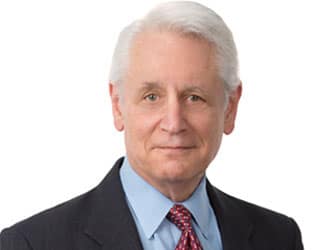
Gregg Skall is a veteran Washington, D.C.-based attorney Gregg Skall with boutique firm Telecommunication Law Professionals. He can be contacted at [email protected].