With dollars from the Corporation for Public Broadcasting in question thanks to Republicans in the White House and on Capitol Hill intent on neutering PBS and NPR, entities that many conservatives feel have become partisan with their news in favor of liberal perspectives, underwriting support and donations are the one-two punch many noncommercial entities need to keep the lights on.
Now, the Chairman of the FCC is ready to examine the fine line between underwriting support and paid advertisement, and if either PBS or NPR have stepped over that line improperly.

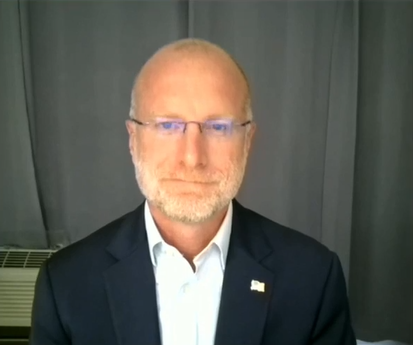
In a letter sent on Wednesday by Chairman Brendan Carr to both Katherine Maher, President/CEO of NPR, and Paula Kerger, President/CEO of PBS, each leader was notified that Carr has asked the Enforcement Bureau of the FCC to open an investigation regarding “the airing of NPR and PBS programming” on broadcast member stations.
Some 1,500 NPR and PBS Member stations could be involved in the investigation.
It is well established that federal law prohibits any noncommercial education station from running commercial advertisements. More specifically, Section 399B of the Communications Act prohibits a noncommercial education station from airing commercials or other promotional announcements on behalf of for-profit entities.
Instead, for-profit entities that contribute funds to a noncommercial station may receive an on-air acknowledgment. As Carr notes, the FCC “has long held that these underwriting announcements are for identification purposes only.” And, these announcements, says Carr, should not promote the contributor’s products, services, or businesses. Further, they may not contain comparative or qualitative descriptions, price information, calls to action, or inducements to buy, sell, rent, or lease.
Simply stated, Carr is concerned that NPR and PBS broadcasts could be violating federal law by airing commercials.
“In particular, it is possible that NPR and PBS member stations are broadcasting underwriting announcements that cross the line into prohibited commercial advertisements,” he writes.
As such, it is important to Carr as FCC Chairman that noncommercial broadcast stations “stay true to their important missions” and refrain from operating “as noncommercial in name only.”
The Media Bureau will assist the Enforcement Bureau on the investigation into underwriting announcements.
Could Congress potentially get involved? Yes, as Carr says he’ll provide a copy of the letter to “relevant Members of Congress” — likely Republican leaders — “because I believe this FCC investigation may prove relevant to an ongoing legislative debate.”
In particular, he says Congress “is actively considering whether to stop requiring taxpayers to subsidize NPR and PBS programming.”
Indeed, a “zero out” of the Corporation for Public Broadcasting, which funds a portion of the annual operating budget for NPR and PBS, has been a topic of discussion for conservative Republicans for years.
What is Carr’s take on the subject?
“For my own part, I do not see a reason why Congress should continue sending taxpayer dollars to NPR and PBS given the changes in the media marketplace since the passage of the Public Broadcasting Act of 1967,” he says. “To the extent that these taxpayer dollars are being used to support a for profit endeavor or an entity that is airing commercial advertisements, then that would further undermine any case for continuing to fund NPR and PBS with taxpayer dollars.”
Maher, the chief executive of NPR, said in a statement that NPR programming and underwriting messaging complies with federal regulations, including the FCC guidelines on underwriting messages for noncommercial educational broadcasters, and Member stations are expected to be in compliance as well. “We are confident any review of our programming and underwriting practices will confirm NPR’s adherence to these rules,” she said. “We have worked for decades with the FCC in support of noncommercial educational broadcasters who provide essential information, educational programming, and emergency alerts to local communities across the United States.”
PBS said in a statement to The New York Times that it was proud of “noncommercial educational programming,” and worked “diligently to comply with the FCC’s underwriting regulations.”