WASHINGTON, D.C. — As promised on November 19 by noted Houlihan Lokey media broker Elliot Evers, administrator of the “CXR Radio Station Trust, lawyers representing Apollo Global Management-controlled Cox Media Group and the trust have filed its Reply Comments in what’s officially “Media Bureau Docket No. 19-98” in “a timely fashion.”
To little surprise, the stance that CMG, and Evers, are taking is largely defensive, expressing the belief that poor economic conditions present an opportunity with precedent for the Commission to extend a divestiture deadline tied to Apollo’s majority ownership acquisition of Cox Media Group.
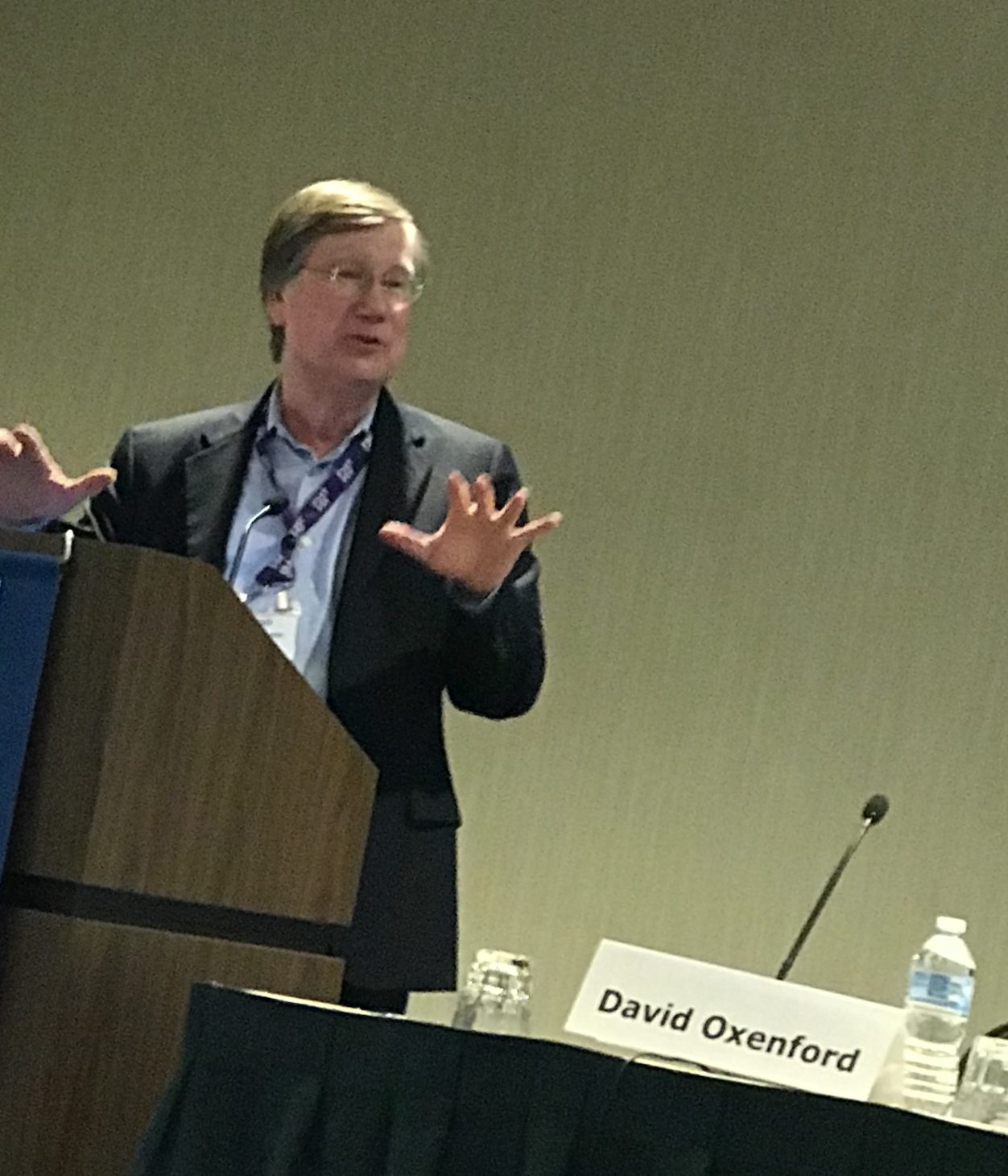
Making the argument on behalf of Evers? David Oxenford.
The well-respected attorney at Wilkinson Barker Knauer is the legal counsel for Evers’ “CXR Radio LLC,” and he firmly believes that there is a case for extending the December 17 divestiture deadline set by the Commission that requires CMG to sell two stations — one in the Tampa-St. Petersburg-Clearwater market and the other in the Orlando DMA.
The sale of one station in each of the markets must transpire under current FCC local ownership rules. With Apollo’s investment, CMG lost its grandfathered status on the number of stations it may own in a given market.
As such, CMG selected Rhythmic Top 40 WPYO-FM “Party 95.3,” licensed to Maitland, Fla., and covering metropolitan Orlando; and Alternative WSUN-FM “97X,” licensed to Holiday, Fla., and serving Hillsborough and Pinellas Counties, the core of the Tampa Bay region.
While there are rumors that Neal Ardman and his NIA Broadcasting wish to bid for 97X, Spanish Broadcasting System (SBS) last week went publicly with its efforts to purchase WPYO — offers that were repeatedly rebuffed by Evers. This led SBS to assail Evers, making the argument that, if there was interest from other parties in WPYO, they would have made an offer by now.
With time ticking, Evers — with Oxenford as his legal voice — opted to role the dice and hold off for a better offer.
“[C]onsistent with well-established Commission precedent, additional time should be
afforded to CXR to conduct a sale that, in view of overall economic conditions and the FCC’s
stated goals for divestiture trusts, would allow for fair market value to be achieved in a
reasonable period of time,” Oxenford argued.
“[C]onsistent with well-established Commission precedent, additional time should be
afforded to CXR to conduct a sale that, in view of overall economic conditions and the FCC’s
stated goals for divestiture trusts, would allow for fair market value to be achieved in a
reasonable period of time.” — David Oxenford
Furthermore, Oxenford says the Evers-led trust “should not be forced through an inflexible regulatory deadline to sell the stations at fire sale prices just because one potential buyer asserts that its offer should be accepted.”
Instead, Oxenford argues, “CXR should be able to establish what truly is a marketplace price by conducting an orderly process to offer the stations to all potentially willing buyers with the benefit of somewhat more normal economic conditions.”
That’s a bold argument, and one that Audio Division Chief Al Shuldiner may put high scrutiny on. First, when “more normal economic conditions” arrive for an industry with consistently declining station valuations is open-ended. Does this mean the FCC can offer 1-year extensions in perpetuity until a designated expert determines that “more normal economic conditions” have returned?
Then, there’s the possibility of Shuldiner and the Media Bureau offering the following response: a deadline is a deadline.
PRESS PUSH, POLITICAL PULL
With widespread coverage of the SBS filing across radio industry trade publications and an editorial assailing CMG and Evers distributed by HispanicAd.com, which covers the marketing and advertising industry serving U.S. Hispanic consumers, Oxenford slammed the trade press, asserting that “many recent articles” expressed the SBS position that CXR should sell WPYO to the company founded in 1983 by Raúl Alarcón Jr. with the acquisition of the former WVNJ-AM in Secaucus, N.J.
Speaking of the trade press articles, Oxenford continued, “Collectively, these make it clear that SBS is attempting to influence the Commission not with legal precedent and relevant factual support, but instead with the blunt instrument of political pressure. This pressure should not be the basis of the reasoned decision-making called for in analyzing the merits of the CXR request.”
Intriguingly, Oxenford asserted that CXR “is perfectly willing to sell WPYO to SBS.”
Really? Yes … but for a price that SBS argues is $4 million higher than the biggest Bond & Pecaro estimate provided for WPYO, which was $6 million. Oxenford tore that estimate to shreds. “That firm did not have access to the financial records of the station, and thus its purported ‘appraisal’ is at best an educated guess as to the value of the property,” he said. “The consultant’s surmise, conducted in September 2021 before the filing of the CXR Request, is based on the SBS consultant’s estimate of WPYO’s share of the market’s radio revenues based on a single metric – its overall audience share. No consideration of its ratings in specific demographics is included in its analysis. And, more importantly, its estimate is based on the depressed radio revenues in the market from 2020 and 2021.”
Meanwhile, Oxenford shared with Shuldiner and the Media Bureau’s Audio Division that “SBS itself does not oppose the grant of an extension of the divestiture deadline.”
Huh? According to documents submitted to the Commission by SBS, the opposition is an extension by 12 months to the CXR request. A “more limited extension” is up for consideration by SBS, Evers said.
Oxenford’s 10-page Reply Comments then return to the theme of pandemic-fueled poor market conditions. “In the context of the historic and unprecedented period through which we have just lived, SBS’s attempt to exploit an impending regulatory deadline for its advantage should not be countenanced,” he argued.
This weak deal-making market is, in Oxenford’s view, one reason why SBS didn’t make an all-cash offer for WPYO “until just months before the divestiture deadline.” And, with no deals on the table, SBS’s offer was one that Evers and CMG felt was below value. “Perhaps the timing of the offer was dictated by a belief that the pendency of the divestiture
deadline would offer it the opportunity to exact a favorable purchase price for the station,” Oxenford said.
That’s a viewpoint Shuldiner will need to agree with, or dismiss. Was SBS taking advantage of a pending deadline, with no takers, unreasonable? What if SBS hadn’t surfaced?
Clearly, at issue is the extension of a deadline tied to local ownership rules that in 2022 could be amended — or not. According to one noted FCC attorney who spoke with RBR+TVBR on condition of anonymity, the pending Rosenworcel Commission could “throw a bone” to Republicans by increasing the number of stations a radio broadcasting company can own on the FM band — assuming they do not own an AM in the market — by one.
Thus, if CXR wins a full year extension and the Commission revises the radio broadcasting subcaps, Evers doesn’t need to sell WPYO or WSUN — CMG can bring the stations back into the fold.
While that’s conjecture, the well-connected Oxenford could very well be gambling on a regulatory thaw, rather than improved market conditions that would bring a $10 million bid for WPYO and an offer for WSUN that passes muster with Evers and the CMG leadership team.
Lastly, Oxenford noted that CXR has received inquiries in recent weeks from potential buyers like SBS who do not currently operate in the Orlando market. But, an inquiry isn’t an offer.
With no other Reply Comments submitted by the November 22 deadline, the matter is now Shuldiner’s to decide.