The media and advertising landscape is, in the minds of many, in its next phase of its evolution as global media leaders now look to data, AI and a more collaborative client-agency approach to navigate an era of rapid change and drive efficiencies in transformation.
Transformation is progressing, creating stronger, more strategic partnerships with brands and their agencies. But what is the largest obstacle to transformation?
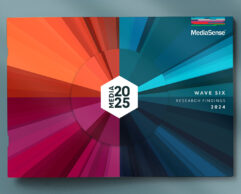
According to independent global media advisors MediaSense, and its latest research study, “Media 2025: Wave 6,” the desire for greater customer centricity, integration and speed – powered by data, technology and of course AI — remains paramount.
While the appetite is there, the new report reveals that a transformation journey is not plain sailing – and for many, it is still in its infancy:
- 68% of global marketers say they are either midway or towards the end of their transformation
- 51% believe their organizations have become more consumer-centric over the last 12 months
- 26% of brands feel confident that they have generated incremental effectiveness as a result of their current transformation
The report also highlights opportunities to establish stronger, more strategic partnerships with agencies. Although there is desire to change an agency relationship as a result of transformation, the resulting appointment is now proving to be more secure, strategic and integrated:
- 50% of respondents ‘very likely to change’ an agency model based on business transformation
- 40% believe their agency model has strengthened as a result of their transformation
Demand for in-housing continues to cool with a shift in emphasis from execution to expertise, and internalising key capabilities that drive competitive advantage. Hence the focus has been on building capabilities across measurement, data, shopper/retail and media strategy. Accordingly, 48% of respondents said they had become data-driven, with 31% now seeing greater value from overall tech and data infrastructure.
Findings also cite 2024 as the year to ‘finally, get to grips with measurement’, with 54% of advertisers marking ‘measurement and insight’ as their top priority for the year ahead. With just 17% believing they have become more agile in their decision making, marketers are still held back by inadequate legacy media measurement, self-serving platform metrics and a host of new but unproven measurement currencies.
Artificial intelligence and machine learning will naturally form part of the answer (45% identified as a key area that AI will disrupt) but the largest discipline set to be affected by advances in generative AI is content strategy & development (62%).
Ryan Kangisser, Managing Partner, Strategy at MediaSense, commented, “Transformation has been a recurring focus of our Media 2025 research program and it’s great to start to see the progress being achieved by many marketing organizations – now becoming more customer centric, integrated and agile. However, a number of deep-rooted challenges are to be overcome with organizational structure, capability & measurement among the most acute. It is otherwise pleasing to see the positive role envisioned for agencies which are set to become more stable and strategic with marketers who have completed their transformation programs.”
Matt Green, Director of Global Media Services at the World Federation of Advertisers (WFA), added, “Integration is not just a buzzword, it is a necessity and a key focus for our members. This report supports this view and the importance of breaking down silos and creating collaborative, future-proof partnerships. The future may be tech-enabled, but it will be the collaboration and interaction of experienced and creative people and teams that will drive the global media industry forward.”
Download your copy of Media 2025: Wave 6.