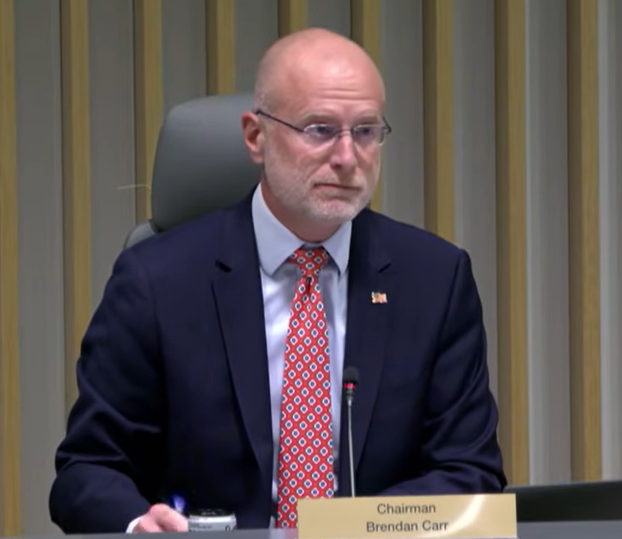
Six Democratic senators are demanding that the FCC explain how it intends to review Paramount Global’s request to authorize sovereign wealth funds from Saudi Arabia, the United Arab Emirates, and Qatar to hold up to 100% of the equity in its broadcast television stations and whether Chairman Brendan Carr can evaluate it impartially.
The letter, sent Wednesday to Carr and signed by Senators Maria Cantwell (D-Wash.), Ed Markey (D-Mass.), Ben Ray Luján (D-N.M.), Andy Kim (D-N.J.), John Hickenlooper (D-Colo.), and Elizabeth Warren (D-Mass.), targets Paramount’s pending petition seeking FCC authorization for foreign equity ownership well above the 25% statutory cap Congress established to keep broadcast licensees under American control.
The foreign investment is tied to the proposed $111 billion merger of Paramount-Skydance and Warner Bros. Discovery.
The Commission has previously exercised its authority to authorize equity stakes held by investors from NATO allies, Five Eyes nations, and friendly neighboring countries. The senators argue this petition is categorically different, as it would mark the first time the agency has authorized a potential majority ownership position by sovereign wealth funds, entities directly controlled by foreign governments, in American broadcast licensees.
What’s at stake, in the senators’ framing: the 28 CBS-owned television stations spanning 17 of the country’s largest markets, CBS News, 60 Minutes, and—upon closing—CNN, HBO, and the balance of the Warner Bros. Discovery portfolio. The letter also flags reporting that Tencent, designated by the Department of Defense as a Chinese military-connected company, is expected to take an equity stake in the combined entity.
The senators didn’t spare the geopolitical context.
Reporters Without Borders’ 2026 Press Freedom Index ranked Saudi Arabia fifth from last globally, ahead of only Iran, China, North Korea, and Eritrea. The UAE and Qatar, the letter notes, similarly suppress independent media. The senators also cited the 2021 Office of the Director of National Intelligence assessment concluding that Saudi Crown Prince Mohammed bin Salman ordered the killing of journalist Jamal Khashoggi, and pointed to recent financial transactions between the investing governments and entities connected to the President and his family, among them Emirati investment in the Trump family’s cryptocurrency venture and Qatar’s gift of a luxury aircraft.
The sharpest language in the letter is directed at Carr himself. In March, Carr told CNBC the FCC had a “very minimal” role in reviewing Paramount’s foreign ownership petition, that the review would “get through pretty quickly,” and that the Paramount-Warner Bros. Discovery transaction was a “good deal.” The senators set those statements against Carr’s own prior record: his 2024 description of Chinese ownership of TikTok as “a clear and present danger to U.S. national security,” and his dissent when the Commission approved a radio station transfer without what he called adequate plans to “wall off the unvetted foreign interests.” “These comments raise questions about your impartiality and the rigor of the Commission’s review of this unprecedented foreign investment,” the senators wrote.
The senators set a June 5 deadline for Carr to answer five questions: whether he will commit to a comprehensive Team Telecom review; whether Team Telecom will specifically examine Tencent’s role; whether the full Commission rather than delegated bureau staff will vote on the petition; whether he believes foreign ownership at the proposed levels would give the sovereign funds effective influence over editorial decision-making; and what assurances, if any, the Saudi, Emirati, Qatari, and Tencent investors have provided regarding noninterference. All related documents were requested as well.
On the question of a full Commission vote, the senators pointed to a March letter from Senate Commerce Committee Chairman Ted Cruz and then-Ranking Member Cantwell that criticized the FCC’s handling of the Nexstar-TEGNA transaction on the same delegated authority grounds.
The FCC has not announced a timeline for action.