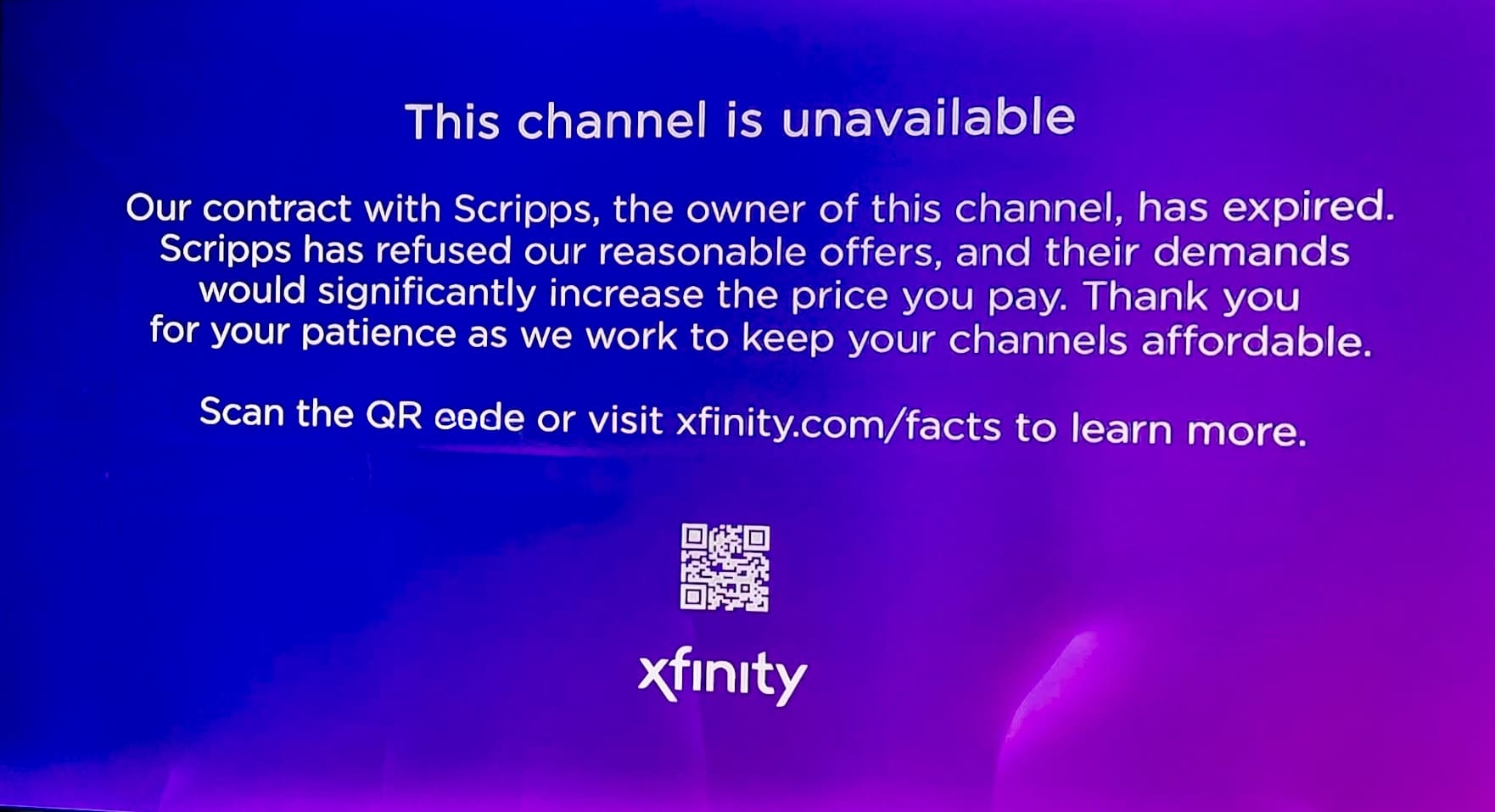
DELRAY BEACH, FLA. — For fans of the NHL Stanley Cup Champions, the Florida Panthers, tuning in to last night’s game against the Ottawa Senators on one of two broadcast TV stations owned by The E.W. Scripps Co. seemed like just another ordinary evening. It was hardly ordinary. During the second period of an eventual 6-3 Panthers victory, WSFL-39 in Miami, WHDT-9 in West Palm Beach and every other station owned by Scripps was pulled by law from Comcast’s Xfinity cable TV systems across the U.S.
The reason? A fresh retransmission consent accord could not be reached as the old one lapsed.
Ironically, the “blackout” involves Comcast, which owns the NHL’s Philadelphia Flyers in addition to the NBC and Telemundo networks, the Peacock streaming platform and stations including WTVJ-6 in Miami-Fort Lauderdale, which competes for audience and ad dollars against WSFL.
For Scripps, 40 stations across 19 DMAs are impacted by the impasse, 19 of which are “Big Four” network affiliates. The company asserts it is not in the wrong. “Scripps has been negotiating in good faith to reach an agreement that reflects this value and is fair for both parties and viewers,” Scripps said in a statement. “We hope Comcast recognizes the critical value we play for our communities and restores our stations’ signals so we can continue to serve their customers. Until then, Xfinity customers can still find our local news and sports programming for free over-the-air, on our station websites, streaming apps and on other locally available cable and satellite providers.”
Scripps added that its mission “is to connect our communities with accessible local news, weather, live sports and entertainment programming. Comcast’s tactics won’t change our commitment to that.”
Comcast issued a statement indicating that its agreement with Scripps ended at 5:59pm Eastern on March 31. Explaining the reason why Scripps’ channels are being blocked to Xfinity customers, Comcast says it “pays programmers to bring customers the entertainment, information, and sports they want. Comcast works to negotiate fair terms in order to ensure the greatest value for customers, given all the ways content can be accessed today. A number of reasonable offers have been made that E. W. Scripps hasn’t accepted. Comcast continues to work towards making this programming available again with fair pricing and terms for our customers.”
In markets including Miami-Fort Lauderdale and West Palm Beach, Xfinity is the dominant MVPD, with pockets of residential communities contracted with smaller competitors including Hotwire Communications and Blue Stream. In coastal communities, Cogeco-owned Breezeline is the dominant MVPD, succeeding Atlantic Broadband.