Inside Room 2123 of the Rayburn House Office Building on Capitol Hill, acrimony was met with cordiality as the House Energy & Commerce Committee conducted a lengthy oversight hearing of the FCC. It was expected, with friendly GOP leaders effusive as Democrats largely blasted the Trump Administration for what it views as meritless meddling.
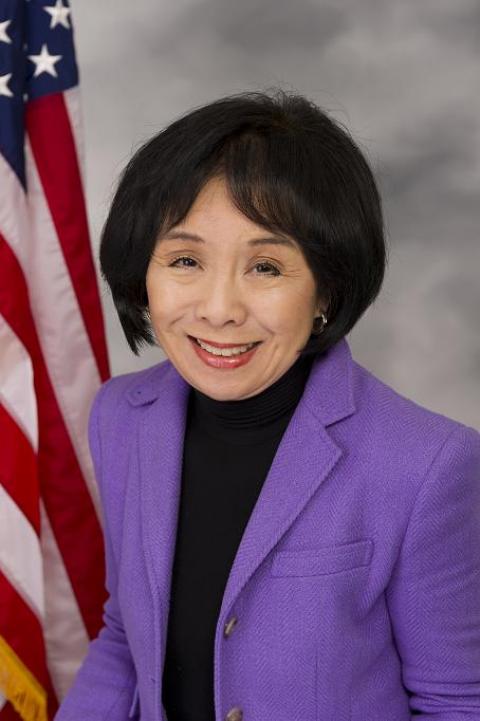
The tone for Democrats was set early on by Minority Leader Doris Matsui (D-Calif.), noting how the Commission’s job “determines whether you can call 911, whether your internet bill is affordable and when the local news can do its job without political interference.”
The latter comment served as an early jab at Brendan Carr, the FCC Commissioner who reinstated a trio of “news distortion” complaints from the conservative Center for American Rights dismissed on delegated authority by acting bureau chiefs in the waning days of the Rosenworcel Commission one year ago.
Matsui then went for the gut punch, saying, “The FCC serves the public, not any president, not any party, and not any one political agenda. It is supposed to be an independent expert agency that promotes competition, protects public safety, and expands connectivity for our rural and urban communities.”
But, she continued, “President Trump and Chairman Carr have repeatedly abused the FCC’s power. We don’t have ‘Speech Police’ in America — we have the First Amendment. Yet under Chairman Carr we have seen a pattern of pressuring the media to tow the administration’s line.”
And, like her Senate brethren at a FCC Oversight Hearing conducted just weeks ago by the Commerce Committee in the upper branch of Congress, Matsui turned to Carr’s quote, “We can do this the easy way, or the hard way” — made on a Cumulus-distributed podcast program by the Chairman in reference to the Jimmy Kimmel Live! episode in which the host made false statements about the accused assassin of Charlie Kirk. Democrats have used that quote as a particular rallying cry, lashing out at Carr for what they portray as his Mafia-like manner on the issue and “censorship by intimidation.”
DEREGULATION AND MODERNIZATION
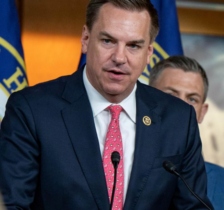 Matsui’s opening statement couldn’t have been more partisan and pointed than that of Richard Hudson (R-N.C.), Chairman of the Subcommittee on Communications and Technology. “The FCC had an active 2025 that can be summed up in one word: deregulation,” Hudson said. “Under Chairman Carr, the FCC has taken significant steps to reduce barriers to broadband deployment, modernize outdated regulatory regimes, and delete obsolete rules.”
He later said the FCC “still has significant work ahead, including modernizing outdated media ownership rules.”
Undaunted, Carr offered prepared testimony that opened as a biography, noting, “Today, working alongside my Commission colleagues and leading the talented group of public servants at the agency is the honor of a lifetime. I am proud of the work the agency’s dedicated staff have been getting done for the American people.”
That pride was seen in Carr’s defense of “President Trump’s strong leadership,” which has led the Commission to move quickly to execute “on an ambitious set of reforms.” This includes the “Build America” agenda and “restoring America’s leadership in wireless.” On that subject, Carr noted, “Thanks to President Trump’s leadership, we are turning things around—and fast.”
Then, there is Carr’s push at the FCC “empowering local broadcasters.” Translation: network affiliation agreements appear to be heavy-handed, prohibiting a local TV station from deciding if preemption of a particular show is in their public interest. “The FCC is going to continue its efforts to empower local broadcasters to meet their public interest obligations,” Carr pledged.
Brendan Carr’s prepared comments at the House E&C FCC Oversight Hearing can be viewed here.