What does a 79-year-old federal law enacted to combat racketeering in labor/management disputes have to do with the FCC and its ability to collect forfeiture payments for rule violations or pass new rules based on delegated authority?
A lot, it turns out, thanks to a case presently in front of the U.S. Supreme Court.
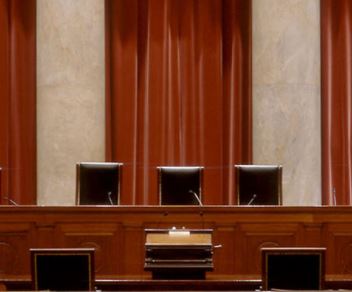
In what could only cement 2024’s SEC vs. Jarkesy and Loper Bright Enterprises vs. Raimondo case rulings, which ended “Chevron deference” for federal agencies by making the court the ultimate arbiter, the Supreme Court last week heard arguments examining whether district courts must adhere to Federal Communications Commission elucidations.
The case is McLaughlin Chiropractic Associates, Inc. v. McKesson Corporation. It centers on the Hobbs Act, a 1946 anti-racketeering law, and its application to the Telephone Consumer Protection Act regarding unsolicited fax advertisements. At issue is the FCC’s 2019 Amerifactors decision, which determined that online fax services receiving faxes as e-mails do not qualify as “telephone facsimile machines” under the TCPA.
Does the Hobbs Act require the district court in this case to accept the FCC’s legal interpretation of the TCPA? That is what the justices are considering. A lower court decertified the plaintiffs’ class, and the Ninth Circuit upheld the decision, citing the Hobbs Act’s provision granting exclusive jurisdiction over FCC orders to appellate courts. This only deepened an existing circuit split.
During oral arguments, shared by C-SPAN, Justices Sonia Sotomayor and Ketanji Onyika Brown Jackson questioned whether the Hobbs Act’s exclusivity binds district courts. Justice Clarence Thomas expressed unease about district courts’ inability to challenge flawed agency rulings, while Justice Neil Gorsuch highlighted due process concerns for parties not involved in the original agency proceedings.
A ruling that district courts are not bound by FCC interpretations could extend beyond the TCPA, affecting the enforceability of any FCC orders interpreting federal laws. This would give district courts greater latitude to review and potentially overturn agency interpretations, altering the balance of power between agencies and the judiciary.
Such a decision would align with the Supreme Court’s June 2024 reversal of the Chevron doctrine, a 1984 precedent that allowed courts to defer to administrative agencies when interpreting ambiguous statutes, as long as the agency’s interpretation was reasonable and lawful. The Court’s ruling now requires courts to independently determine whether an agency has acted within its legal authority, eliminating automatic deference in cases involving statutory ambiguity.
— With editing and additional reporting by Adam R Jacobson