The last day of 2025 also served as the final day interested parties could submit comments to the FCC in regard to Media Bureau docket No. 25-331, which seeks insight into whether or not TEGNA should be acquired by Nexstar Media Group.
Of the groups that submitted comments, most are vehemently disapproving the proposed deal.
The transformative transaction, announced in August and submitted for regulatory review following the temporary closure of the federal government due to lack of Congressionally approved funding, requires either a waiver of current local TV ownership rules or a wholesale change in the rules prior to the transaction’s close.
For the pro-MVPD advocacy group American Television Alliance (ATVA) and the National Content & Technology Cooperative, the FCC is warned that Nexstar and TEGNA seek the agency’s approval of “a massive consolidation that would change the face of broadcasting.”
If their proposed transaction succeeds, Nexstar stations would serve more than 80% of households in the United States, the ATVA and NCTC assert. Post-transaction, some 36 million households will live in markets with a Nexstar-TEGNA Big Four duopoly or triopoly. As such, the two pro-cable TV industry groups say, consumers will feel the impacts of
“reduced competition on local news and viewpoint diversity.”
Specifically, to gain the Commission’s approval, the ATVA and NCTC say that TEGNA and Nexstar “bear the heavy burden of showing—with evidentiary support the FCC can verify—
that these specific license transfers serve the public interest. They have not made the case.”
If anything, the ATVA and NCTC argue, the proposed transaction would create anticompetitive effects in two markets—retransmission consent and spot advertising. That said, the ATVA has waged a relentless one-sided campaign for the last several years against the broadcast television industry when it comes to carriage fees and fair compensation for a MVPD to profit from providing an over-the-air signal to its subscribers. In fact, the ATVA has become a de-facto communications representative for DirecTV in recent retransmission consent fee fights.
As it turns out, DirecTV submitted on December 31 its own Petition to Deny the TEGNA-Nexstar merger. And, law firm HWG LLP just happens to be representing both the ATVA and NCTC and the direct broadcast satellite (DBS) service provider, with attorneys Michael Nilsson, Timothy Simeone, and William Wiltshire III filing a hefty 183-page ex parte brief largely presenting the same arguments the ATVA/NCTC brief does. One key difference: DirecTV believes the transaction would raise prices for pay-TV
subscribers across the country. Why? That’s tied to its viewpoints on retransmission consent fees, and having its customers pay for the added costs while keeping executive pay in the hundreds of thousands of dollars, at the very least.
DirecTV also believes consolidation would “almost certainly decrease the amount and quality of local news,” with little in the way of validation of the statement.
Speaking on behalf of DirecTV, the HWG attorneys write:
Consistent with decades of Commission precedent, a transaction proposing enormous and
conceded harms with only the vaguest promises of public benefit should be rejected out of hand. Here, however, Applicants ask the Commission to treat this transaction differently than regulators have ever treated a transaction of this nature and magnitude—and to do so
unsupported by any real economic analysis. They want the Commission to ignore that (1) the Department of Justice has required divestitures in prior transactions to prevent the creation of new Big Four duopolies and triopolies in local markets, and that (2) the Commission itself has only approved other transactions after and in reliance on DOJ-imposed divestitures, so that no such duopolies would be created. Applicants also want the Commission to ignore, eliminate, or waive the national ownership cap, which the Commission lacks authority to do. Rather than adhere to precedent, Applicants hypothesize a novel market definition so broad that it would permit any and all broadcast consolidation.
AN INDY STOP SIGN ON NEXSTAR’S FAST TRACK
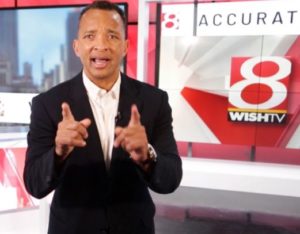
Another Petition to Deny the Nexstar-TEGNA merger was submitted Wednesday on behalf of DuJuan McCoy and his Circle City Broadcasting by BakerHostetler attorney Dan Kirkpatrick.
McCoy has a strong argument against the combination of TEGNA and Nexstar due to what would result in Indianapolis, where his company owns WISH-TV and WNDY-TV.
Nexstar controls No. 1-ranked FOX affiliate WXIN-TV and No. 3-ranked CBS affiliate WTTV-TV in Indianapolis, while TEGNA recently acquired from Dispatch the No. 2-ranked station in the market, NBC affiliate WTHR-TV.
“Allowing the combination of the top three stations in this market, representing three of
the Big 4 network affiliates, would together control more than 80% of the local television
advertising revenue and audience share in the market would decimate competition in the market,” McCoy asserts through his legal counsel. “This combination would also result in anticompetitive harm to local MVPDs, and consumers through the combined entity’s ability to demand inflated rates.”
Furthermore, McCoy and Circle City believe “the anticompetitive economic effects of this merger would almost certainly result in the silencing of any other local television news sources, resulting in significant harms to localism and the diversity of viewpoints and
outlets available to viewers in the market.” And, McCoy believes Nexstar and TEGNA have failed to demonstrate how the proposed merger serves the public interest.
December 31 filings also were seen by Newsmax, the Boca Raton, Fla.-based conservative-leaning cable news network owned by Christopher Ruddy that some argue lacks standing as it does not own broadcast media properties. That said, it offers to broadcast radio via syndication The Rob Carson Show, giving Newsmax a toe dip in over-the-air media. Ruddy and Newsmax don’t want the merger, nor does an individual named Jim Petzel.
Petzel, a retired pharmaceutical and fermentation biologist who worked at AbbVie and, prior to that, Abbott Laboratories, resides in Wentzville, Mo. He submitted his opposition as a RTF file, and expressed his opposition to the merger by stating:
By definition and regulation, local broadcast TV stations should support the needs and interests of the local communities which they serve. It is not logical to think that large, multi-billion dollar corporations have the ability, much less any significant level of interest, to have any meaningful level of engagement with hundreds of local communities and their varied needs and interests. Approving this merger would only exacerbate an existing problem. We need ownership of local TV stations that is closer to the community and understands their needs. Do not approve this merger that would lead to homogenization of local TV ownership and create a larger gulf between those who operate these TV stations and the people whom they are supposed to serve.
In St. Louis, Nexstar owns FOX affiliate KTVI-2 and The CW Network-aligned KPLR-11, through its merger with Tribune. TEGNA owns NBC affiliate KSDK-5.
Reply comments are being accepted by the Media Bureau through January 15.