

Gen Z: The Not-So-Silent Generation
Most of Gen Z — the generation born after 1995 — still aren’t old enough to buy alcohol, get married or hold their first job. But, they’re already flexing their consumer muscles. More than 70% of Gen Z consumers surveyed for the National Retail Federation (NRF)/IBM “Uniquely Gen Z” study released earlier this year say they influence family spending on everything from electronics and vacations to everyday household items.

Getting Back To Basics In The C-Suite
When there’s a lot going on, we often push the fundamentals aside and forget the basic skills that have been part of our success. Project management has been a central part of Michelle LaBrose's success from the beginning of her career. So, when the founder and "Chief Cheetah" of Cheetah Learning is faced with new challenges, she remembers one acronym: "IPEMC."

A Tribute To The FCC Chairman
He faces the most difficult challenge in the history of the Commission, as he travels the nation seeking support from the broadcasting community. He is FCC Chairman Ajit Pai, who Media Information Bureau featured columnist Ken Benner is beyond a doubt in support of, as he writes in this "tribute" to the Commission's leader.

Today’s USA: Aging, And More Diverse Than Ever
The nation's population has a distinctly older age profile than it did 16 years ago, according to new U.S. Census Bureau population estimates. New detailed estimates show the nation's median age — the age where half of the population is younger and the other half older — rose from 35.3 years on April 1, 2000, to 37.9 years on July 1, 2016.

‘Traditional Media Isn’t Going Away’ Despite Digital Buzz
There is no question that forms of online and digital media play an ever-more significant role in our lives. But what does that mean for traditional media platforms? According to Kantar Media’s DIMENSION report, traditional media isn’t going away.
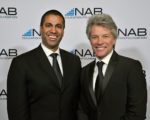
The FCC Chairman’s Good Faith Efforts
On Saturday, June 10, FCC Chairman Ajit Pai stopped by a Wyoming Broadcasters meeting and said, in part, “Last month, the FCC launched a comprehensive review of our media regulations. Our goal is clear: We want to figure out how to update our rules to match the realities of today’s media marketplace." In the view of Media Information Bureau columnist Ken Benner, this isn't the first time such FCC efforts have been attempted, only to be destroyed with the well-funded lobbying of Members of Congress.

Underlying Growth In Global Ad Spend Builds
Global ad spend will grow 4.2% to $559 billion in 2017, according to Zenith’s just released Advertising Expenditure Forecasts. That’s down from 4.8% growth in 2016. However, 2016 benefited from extra ad spend stimulated by four key catalysts, making the annual comparisons tougher for 2017.

Does The Radio Biz Need An Ad Agency Of Record?
Ten months ago, Adam R Jacobson joined the Radio + Television Business Report as Editor-in-Chief. It marked his return to day-to-day coverage of the radio industry after a 10-year hiatus, giving him a unique perspective on the positives and negatives of the business. Ten months in, he's still fired up about what radio can do ... and has positively failed at. In his view, it's time for the radio industry to hire an ad agency to do what should have been done a decade ago.

Are Wall Street Investors Pessimistic On TV Ad Growth?
There's a disconnect between the C-Suites of the nation's biggest television industry media companies and the numbers-crunchers ensconced in the most influential financial investment advisement houses on Wall Street. This is one of the biggest takeaways from this week's "Media IR Day" in New York hosted by RBC Capital Markets.

Where ‘Fake News’ Meshes With Ridiculous Research
According to a study conducted over a three-day period in May, more than half of U.S. pay television subscribers did not see having live sports channels as an important consideration. That's according to a study that seems dubious, biased and just one more example of how ridiculous "facts" are being masqueraded as research, our Editor-In-Chief notes in this Media Information Bureau report.

Are Consumers Ditching Brands Because Of Foul Content?
Nearly half of all consumers indicate they would rethink purchasing from brands or would boycott products if they encountered brand ads alongside digital content that offends them. That's the key takeaway from a new CMO Council study, aptly titled “How Brands Annoy Fans.” It's also more fuel to the fire of broadcast radio and TV C-Suiters in their fight to win back clients who were dazzled by digital but are now perhaps paying the price for trashing good 'ol traditional media.

Is Contextual Ad Buying An ROI Dud?
While evidence exists in support of the benefit of contextually relevant advertising in aggregate, its benefits on return on ad spend (ROAS) for digital campaigns and unaided ad recall for TV ads is uncertain. Those are the findings of original research presented today by the Advertising Research Foundation (ARF) at its 2017 Audience Measurement forum, “Modern Measurement: Media, Models & Methods.” Is that good news for broadcast media?

What To Say When Your Station Is Up For Sale
The period between the execution of a purchase agreement for the sale of a radio or TV station and the transaction's closing may be viewed by many as a broadcaster’s vision of purgatory. To ensure a smooth transition, the seller needs to know how—and when—to communicate the sale to employees, advertisers and vendors. In this column from Erwin Krasnow and Doug Ferber, the broadcast media C-Suite is guided through the intricate process of communicating the decision to sell the station. Be sure to jot down their suggestions on engaging in the most effective communication to staff, once that Form 314 is filed with the FCC.

Explaining The Media Plague
RBR+TVBR featured columnist Ken Benner returns to the fold with his views on what's truly killing media. It's not "fake news." It might just be, in his opinion, hefty fines and fees courtesy of the Federal government.

Mexico 2 USA 1: The Score On FM Chips In Smartphones
In late April, the Comisión Federal de Telecomunicaciones — Mexico's equivalent of the FCC — said sí to new regulations that require all smartphone manufacturers to enable the chip that allows every headset to receive FM radio signals. This makes the nation the first on planet Earth to require everyone from Samsung to Apple to bring local FM signals to one's mobile device. Will the USA be the last nation to take such action?