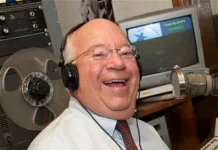
MIAMI — It had been WGBS-AM, an English-language Talk station owned by Jefferson-Pilot Communications that decided to sell it in order to acquire crosstown WNWS-AM and pair it with its Beautiful Music FM, WLYF. The buyer? Cuban-American businessman Amancio Suárez, who paid $3.5 million for the facility.
Under his leadership, and a few years later that of Heftel Broadcasting, the station now known as WAQI-AM “Radio Mambí” would become a Spanish-language spoken word force for the community still adamant on overthrowing Cuba’s communist government and Fidel Castro.
Now, forty years since its birth, Radio Mambí is coming to an end.

For some, the end of WAQI is a monumental, as the station for a generation of South Florida’s Cuban exile community served as the voice of freedom alongside WQBA-AM 1140 “La Cubanísima.”
That station was the main rival of Radio Mambí in its early years, and until the Winter 1988 Arbitron ratings for Miami WQBA dominated the marketplace, with WAQI the second-ranked talker for Spanish speakers. Still, WRHC “Cadena Azul” and WOCN-AM were now fading in the ratings race, and Suárez smelled opportunity. In August 1989, Heftel and Suárez’s Mambisa Broadcasting came together to form Hispanic Viva America Media Group — a move that made Heftel an investor in WAQI, aligning it with WQBA as a cousin.
The partnership proved highly successful. By Winter 1990, Radio Mambí had jumped ahead of La Cubanísima. In the Spring 1990 Arbitron ratings for Miami, WAQI scored a 6.5 share, easily making it the top Spanish-language radio station in the market. Similar success was seen in Birch ratings for Miami.
By Spring 1995, Suárez had enjoyed a decade of success with Radio Mambí, but was ready for a change. He sold his 51% controlling interest in WAQI to Heftel, which became the 100% owner of Radio Mambí and officially made it a sibling to La Cubanísima. Protestors emerged, bemoaning the lack of programming diversity that could result from co-ownership. The deal was finalized in September 1995, and by then WQBA-AM was fading in the ratings while Radio Mambí remained a force.
In 2002, another significant ownership change transpired, as Hispanic Broadcasting Corp. (the result of Heftel’s 1997 merger with Tichenor Media System) merged with Univision Communications, the Goliath of Spanish-language media in North America.
With Radio Mambí now under Univision ownership, challenges emerged for the spoken word stalwart. By Spring 2003, Arbitron data showed the 50,000-watt AM easily outdistancing its Spanish News/Talk competitors. However, its audience was clearly aging, as WAQI ranked No. 13 among Adults 35-64 and outside of the Top 20 in all younger demographics. It was also a Time Spent Listening-driven entity, with a whopping 13 hours and 15 minutes devoted to Radio Mambí by its loyal AARP card-carrying audience. By Spring 2008, Arbitron data showed WAQI now ranked No. 18 among Adults 35-64 but was carried by weekly time spent listening of 16 hours and 45 minutes — an incredible statistic that doubled the TSL of No. 1 ranked WHQT “Hot 105.”
By June 2022, the aging audience for nearly all of Univision Radio’s Spanish News/Talk properties led the company to sell a collection of 18 AM and FM properties to the newly formed Latino Media Network for $60 million. WAQI and WQBA-AM were included in the deal, which triggered a new firestorm in the Cuban-American community of Miami. The main issue? Soros Fund Management was the main financial backer of LMN, and the ties of Soros to liberal and Democratic Party causes infuriated hardline anti-Communist groups that feared each station’s voices would be neutered under new ownership.
Those concerns proved prophetic, even as the audience estimates showed that luring younger listeners to the iconic AM radio stations was all but futile. New competition had emerged in recent years, thanks to WSUA-AM “Caracol 1260” and Actualidad Media’s WURN-AM. In the just-released November 2025 Nielsen Audio ratings for Miami-Fort Lauderdale, WURN’s “Actualidad Radio” Spanish News/Talk programming easily won the ratings battle over Radio Mambí; WQBA had all but disappeared from the ratings in October 2025, after a July change from Sports-focused Spanish-language programming to a gold-based Spanish Adult Contemporary music presentation.
Yet, WAQI remained ahead of Salem Media Group’s WMYM-AM “La Poderosa,” even as longtime VP of Marketing, Promotions and Operations Monica Rabassa defected from Radio Mambí to join WMYM. WSUA had ownership and management issues of its own, while Audacy’s WAXY “Radio Libre” had ended its partnership with Americano Media and only one month ago brought local conservative-leaning talk hosts en español back to the mix.
FINANCIAL CHALLENGES KILL AN ICON
Despite the continued ratings strength in a consolidated environment for AM radio serving Spanish speakers in South Florida, the revenue challenges proved too heavy for Latino Media Network. The diminished incoming dollars are the key reason for the end on Friday evening (12/12) of Radio Mambí.
Speaking to FOX News, WAQI General Manager Mike Sena commented, “For four decades, Radio Mambí has been a gathering place for South Florida and those devoted to the ideal of a free Cuba. Often the market leader in Spanish-language talk, our microphones welcomed presidents, governors, mayors, dissidents and political prisoners, cultural icons, and community voices. We stood with Miami through hurricanes and history. Much like our beautiful city, Radio Mambi, its audience, and the media industry are rapidly evolving, presenting financial challenges for many in the marketplace.”
That’s why, at 11:59pm on December 12, WAQI-AM “will close our live news/talk chapter and will forge on to new frontiers. We are proud of this legacy and deeply grateful to the colleagues, listeners and advertisers who made it possible.”
For now, an automated music format will air on WAQI, along with Spanish-language coverage of the NBA’s Miami Heat and the Miami Marlins baseball club.