When it came time for Capitol Broadcasting, owner of two pioneering TV stations in the digital TV era, to launch ATSC 3.0 broadcasts on a low-power TV facility serving Wilmington, N.C., the company turned to the transmitter designer and manufacturer that’s part of the Elenos Group to light up NEXTGEN TV broadcasts in the coastal North Carolina city.
Broadcast Electronics is now celebrating, as the installation of ATSC 3.0 services at W30ER-LD in Wilmington marks another achievement for Capitol, which launched the first HD television broadcasts in the U.S. with the adoption of ATSC 1.0 technology at WRAL-5 in Raleigh and, more recently, brought the first full-time simulcast of ATSC 3.0-powered NEXTGEN TV to a market in the United States.
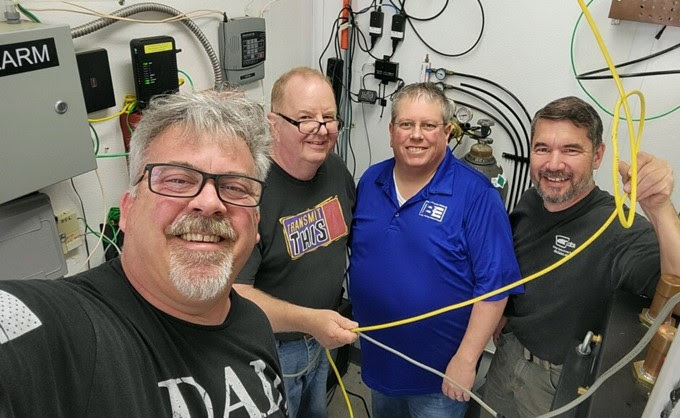
Broadcast Electronics engineer Jeff Clampitt worked closely with the WRAL engineering team — including Pete Sockett, Director of Engineering and Operations at Capitol Broadcasting — for planning, commissioning, and training to support the conversion of that facility to ATSC 3.0. The BE transmitter works seamlessly with WRAL’s ATSC 3.0 ecosystem, which includes Harmonic encoding and a Trivini scheduler.
Now, that success has been replicated in Wilmington.
“Capitol Broadcasting has been at the forefront of innovation of NextGen TV with ATSC 3.0 and extending this to our station in Wilmington was the next logical step. We currently carry WILM’s Local Programming as well as MeTV and H&I TV on the new ATSC 3.0 channel and intend to take full advantage of the NextGen capabilities including datacasting and mobility,” Sockett said. “The BE transmitter has been extremely reliable since turn on, and the transition to ATSC 3.0 was smooth and simple, we couldn’t be more pleased.”
All BE television transmitters feature Pro TV inside technology, providing a software-defined exciter. Support for IP content distribution with 4x IP Gb ports is standard.
BE President/COO Rich Redmond said he’s thankful to have “a very dedicated team of broadcast professionals at the Elenos Group who understand the challenges of operating radio and TV stations in a 24/7/365 environment, and stand ready to simplify and accelerate the transition to the NextGen TV technology.”