In 1973, as the Watergate scandal intensified and the Nixon Administration sought to downplay the matter, a conservative caucus of Republicans in the House of Representatives was formed. For 52 years, it has sought to serve as “a leading influencer on the Right.” Today, the Republican Study Committee exists “to bring like-minded House members together to promote a strong, principled legislative agenda that will limit government, strengthen our national defense, boost America’s economy, preserve traditional values and balance our budget.”
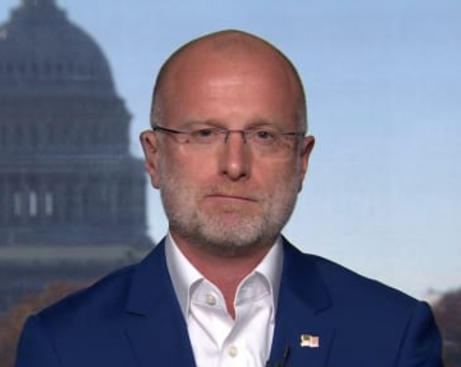
On Wednesday, a closed-door luncheon reportedly brought a topic of discussion to the RSC that’s been a chatter subject among conservatives in recent months — Audacy Inc. and its lead post-bankruptcy equity interest holder. The person leading the conversation at the RSC? Look no further than Brendan Carr.

According to Brietbart News, the right-leaning digital news organization directed by Alex Marlow, Carr was scheduled to brief the RSC, headed by Texas Rep. August Pfluger, about how the FCC under the leadership of Jessica Rosenworcel approved the post-bankruptcy ownership structure presented by audio content creator and distributor Audacy.
Discussions among top Republicans on Capitol Hill regarding the radio station owner’s emergence from debtor-in-possession status first gained steam in June 2024. With a Houston federal bankruptcy court having signaled its approval four months earlier, the Commission had yet to act. This left one important component of the company’s restructuring plan under review — saying yes to making a fund controlled by Democratic activist and investor George Soros Audacy’s largest shareholder, adding to its investment in Latino Media Network (LMN).
As the leading Republican Commissioner at the FCC, Carr noted that regulatory approval of the deal would not involve any “Soros shortcut.” Carr spoke up after House Member Chip Roy (R-Tex.) warned Rosenworcel in April 2024 not to fast track the Audacy Chapter 11 emergence effort.
Carr, who has not responded to RBR+TVBR‘s multiple requests for an interview, spoke at the time to the New York Post. At the time, Carr said plainly, “The FCC should not create a special Soros shortcut … When it comes to a broadcast station acquisition of this size and magnitude — hundreds of radio stations across more than 45 markets — the FCC needs to run its full and normal review process. The FCC should not be skipping steps or waiving required agency processes.”
This “shortcut” focused on an increase in Audacy’s foreign ownership concentration. However, as 2025 began Audacy told the Commission that the matter pertaining to non-U.S. ownership is moot. As such, any un-doing of its post-bankruptcy regulatory OK is unwarranted, the company argued.
In Audacy’s petition to the FCC originally filed by the company, the owner of such stations as KNX in Los Angeles, WXRT in Chicago and WFAN in New York asked the Commission to issue a declaratory ruling to facilitate a warrant exchange upon which non-U.S. individuals and entities were expected to hold more than 25% of the company’s equity and voting interests.
In the weeks following the filing of the petition on October 29, 2024, transfers of stock among existing Audacy stockholders resulted in a greater portion of the company’s equity interest being held by domestic entities and individuals. Specifically, a downward shift from 31.4% voting interest held by foreign entities to 24.5% of voting interest has transpired.
Still, the late September 2024 approval of Audacy’s plan to emerge from bankruptcy — a party-line 3-2 vote — saw Carr and fellow Republican vote-maker Nate Simington vociferously disapproving the deal over Soros’ ties to liberal and Democratic causes.
This all but finalized Audacy’s reorganization plan, which sees the company cancel some $1.6 billion of its existing debt. In exchange, it issued securities in a newly reorganized Audacy that emerged from debtor-in-possession status through a combination of Class A and Class B common stock and pre-paid special warrants carrying no voting rights, with limit exercise rights. Substantially all of Reorganized Audacy’s voting stock is held by new shareholders; David Field, son of company founder Joseph Field, would step down at the company first known as Entercom in late January 2025.
As a result of the exchange of debt for securities, Laurel Tree Opportunities Corporation was expected to hold a controlling, attributable interest in the reorganized company, holding 57% or greater of the Class A New Common Stock of the reorganized Audacy. The sole voting shareholder of Laurel Tree will be FPR Capital.
Fund for Policy Reform holds 100% of the voting and equity interest of that entity and is governed by a four-member board of trustees, all of whom are U.S. citizens: Leonard Banchon, Maryann Canfield, Alexander Soros, and Michael Vachon.
Today, Audacy is no longer publicly traded. Its top equity interest holder is Soros Fund Management. And while no one individual can suggest the fund, or billionaire liberal activist George Soros is in any way influencing the independently run news rooms of Audacy’s all-News radio stations, conservatives on Capitol Hill remain concerned.
BAY AREA BLEMISH
So does the FCC’s Chairman, who was expected to use the RSC annual luncheon speaking engagement to inform House Republicans about how the Commission earlier this month asked Audacy about reports that aired January 26 on KCBS Radio in San Francisco that revealed where undercover Immigration and Customs Enforcement (ICE) vehicles and agents would be doing sweeps for undocumented immigrants.
At issue is whether KCBS violated the “public interest” obligations set forth in holding a license by broadcasting the locale of the ICE agents. At the time, they were operating “in an area known for violent gang activity,” FOX News said, reporting on the matter. The specific make, color and model of a host of unmarked vehicles tied to the ICE operation were broadcast after sharing that the Santa Clara County Rapid Response Network first reported on the activity. While that may protect KCBS Radio on the grounds that it is sharing information with its audience that is already publicly available, the Carr Commission may not easily accept that argument.