Seven Questions with Gregg Skall

0

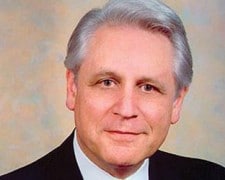
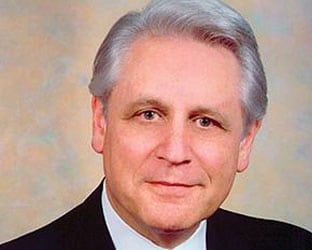
Gregg SkallVeteran Washington communications attorney Gregg Skall has seen it all, and his wealth of experience positions him well to project current events into the future. Here are his thoughts on station trading, retransmission consent, performance royalties and more, including his take on where we are today on these issues, and where we’ll be tomorrow.


Personal information
Current company: Womble Carlyle Sandridge & Rice, LLP
Position: Partner
Location: Washington, D.C.
Place of Birth: El Paso, Texas
Date of Birth: March 28, 1944
Spouse/Kid/Personal info: Married to Monte Skall, son Brandon Skall
College: Ohio State University: Major Speech and Theater; Law: University of Cincinnati Law School (served as research assistant to Dean Roscoe Barrow, Director of Network Broadcasting Study dubbed “The Barrow Report.”
Favorite band or artist: Still the Beatles
Favorite books: “The Source” by James Michener; “Presumed Innocent” by Scott Turow; “Team of Rivals” by Doris Goodwin
Sports Team Preferences: Washington Redskins,  Washington Nationals
Hobbies/Passions: My wife and her family have a 200 year old farm in the Virginia Mountains. Running that place, including getting the hay made, doing the deer hunt club agreements and generally managing a large farm does not leave much time for additional hobbies.
Causes/Charities: Lyme Disease: I serve as counsel to several organizations devoted to supporting and advocating for Lyme disease victims.

Questions:
1.How did you get started in the business?
Roscoe Barrow, namesake of the “Barrow Report” on Network Television was teaching at my law school. He was deeply involved in the issues surrounding network television program procurement practices and how they were affecting independent producers in the late 1950s and early 1960s. That hooked me on communications law and he introduced me to then FCC Chairman Rosel Hyde. That led to a position at the FCC in the Office of Opinions and Review. After a stint in private practice, I returned to Washington in the White House Office of Telecommunications Policy during the Ford Administration, later serving as the first Chief Counsel to the National Telecommunications & Information Administration under Assistant Secretary of Commerce Henry Geller.

2. Television station trading has been hot this year. Where do you see it going in 2014?
The television industry is in for more consolidation. The proliferation of new, internet based media and the changing economics of the business have dramatically changed the media marketplace. In a simpler time, broadcasting was a nearly perfect two-sided economic model, providing news, entertainment and public service programming to viewers and drawing support from advertisers seeking its audience. It’s no secret that today, new choices are fractionalizing both sides of that market. To compete and remain relevant, television will have to consolidate and concentrate resources, and that trend has clearly begun. Local broadcasters remain the most relevant and important source of local content for communities. The challenge will be to use the benefits of that consolidation for public service and locally relevant content. The challenge for government policy makers and regulators will be to find politically acceptable ways to achieve important public policy while adapting regulation to the modern climate in which business must operate. Alfred Kahn, author of The Economics of Regulation: Principles and Institutions taught that once regulation is set, it generally lags behind changes in the economy and must catch up. The challenge is to regulate TV in a constructive way before it follows the road newspapers are on.

3. Radio trading has not been as hot. What do you think the prospects are on that side of the trading coin?
As we all know, radio has already experienced several rounds of station trading and enormous consolidation. Financed first by the public equities market and then enormous debt, consolidated radio has struggled to maintain its commitment to local service while trying to meet the financial expectations of the public securities market. I see signs that we’re coming to the end of that road. Fortunately, we still have very good, experienced radio broadcasters who would love to have many of those markets back in the hands of professionals dedicated to local service and community involvement. Where those fundamentals are still at work, we see radio thriving, even in the face of new technology. Generally, we are not quite at the point where sellers are willing to accept multiples that make sense to experienced buyers, but some of that is beginning to happen and we’re seeing deals announced with increasing frequency. I believe we will see a point where more of the large groups conclude they would be better served with more targeted business plans, and when that happens, there are plenty of experienced broadcasters who can sensibly raise the financing necessary to buy those stations at reasonable multiples. So, I see the good prospects for a hot but intelligent station trading market in a year or two.

4. SNL Kagan thinks TV retransmission consent rates still have room to grow, but some MVPDs are screaming bloody murder and calling for government intervention. Where do you think this issue is headed, and in particular, will Congress or the FCC jump in?
That is really crystal ball gazing, but I’ll take a shot at it. No, I do not think that Congress will jump in to dictate the marketplace and distort contract negotiations between parties who have other alternatives if they cannot agree.
First, remember, in the U.S., we still believe in marketplace solutions and TV retransmission consent negotiations are not in so distorted a market that they require government intervention. Local TV provides important content to local viewers and remains incredibly important to cable. It is still one of Cable’s best bargains on a per subscriber basis. Also, the local affiliate network relationship is still extremely important to the networks. While that may change in the future, it has not as yet. If it does, that will be a market response to changing technological alternatives and we won’t need government intervention to realign the negotiating table.
Keep in mind that the perfect two-sided advertiser supported broadcasting environment is no more. Today, program delivery is an evolving dynamic that includes over-the-air television, cable and satellite, internet streaming, television networks and the Hollywood creative community. Where networks once paid affiliates for their audiences, network compensation is reversed and affiliates require new sources of revenue to pay their networks. Program development and production is increasingly more expensive, making compelling programming more costly, paid in-part from affiliate retransmission consent payments. In short, television is now a multi-sided marketplace that pays for programming for its local audience from combined sources of revenue, including a form of pay-TV through subscriber funded retransmission consent.
Another emerging issue for retrans relates to new media streaming rights. Cable wants streaming rights in the retransmission package, which sets up a direct conflict with the goals of local television and the networks to address that market themselves. Further complicating the matter is emergence of new distribution networks, such as Apple and Intel, seeking to make their own deals. That’s a real conundrum! So, for government to get involved, were it to do so properly and not superficially, it would have to address all these facets of a very complicated, evolving multiple-player marketplace. I think Congress and the FCC would rather let the market sort itself out, which it has done so far.

5. Radio broadcasters are concerned about Mel Watt’s Free Market Royalty Act. Meanwhile Clear Channel and some others are cutting their own revenue-sharing deals with labels. Where do you see this issue heading?
The trend is clear that “big” radio is making its deal with content owners. While I think a lot of radio broadcasters are looking for non-music alternatives, and some good ones are emerging, music and radio are and will continue to be joined at the hip. Streaming will continue its upward trend of importance to radio listeners and private deals with the labels are currently the only reasonable way to stream without breaking the bank. As I hear it, no one paying Sound Exchange rates can make any money, or even break even. The recording industry end game remains a mystery, I think, even to them. I am hopeful that NextRadio will change the calculus on how mobile users will listen to radio. Live and local are still the most important components in radio, and if NextRadio catches on, that may be the solution. I have heard that Sprint is thrilled with consumer reaction. Live and local survived the 45 and CDs, and it can win now as well.
Another solution may be the BMI model. BMI was created as a response of the radio industry to perceived unreasonable demands of the other royalty collection organization. We all know there are hundreds of struggling and very good local musicians who cannot get record label deals and would not make much money from them even if they did. Perhaps the radio industry will form its own rights organization for performers, as it did for authors and composers with BMI. That is even easier today; with sales of singles made by downloading files, the record company retail distribution network is no longer a necessity for a successful artist.
Bottom line: I think that NAB has convinced enough legislators that this is a fight they don’t belong in and the market will sort things out. The symbiotic relationship supporting the current system is demonstrably real and should not be changed.

6. What do you think the priorities will be for incoming FCC Chair Tom Wheeler, and what would you like to see him accomplish?
Clearly he has to get the obvious ones done: For broadcasting, those include a successful television voluntary auction, followed by a spectrum repacking plan that actually works. Repacking may be the hardest part. Then, developing a spectrum plan for mobile that actually works, including working out an acceptable deal with government spectrum user, particularly DoD, that provides an acceptable swap of frequency bands.
On the mobile carrier side, the Commission must address intercarrier compensation for rural carriers so that they are compensated in a way that provides comparable mobile services to rural America. I have known Tom since my government days at OTP when he was at NCTA. Tom is thoughtful, careful, thorough and fair. He understands business and has a clear vision of the public interest. He is also a student of history and learns from it. I believe we can count on Tom to be fair to broadcasting and look for practical and smart solutions to these problems.

7. Is there any question you’d like to answer that we forgot to ask?
Yes, What about AM? I am a fan of AM revitalization, leading to a flash-cut AM transition to an all-digital AM service. The FCC will have to keep focused on the AM revitalization program and move it forward while studying the issues to be tackled for an AM All Digital transition. Also, once the LPFM window has closed and we can assess the FM translator environment, the FCC should move forward with the Tell City waiver to allow more flexibility for AMs, particularly Class C and nighttime restricted stations, to acquire FM translators.