Senators double down on ending sports blackouts

0

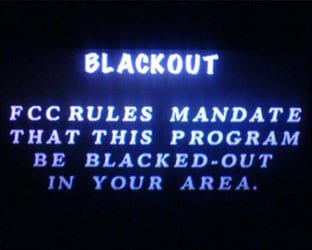
FCC BlackoutRichard Blumenthal (D-CT) and John McCain (R-AZ) say the FCC’s willingness to take aim at sports blackouts is only a start, and are introducing legislation – The FANS Act of 2013 – that will add teeth to the regulatory framework.


FANS stands for Furthering Access and Networks for Sports. Brian Higgins (D-NY) introduced companion legislation in the House of Representatives.

The senators believe that sports leagues receive many public benefits, and in exchange, they should meet “basic obligations” to the fans, and that includes not blacking out local games on TV, cable and internet outlets.

Blumenthal said, “Special breaks should be stopped for professional sports leagues that impose anti-consumer blackout policies leaving their fans in the dark. Leagues that enjoy antitrust exemptions and billions of dollars in subsidies and other benefits should give their fans fair access to their favorite teams on TV. This legislation would protect fans who now get the short end of the stick from leagues that treat the public with contempt while continuing to enjoy public benefits. Fans deserve to be put first – or at least treated fairly.”

McCain said, “I am proud to join Senator Blumenthal to introduce the FANS Act, common-sense legislation that addresses archaic blackout policies and regulations that hurt sports fans around the country. While the FCC’S announcement last week that it would consider changes to the sports blackout rule is encouraging – and something we’ve urged in the past – legislation is still needed to improve this regulatory framework. The FANS Act would return the focus to the fans, consumers, and taxpayers who make these leagues as successful as they are.”

According to the senators, the bill will:

Eliminate the Federal Communications Commission’s sports blackout rules.
The bill would remove original language in the SBA that allows leagues like the NFL to require local broadcasters to blackout home games when local stadiums fail to sell out most or all tickets 72 hours in advance of a game. While this policy may have helped increase ticket sales years ago, there is no longer any evidence that it helps to drive fans to stadiums. Rather, current data indicates that stadium sales are much more closely correlated to the size of the stadium, the population of metropolitan area, and the cost of the ticket.

Condition antitrust exemption to prohibiting sports blackouts during contract disputes between broadcasters and cable/satellite distributors.
For leagues to enjoy the antitrust exemptions of the SBA, the bill would require leagues to prohibit any video licensee from deliberately removing sports games from a cable or satellite distributor during distribution contract negotiations. This provision ensures that games are not blacked out as a result of contractual disputes between broadcasters and cable or satellite companies.

Condition antitrust exemption to making home games available on the Internet.
For leagues to enjoy the antitrust exemptions of the SBA, the bill would require that a league make a game available, for a fee or otherwise, over the Internet when a game is not available via television through broadcasters or pay-TV. Fans should not have to drive to a nearby town to watch their home team play.

Apply antitrust laws to Major League Baseball
As a result of an historical accident stemming from a Supreme Court ruling in 1922, MLB is the only league to enjoy a broad exemption from the anti-trust laws. The bill would follow the advice of the Court and expressly bring MLB under the Clayton Antitrust Act for the purposes of this legislation only.

RBR-TVBR observation: All we can say is wow! Really? If we’re reading this correctly, a retransmission impasse leading to a disruption of service will go into recess long enough for a football game to be broadcast, after which the blackout may resume.

And the requirement puts the onus for not blacking out a sporting event on the teams, not the broadcasters or MVPDs. Maybe that will be as simple as inserting a line into a contract, but somehow we doubt it.

And talk about your slippery slopes! Wouldn’t it be a bit more important to have a blackout exemption for news and information programming?

In our humble opinion, we can’t imagine very many politicians in Washington being in favor of continuing to black out popular programming that the people who vote for them very much want to watch. With both Congress and the FCC taking aim at blackouts, we expect they will likely be a thing of the past at some point in the relatively near future.

But that retransmission consent impasse exemption is just plain nuts – we sincerely hope that is scrubbed out before this legislation is deemed Oval Office-ready.