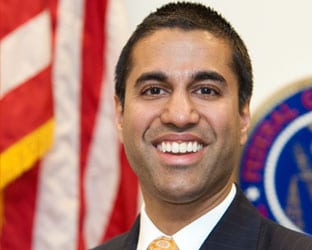
FCC Commissioner Ajit Pai did more than attack the $3B AWS-3 bidding that went to ostensibly small organizations that were in fact 85% owned by DISH Network. He named the real small companies that lost out because of it.
Pai was able to name five bidders that lost out to the two companies.

Repeating an earlier statement, Pai said, “Allowing DISH, which has annual revenues of approximately $14 billion and a market capitalization of over $34 billion, to obtain billions of dollars in taxpayer subsidies would make a mockery of the small business program.”
He added, “The evidence of abuse continues to mount. DISH recently disclosed that it made approximately $8.504 billion in loans and $1.274 billion in equity contributions to those two companies—hardly a sign that they were “very small businesses” that lacked access to deep pockets.1 Moreover, we now know that DISH’s abuse of the program had an enormous impact on actual small businesses serving actual customers.”
From Pai, here are the five examples:
* Glenwood Telephone Membership Corp. provides communications services to rural parts of Nebraska. Glenwood was the provisionally winning bidder for two licenses that would have allowed it to serve parts of Nebraska, but it was outbid by a DISH entity claiming a taxpayer subsidy. As a result, it did not win a single license in the auction. Glenwood has gross annual revenues of just over $13 million, which are 1,052 times less than DISH’s.
* Rainbow Telecommunications Association, Inc. provides communications services to rural parts of Kansas. Rainbow was the provisionally winning bidder for one license that would have allowed it to serve parts of Kansas, but it was outbid by a DISH entity claiming a taxpayer subsidy. As a result, it did not win a single license in the auction. Rainbow has gross annual revenues under $14 million, which are 1,025 times less than DISH’s.
* Pioneer Telephone Cooperative, Inc. provides communications services in rural parts of Oklahoma. Although Pioneer won three licenses in Oklahoma and Kansas, it was outbid by a DISH entity claiming a taxpayer subsidy for another license that it could have used to serve other parts of Oklahoma. Pioneer has gross annual revenues under $15 million, which are 933 times less than DISH’s.
* Geneseo Communications Services, Inc. provides communications services to rural parts of Illinois. Although Geneseo won two licenses in Illinois, it was outbid by DISH entities claiming taxpayer subsidies for four other licenses that Geneseo could have used to serve different parts of Illinois. Geneseo has annual gross revenues under $16 million, which are 894 times less than DISH’s.
* VTel Wireless, Inc. provides communications services to consumers in rural parts of Vermont. VTel was the provisionally winning bidder for one license that would have allowed it to serve parts of Vermont, but it was outbid by a DISH entity claiming a taxpayer subsidy. As a result, it did not win a single license in the auction. VTel has gross annual revenues under $27 million, which are 515 times less than DISH’s.
Pai noted that this situation has caused a bipartisan uproar on Capitol Hill.
He noted the call from CWA and NAACP to “reject DISH’s attempt to: claim discounts. Americans for Tax Reform also called for action since DISH “flouted the FCC’s DE rules.”
Pai concluded, “Right now, the DISH applications are pending before the FCC. If it turns out that the DISH entities did not comply with the FCC’s rules, the agency must, at a minimum, deny them any small business discounts. And whether or not they violated our rules, the FCC must take immediate action to ensure that this abuse never happens again.”