When Anna M. Gómez was confirmed as an FCC Commissioner just over two years ago, the Democratic-aligned vote maker on the Federal Communications Commission says she “could not have anticipated the pace or the magnitude of the challenges we now face.”
While Gómez has had her priorities, including bipartisan goals that should unite the FCC, the past 10 months has see the Commission take “a markedly different approach” — one she’s highly critical of. This includes potential loosening of U.S. media ownership rules.
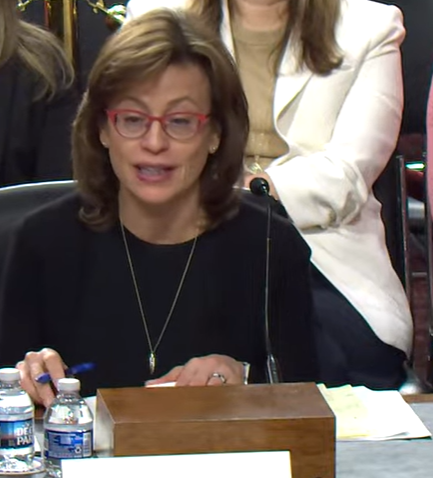
Gómez reiterated her calls for a FCC free of outside influence, in particular from the executive branch, in her opening remarks at the first Senate Commerce Committee FCC oversight hearing in five years.
She noted that as a Commissioner, her attention has been centered on expanding “reliable and affordable” highspeed connectivity to every community; maintaining U.S. leadership in wireless innovation through “smart spectrum policy”; and, for broadcast media, “preserving localism and a vibrant media ecosystem.”
For Gómez, “They are the areas where I had hoped we would be spending our time and energy. Instead, over the past ten months, the Commission has taken a markedly different approach, one that has undermined its reputation as a stable, independent, and expert-driven regulatory body. Nowhere is that departure more concerning than in its actions to intimidate government critics, pressure media companies, and challenge the boundaries of the First Amendment.”
She noted her “First Amendment Tour” launched earlier this year, offering her the opportunity to criticize the Carr Commission and the Trump White House across the U.S. Gómez also thanked Committee Chairman Ted Cruz (R-Texas) for expressing his “defense of the First Amendment” in disagreeing with FCC Chairman Brendan Carr on how to police the nation’s airwaves “in the public interest” when the Jimmy Kimmel Live! controversy erupted in mid-September.
“One thing I learned during these conversations is that when the FCC loses its focus and strays from its core mission, consumers pay the price,” Gómez said.
With that, Gómez made it clear that any media ownership rule changes the FCC makes will likely end up in 2-1 vote, with the lone Democrat in dissent.
“The FCC has advanced plans that would allow billion-dollar media companies to grow even larger, likely at the expense of local news and community-driven reporting,” she said. “This push comes at a time when major media companies are already consolidating across broadcasting, streaming, and content production, raising serious questions about market power, editorial independence, and the future of community-based journalism.”
Offering commentary in opposition to the NAB, Chairman Carr and even Newsmax CEO Chris Ruddy, Gómez opined, “The national television ownership cap is established by law and reflects Congress’s judgment about the importance of competition, localism, and viewpoint diversity. Efforts by this FCC to reinterpret or effectively sidestep that statutory limit present significant issues concerning the scope of the FCC’s authority and the consequences for those it regulates and serves.”
Should the FCC vote to change the Congressionally mandated local TV national ownership reach cap of 39%, a court challenge thanks to the Loper Bright and Jarkesy Supreme Court decisions is inevitable, D.C. insiders have told RBR+TVBR in recent weeks.
For Gómez, “Whether in broadcasting or streaming, media consolidation should not erode the independence of the press or diminish the voices of local communities. Taken together, these actions underscore the need for the FCC to refocus on the principles that matter in the real world and the impacts its decisions have beyond Washington.”