Gary Shapiro’s Latest Broadcast Media Punch: Underused Spectrum

0

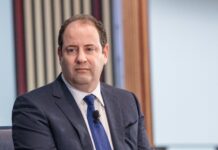
WASHINGTON, D.C. — When it comes to antagonists of broadcast media, there is perhaps no individual who has risen to fill that role than the head of the Consumer Technology Association. From fighting the AM Radio for Every Vehicle Act through fierce lobbying to preventing broadcast TV from modernizing the FCC’s ownership rules, CTA President Gary Shapiro has engaged in activities that led some in broadcast media to outright boycott the 2026 CES conference in Las Vegas last month.


Now, Shapiro’s group is gaining attention for a letter sent Monday to the Senate Commerce Committee’s Chairman and Ranking Member ahead of yesterday’s hearing on broadcast TV ownership rules that came to light only after the two-hour Capitol Hill affair.


 

With Senators now open to examine broadcaster consolidation, the Consumer Technology Association urged the Committee led by Sen. Ted Cruz (R-Tex.) and minority leader Maria Cantwell (D-Wash.) “to approach any relaxation of broadcast ownership limits with significant caution.”

Why? “Broadcast television uses exclusive access to publicly owned spectrum, a finite resource the federal government must manage in the public interest,” Shapiro wrote. “Changes to ownership rules that further consolidate control of local broadcast licenses should not occur without a corresponding reassessment of whether broadcast spectrum is being used efficiently and in a manner that best serves American consumers and the broader economy.

What does changing the 39% national television ownership reach cap have anything to do with spectrum use? Shapiro’s logic is tied to over-the-air television consumption. While it has indisputably increased in recent years thanks to “cord-cutting,” the CTA head points to a study from the NAB released February 2 in which it states “just 9% of consumers surveyed say they use an antenna to access live television, including local broadcast TV stations.”

There could be many reasons for this — and key CTA members could very well be the culprits. During Super Bowl LX, attempts to watch the game on WRC-4 in Washington, D.C., via a smart television were all but futile, requiring a paid access plan via Peacock. Two days later, on a Samsung smart TV, a second attempt was also a near-impossibility, until finding the buttons that led to a channel scan — albeit minus the all-important digital broadcast TV antenna, even while in Penn Quarter just a couple of miles from the WRC transmitter.

Pointing to CTA’s own study that only 8% of video content consumers rely on a TV antenna “as the only source of video content” — a different statistic that cannot truly be compared to the NAB study’s question — Shapiro insists “these findings confirm the reality of how most consumers choose to access local TV stations, the questions posed in NAB’s recent survey on public support for relaxing ownership caps are so contrived, they stand in stark contrast to other reputable studies which show the opposite: consumers want to preserve the localism that comes from local TV stations.”

That explains why the CTA asks the Senate Commerce Committee “to consider the obvious: local broadcast TV spectrum remains increasingly underused in many markets, as consumer viewing habits continue to migrate toward streaming, mobile, and on-demand platforms. Yet, demand for licensed and unlicensed spectrum to support next-generation wireless services, innovation, and economic growth is growing. Allowing greater consolidation of broadcast ownership without addressing this imbalance risks entrenching inefficient spectrum use while foreclosing opportunities for higher-value applications.”

But, will Shapiro’s warnings be heeded? During the two-hour session that saw Newsmax CEO Christopher Ruddy poignantly paint a strong opposition portrait to changing the FCC’s local TV ownership rules, not a word was spoken regarding reallocation of spectrum. There was also no words decrying the use of a “mandate” from the federal government, something the CTA does not want.

“The NAB’s push for loosened ownership restrictions and new mandates requiring the inclusion of a NEXTGEN TV tuner in all televisions and a mandate of AM radios in cars reveals a misuse of valuable public spectrum and a reliance on Washington largesse at the expense of consumers,” Shapiro claims. “If the spectrum broadcasters are using were being put to its best use in 2026, broadcasters would not be seeking government action to force consumers to buy receivers they do not want.”

With Ruddy’s legal counsel waiting to sue the FCC should it move forward with a TV ownership cap melt, the CTA could follow suit with a court fight. “Ownership rules were created to promote localism, competition, and diversity,” Shapiro concludes. “Relaxing those rules without securing tangible public interest benefits — particularly improved spectrum efficiency — risks hurting those objectives while delivering limited consumer benefit.”