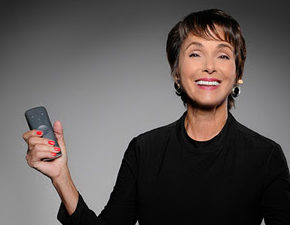
Eye contact is everything in public speaking in person and online. “It’s one of the characteristics of effective public speakers,” says PR veteran Rosemary Ravinal, now a “Zoom expert.” She says, “Creating positive and meaningful eye contact is important to engage your audience and help them remember more of what you said.”

Eye contact is everything in public speaking. It will make you appear more authoritative and trustworthy. It is one of the most important non-verbal communication skills that you can master. This essential public speaking skill is on par on the power scale with the smile and is indispensable for both in-person and virtual presentations, though the latter is more challenging.
Proper eye contact means holding a gaze as you speak either to a live audience or via a webcam. It’s only when you see eye-to-eye with your audience that meaningful communication can be established. And that can mean success or failure when you do a presentation, a speech, a panel, a workshop, or lead a discussion.
Nine pro tips about eye contact when speaking
While it’s easier said than done, eye contact can be your chief weapon for boosting engagement IRL or online. Let’s look at what positive eye contact is and ways to put it into practice the next time you speak or present.
Here are nine things you should know:
- The average gaze length is three seconds. To build rapport, your eyes should connect with a cross-section of your audience about 50 to 70 percent of the time.
- The length of time you should gaze can vary according to cultural norms, like when addressing executives from other countries and backgrounds.
- Focusing your eyes helps you concentrate and lessen any performance anxiety you may feel.
- With a steady gaze, people with heads bowed looking at their phones may notice your connection with the others and stop scrolling.
- When your audience sees your eyes scanning their faces, they feel motivated to signal to you how they feel about what you’re saying–with nods and smiles.
- With good eye contact, your talk becomes less monologue and more dialogue, with your audience communicating back through their gestures and facial expressions. Your speech or presentation becomes a conversation.
- When you look someone in the eye for three seconds, you will naturally slow down your speech. You might even pause. This will make you sound more in control, confident and powerful.
- When you gaze at people, they will pay more attention and remember more of what you said.
- The same is true for video calls. Research shows that online participants retain more of the content shared when there is more virtual eye contact involved. A direct gaze at the camera by the meeting leader for 30% of the video conference significantly increases what they remember.
Creating positive and meaningful eye contact is an important hallmark of a great public speaker on any stage and with audiences of all sizes. With practice, you’ll master this important skill and turn it into a behavior that will serve you well in all areas of your life.
Rosemary Ravinal brings more than three decades of accomplishments as a communications expert in the U.S. mainstream, Hispanic and Latin American markets.
She can be contacted by clicking here.