No-contract, pay-as-you-go services have long been popular options in the wireless telecommunications arena, with MetroPCS, Cricket Wireless, Virgin Mobile, Straight Talk and Boost Mobile each fighting for market share among value-minded consumers.
The options have been additive, rather than competitive, for major wireless carriers Sprint, AT&T, Verizon, T-Mobile and U.S. Cellular.
Now, Comcast is set to bring the pay-as-you-go option to home internet and cable services.

The launch of Xfinity Prepaid Services could very well be the remedy for cord-cutting trends that put into question the long-term viability of MSOs, giving fans of Apple TV and Roku an option on a platform that’s built on legacy and a plethora of consumer options.
By the end of 2016, consumers in Florida, Georgia, Illinois, Indiana and Michigan will be able to sign up for TV or Internet services and “recharge” their subscription any time they would like.
The duration of these pay-as-you-go services range from a week to a month. No contracts or credit checks will be required.
Comcast expects pay-as-you-go services to be available in all of its U.S. markets by the end of 2017.
“We want to create an easy, pay-as-you-go option for people who want more flexibility and predictability when buying our services,” said Marcien Jenckes, EVP of Consumer Services at Comcast Cable.
Comcast is not only taking a cue from the no-contract wireless industry, but is tapping into it to boost sales of its prepaid services. The communications giant inked a deal with Sprint-owned Boost Mobile that will see Xfinity Prepaid offered at Boost Mobile locations in the states getting services later this year and all 4,400 Boost Mobile locations within Comcast’s service area by the end of 2017.
“Our partnership with Boost Mobile will give Xfinity Prepaid customers even more places where they can conveniently sign-up and pay-as-they-go,” Jenckes said.
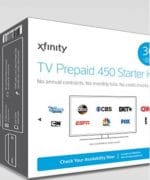
Pricing starts at $80 for a one-time TV Prepaid 200 starter kit, and $120 for a one-time TV Prepaid 450 starter kit.
For TV Prepaid 200 consumers, a 7-day “refill” costs $15; a month costs $45.
For TV Prepaid 450 consumers, a week-long refill is $30; a 30-day refill is $90.
Comcast believes Xfinity Prepaid will be a hit with individuals who are “unbanked”—terminology used by multicultural analysts to describe the nearly 10 million U.S. households that do not have a savings or checking account. For years, the unbanked was largely comprised of first-generation Hispanic immigrants.
Tapping into this segment of Latino consumers, Comcast is offering “TV Prepaid Latino” as a 60+ channel offering that can be added to either a TV Prepaid 200 or TV Prepaid 450 package.
Xfinity Prepaid may also prove appealing to younger consumers who have clipped their home’s cable wires and replaced them with services such as Hulu, Netflix, and Amazon Prime. However, Xfinity Prepaid’s start-up costs and fee structure may deter individuals who have scorned cable companies by selecting OTT services with $10 monthly agreements.
For Comcast, it’s betting on scale, and the wide variety of options it has rolled out in recent years.
Comcast has been particularly savvy in providing its customers access to services offered in the home pretty much everywhere. Xfinity WiFi hot-spots, which give subscribers the opportunity to access encrypted wireless internet just as they would when in the home, have grown exponentially in areas where Comcast offers service.
At the same time, the Xfinity Go App gives cable subscribers access to a wide variety of basic and premium-tier cable networks, regardless of where they may be. RBR + TVBR used the App to watch live television for Eastern Time Zone viewers while in Hawaii, where Oceanic Time Warner has a monopoly for wired communications services.
Thus, Comcast could build out Xfinity WiFi in areas where they aren’t wired, and then offer pay-as-you-go services, should it wish to expand even further than its current wired-market areas.
Such a scenario won’t be seen in the immediate future, as traditional equipment based in a home where Comcast provides wired services is necessary for Xfinity Prepaid activation.
Interested Xfinity Prepaid consumers pay a one-time set-up fee that includes necessary equipment such as a WiFi modem, Digital Television Adapter (DTA) or remote control. In return, they’ll get 30 days of service at no charge.
As is the case with its wired bundles, Comcast will also provide a discount for people who sign-up for both prepaid TV and prepaid Internet service at the same time.
Whether other MSOs take Comcast’s lead is still to be seen. Given the rapid shifts in viewing habits, how video programming is delivered and more scrutiny given to at-home expenses, prepaid options may be just what’s needed to stem the flow of customers who have been scurrying away from the traditional cable service provider.