Coalition of Attorneys General Seek To Block Nexstar/TEGNA Deal

0

Regulatory approval from the FCC is highly anticipated, but has yet to happen. The Justice Department is likely to give its affirmative nod as well. Nexstar Media Group‘s rule-smashing, industry-reshaping merger plan with TEGNA appears to be on track for a closing date in July. Yet, the specter of legal action designed to throw a speedbump — or a banana in the tailpipe — of the transaction wagon had arisen as a likely possibility.


Thank the Attorneys General of eight states for bringing a potential block of the deal to life. DirecTV, which has been fighting the merger, is also involved in the political theater.


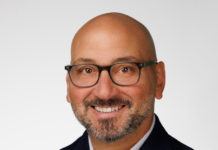
Taking the lead on the AGs legal action is California Attorney General Rob Bonta, who moved to file a lawsuit to thwart the pending $6.2 billion acquisition of TEGNA by Nexstar.

If allowed to proceed, Bonta believes the deal would nots simply create the largest broadcast station group in the United States, but would put more broadcast programming in the hands of fewer people, “removing control from the communities they report to, cutting local jobs, and significantly impacting the delivery of news and other media content to Americans nationwide.”

Interestingly, DirecTV Director of Communications for Content & External Affairs Thomas Tryer shared news of the Attorneys General’s action with the media, suggesting that the direct broadcast satellite service provider is in some way driving the fight, having been unable to persuade Washington leaders to act on its behalf by saying no to the deal.

And Bonta takes an approach in his opposition that seems right out of the script of pro-MVPD organizations repeatedly shared when a retransmission consent impasse — such as the one currently between Gray Media and Dish — transpires.

“Due to the considerable increase in consolidation, the deal is also expected to raise prices and harm consumers,” Bonta says, assuming that Nexstar will demand higher carriage fees and, in turn, MVPDs including Charter Communications’ Spectrum could balk. With the February 27 approval of Charter’s merger with COX Communications, Spectrum becomes the dominant MVPD in the Golden State. While this presents perhaps an even bigger case for a state Attorney General when it comes to antitrust matters, DirecTV’s influence has directed the eight Attorneys General to move ahead with a plan to terminate a deal the NAB and many industry leaders believe is integral to the ultimate long-term survival of broadcast television.

Don’t tell that to Bonta, who says that in California, a combined Nexstar-TEGNA would own “half” of the “Big Four” network affiliates in the Sacramento and San Diego markets, respectively. Indeed, concerns have been raised in other locales including Denver and Indianapolis, respectively, that Nexstar would gain too big of a voice when it came to “Big Four” ownership.

That said, an Eighth Circuit U.S. Appeals Court negated the “Top Four” rule and the recent granting of a waiver to DuJuan McCoy’s Circle City Broadcasting allowing it to own and operate three full-power stations in Indianapolis signals that Bonta’s arguments may carry little weight in front of the DOJ.

Furthermore, Bonta mentions reports in the mainstream media that have put outsized attention on a reduction-in-force initiative at Nexstar newsrooms at KTLA-TV in Los Angeles, WGN-TV in Chicago and Nexstar-controlled but Mission Broadcasting-owned WPIX-TV in New York. Nexstar is one of several broadcast media companies that have undertaken newsroom reorganizations in recent months, with Allen Media Group and The E.W. Scripps Co. among Nexstar’s peers to do so — minus the reactionary social media response.

With Bonta harping on the potential “irreparable harm to local news and consumers who rely on their reporting as a critical source of information,” the California AG goes on to say that a combined Nexstar-TEGNA creates “a behemoth covering 80% of U.S. television households. This merger is illegal, plain and simple, running contrary to federal antitrust laws that protect consumers.”

While it is not permissible under current regulatory policy as codified into law by Congress in 2004, waivers are widely expected ahead of likely deregulation; a February Senate Commerce Committee hearing convened by Sen. Ted Cruz (R-Texas) specifically to examine the 39% national TV ownership reach cap set the wheels in motion for a potential Congressional bill, should the FCC’s moves end up in court.

A CLAYTON ACT VIOLATION?

The lawsuit from the eight Attorneys General was filed on Thursday (3/19) in the U.S. District Court for the Eastern District of California. Specifically, it alleges that the merger clearly violates Section 7 of the Clayton Act, which holds that mergers that substantially lessen competition or tend to create a monopoly are illegal.

Bonta is joined by the attorneys general of New York, Colorado, Illinois, Oregon, North Carolina, Connecticut, and Virginia.

And, Bonta singles out the Trump Administration — which has voiced its support for the deal via a presidential post on Truth Social — by suggesting the White House “is more concerned with protecting corporate interests than doing its job to defend the public and uphold consumer protection and antitrust laws that help make life affordable for American families.”

Bonta concludes, “Antitrust enforcement is an essential component of a healthy economy. Competitive marketplaces established through antitrust vigilance help consumers by ensuring fair prices for goods and services, an array of products to choose from, quality goods and services, and the steady introduction of innovative new products. As part of the Attorney General’s commitment to enforce antitrust laws, the California Department of Justice has launched an Antitrust Complaint Form for people to report anticompetitive conduct that potentially violates the antitrust laws.”

FCC’s GOMEZ CHIMES IN WITH AFFIRMATIVE NOD

Anna Gómez

The FCC’s lone Democrat to serve as a Commissioner, Anna M. Gómez, went to social media platform X to express her support for the eight state Attorneys General who are suing to block the “unlawful” Nexstar-TEGNA merger.

In doing so, Gomez reiterated her call for this merger “to not be approved under bureaucratic cover but through an open and transparent process that involves a vote of the full Commission.”

Gómez made those comments during a press conference at the tail end of the FCC’s February Open Meeting.

On X, she wrote:

You do not have permission to view the comments.

Leave a Reply

Your email address will not be published. Required fields are marked *