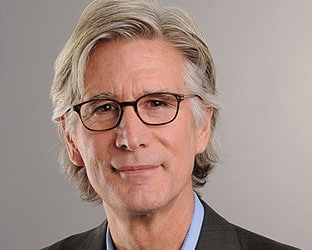
After more than three decades at Katz Radio Group, Bob McCurdy recently left the rep firm as President of Katz Marketing Solutions. McCurdy, who has held that role since January 2009, will remain a consultant to the company. RBR-TVBR asked him why he left, what his consulting role will entail and issues that concern him about the radio biz:

Why did you decide to leave the position for a consulting role?
I had a terrific 34 year “run” at Katz Radio Group and Clear Channel, loved the people, learned a lot and I think made some contributions over the years. Basically, I just felt that it was time do something different. Everybody experiences that “feeling” at some point. I approached Mark Rosenthal and Mark Gray about my desire and they were supportive and terrific.
My goal right now is to take some time and embark on an intensive marketing focused “sabbatical.” I have been reaching out to a number of thought leaders in the agency and marketing and world. I’ve also set up meetings with respected professors in academia who specialize in audio and marketing disciplines. My goal is to continue to learn, absorb and figure out how to more effectively communicate the incredible power of Radio and audio to generate the respect and revenue it deserves. The bottom line is that I am as passionate and as excited to be involved with this industry as I have ever been.
What will you be working on in your consulting role for KRG?
I will in essence be acting as a KRG “free safety”, alerting them to different opportunities, providing research suggestions/interpretations, POV’s regarding industry and marketing developments, white papers on various topics and facilitating “introductions.” I will continue to assist KRG any way I possibly can. Whenever anyone asked me in the past, “What have you been up to?” I’ve always responded, “Trying to make a difference.” I will continue to try to do that.
Radio and the audio world have some terrific opportunities and challenges ahead. There’s a lot going on “out there” and if Radio is to continue to thrive, it is of paramount importance that we understand the competitive environment and react accordingly.
What three major issues do you see right now that radio broadcasters need to address?
The most important thing the industry can do is to empirically demonstrate that investment in Radio not only delivers a positive ROI but delivers a greater “pay back” than other media alternatives. Clear Channel’s Radha Subramanyam and CBS’ David Poltrack have initiated and are overseeing some long overdue research in this area. Anecdotal evidence no longer cuts it with sophisticated data oriented marketers.
The digital guys have long known about the importance of proving “payback.” About a decade ago the IAB embarked on their XMOS studies which left little doubt as to the positive impact of online advertising. Mobile, Facebook, Twitter and others are now using the same playbook, ferociously pursuing and enhancing the ROI they deliver. Radio must keep pace.
The Online guys, in search of continued double digit growth, have recently set their sights on “brand” dollars. Media mix modeling results play a big role in the allocation of these funds. This lucrative pool of dollars could be Radio’s ticket to increased revenue if its ROI/payback can be empirically illustrated. It has been estimated as much as 70% of all ad spend is ‘brand” focused, much of which eludes the Radio industry as it’s perceived as being primarily a “call-to-action” medium.
Another issue facing the Radio industry is its perception/usage among key decision makers, many of whom are city dwelling millennials. This has contributed to a very real “projection” bias when it comes to planning and media recommendations, as they “project” their media usage patterns upon the target audience. The importance of this issue can’t be under-estimated.
Several years ago, a study was done comparing the media usage of those within the ad industry with the rest of the country using TouchPoint methodology. It concluded there was a huge difference between the media pros and the average Joe. It’s worth considering updating and even expanding this study as the first step to overcoming this “bias” is to highlight its existence.
Third, Cross Media Optimization is on every marketer’s mind. The complexity of the media landscape is unprecedented and in addition to wanting to identify the individual contribution of each medium, marketers are also looking for the optimum way to allocate their funds across media. Consequently it is in Radio’s best interest to not only substantiate its direct impact on sales, but also highlight its “multiplier” effect on other media. Twitter and Shazam understand this and are currently working feverishly to illustrate this synergy with television. I don’t think we can overstate the importance of this moving forward. Being able to empirically demonstrate Radio’s individual role in a media mix will become table stakes, while illustrating how it complements and enhances the impact of the other media in the campaign will lead to higher rates and revenue.
A good place for the Radio medium to start down this path is to empirically demonstrate the “multiplier” effect that exists between Radio’s online, on-air, onsite and on-demand assets. The tremendous value and impact of these assets is not yet understood nor fully appreciated by marketers.
Finally, it would likely prove beneficial if the Radio industry got together and crafted a strategic, multi-year marketing/research agenda designed to address key issues, much the same way advertisers map out their own marketing plans.