The NAB very much wants a definitive transition date for broadcast television in the U.S. to switch to ATSC 3.0-delivered NEXTGEN TV channels. Most, but not all, over-the-air TV station owners agree, shifting from the voluntary transition put in place by the FCC under Chairwoman Jessica Rosenworcel.
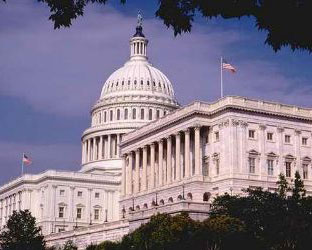
While there’s strong opposition to a “mandate” from the Consumer Technology Association and set manufacturers and the cable TV industry isn’t so pleased, either, some 91 Members of the House of Representatives believe the FCC is empowered to bring ATSC 3.0 transition advancement to fruition.
In a formal letter addressed to Commissioners Olivia Trusty and Anna Gómez and Chairman Brendan Carr, a coalition of House Members express that “a date-certain transition to ATSC 3.0 is essential to enable a terrestrial complement to GPS nationwide utilizing the precise timing signals from broadcast towers.”
The letter could have been penned by the NAB’s legal team, given their desire to have its own Broadcast Positioning System (BPS) — fueled by ATSC 3.0 — serve as the solid backup to GPS, if not an eventual replacement.
“If GPS is disrupted by jamming, spoofing, or other means, our nation’s vital infrastructure – from financial markets to transportation and everything in between – would be at risk,” the House Members write. “A swift transition to ATSC 3.0 can facilitate a GPS complement that is incredibly resilient, but only if the FCC acts swiftly in this transition.”
To accomplish that, the 91 House Members call on the Commission to work with Congress and industry “to ensure a smooth transition and to protect consumers with legacy TVs, so that all viewers and local communities benefit from the opportunities enabled by the upgrade from ATSC 1.0 to ATSC 3.0.” Hence the introduction of set-top boxes and dongles courtesy of efforts led by Pearl TV, the marketing arm of ATSC 3.0, shifting its tone circa 2019 from the belief that consumers naturally replace their television every six years, thus bringing a critical mass of NEXTGEN TV-ready viewers to broadcasters. COVID-19 and a rapid shift of consumers to digital and streaming video thwarted that assessment from Anne Schelle, leading to ways to bring non-backward compatible technology to those unable or unwilling to part with their current sets.
With continued access to “high valued content” part of the House Member pitch and their belief that “regulatory certainty would spur manufacturer investment” in NEXTGEN TV-capable receivers of all sizes, “a firm transition date would catalyze the entire ecosystem, focusing technical development, accelerating deployment, and creating a predictable path forward,” the Members of Congress state.
There is a vested interest, if not so much a conflict of interest, for one House Member — Mike Flood, the Congressman from Nebraska who owns radio and television stations across the Cornhusker State.
Importantly, the 91 Members represent both Republicans and Democrats, with such signees as Debbie Dingell (D-Mich.) putting their signatures on the letter to the Commissioners.
For NAB President/CEO Curtis LeGeyt, the letter was highly welcomed. “Their leadership reflects a clear understanding of the immense consumer benefits that a modernized broadcast infrastructure will deliver to communities across the country,” he said. “We look forward to continuing to work with our industry partners and the Commission as it moves toward a final order that will ensure broadcasters can deliver the full promise of NextGen TV to every household.”