
WASHINGTON, D.C. — A new report released Monday by the House Judiciary Committee takes aim at the National Football League, alleging it has stretched an antitrust exemption created by the Sports Broadcasting Act of 1961 beyond its original purpose “to the detriment of American consumers.”
Additionally, survey data obtained by the Committee suggests, in their view, that the NFL’s “Sunday Ticket” offering is not the consumer-friendly option that the NFL presents it to be.
That’s a key conclusion from an “interim staff report” titled “The Sports Broadcasting Act: A Special-Interest Antitrust Exemption Gone Awry.” Its release comes just 48 hours ahead of a previously announced hearing that sees Congress examining potential legislative reforms to the Sports Broadcasting Act.
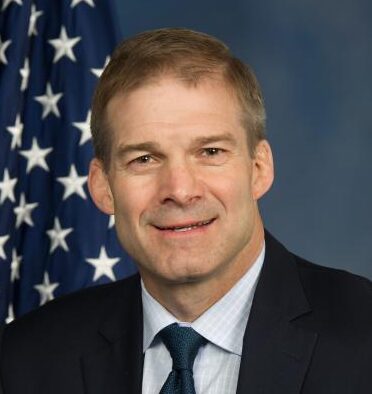
And, while NFL Commissioner Roger Goodell was invited to appear as a witness at a Wednesday morning (6/10) hearing convened by Rep. Jim Jordan (R-Ohio), he declined. Why? NFL General Counsel Ted Ullyot told Jordan in a letter sent on June 3 that Goodell would not be present on Capitol Hill “due to ongoing litigation related to the topic of the hearing.”
Congress passed the SBA in 1961 after the NFL lobbied for legislation following a court ruling determining that the league’s rules and agreements unlawfully restricted individual teams’ broadcasting rights.
Since then, the SBA grants professional sports leagues a limited antitrust exemption for sponsored telecasting, allowing the leagues to collectively sell rights for free over-the-air broadcasts. At the time, the exemption was necessary to help teams in smaller markets remain financially viable and to preserve the overall stability and competitiveness of professional sports leagues.
The SBA’s passage came at a time when the upstart American Football League proved to be a serious threat to the NFL, with teams such as the New York Titans winning over fans. With fierce competition for players, fans, and television audiences, the NFL and AFL announced a merger in 1966 that was completed in 1970.
Since then, the sports broadcasting market has changed considerably and now includes cable, satellite television, and streaming services. At the same time, professional sports leagues are in a much stronger financial position than they were in 1961, the House Judiciary Committee said. “Yet, some NFL fans must now pay more than $600 per season to watch all of their favorite team’s games,” the Committee said in a statement. “Many fans describe the current broadcasting landscape as expensive, fragmented, and difficult to navigate.”
Thus, in August 2025 the Committee and its Subcommittee on the Administrative State, Regulatory Reform, and Antitrust opened an investigation into the broadcasting practices of the professional sports leagues, which are governed by the SBA. As part of this oversight, the Committee sought to examine whether anticompetitive broadcasting conduct by the NFL has harmed American football consumers and undermined the letter and spirit of the antitrust laws and the SBA.
Today, the Republican-led Judiciary Committee challenges the NFL’s “boasts” that 100% of its “local market games” are available free and over-the-air and that 87% of games have “primary distribution” on broadcast television.
“The NFL’s claim of a fan-friendly distribution model defies the reality experienced by millions of NFL fans,” the Congressional body said. “The NFL’s own data show that the average NFL game reaches only 39% of U.S. households. In 2016, broadcasters aired 113 of the NFL’s 256 regular-season games in fewer than 20% of U.S. households. When the NFL claims that 87% of games receive ‘primary distribution’ on broadcast television, it means only that a broadcast station carries those games somewhere in the country – not that most fans can watch them.”
- Despite the NFL’s claims, Sunday Ticket “is not just a product for the avid fan of NFL football in general, but a product bought mainly by fans attempting to watch their favorite team who are stuck with no other option.”
- According to data from former Sunday Ticket subscribers, when asked, “Why did you sign up for NFL Sunday Ticket?,” over 70% of respondents answered that they subscribed to “watch my favorite team, which is out of market[.]”
- When asked why they canceled their Sunday Ticket subscription, 70% of respondents answered that Sunday Ticket is too expensive.
“The results shown in the data suggest that the NFL’s current model of placing games behind a paywall, especially through its Sunday Ticket offering, is harming consumers by forcing them to pay for a large package of NFL games when many consumers only want to see their favorite team’s games,” the report says. “The existence of the data also suggests that the NFL has misstated the nature of its Sunday Ticket product.”The Committee and Subcommittee said it will continue their oversight of the Sports Broadcasting Act and whether the antitrust exemption it created continues to benefit American sports consumers. “This oversight may inform legislative reforms to the SBA to improve the sports broadcasting experience for football and other sports fans,” the Committee said.