Radio In Every Vehicle? Nielsen and iHeart Prove Its A Must

0

“Radio is one of the most valuable entertainment options in the car.”


That’s a key finding from a “comprehensive” car radio study unveiled on Tuesday by Nielsen , conducted in partnership with iHeartMedia — the owner of key spoken word AM radio stations that stands at a crossroads as the AM Radio for Every Vehicle Act sputters on Capitol Hill.

As the report concludes that removing AM/FM radio “is a multibillion-dollar gamble for automakers,” the FCC at its August Open Meeting could be ready to give broadcast media — and AM/FM radio — a big shot in the arm.


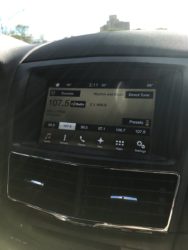
The study, Tuned In: Why Removing AM/FM Radio Is a Multi-Billion Dollar Gamble for Automakers, notes that the typical vehicle dashboard has undergone a digital facelift in recent years, making the photo at the top left of this article from a New York limousine in  October 2018 practically outdated.

With “sleek touchscreens, subscription-based apps and advanced smartphone integration,” the newest automobiles feature touch-screen technology akin to a built-in tablet. But as Automotive Original Equipment Manufacturers (OEMs) decide which features to keep and which to cut in the name of visual appeal, Nielsen and iHeartMedia question if audio appeal being sacrificed.

In other words, is traditional AM/FM radio still a necessity?

The study, conducted in May 2026, yields “a resounding answer,” they say.

“Radio is not only necessary, it is one of the most valuable entertainment options in the car,” Nielsen and iHeart find. “Stripping AM/FM radio from vehicles isn’t just an unpopular design choice but a direct threat to customer loyalty and, ultimately, vehicle sales.”

Additionally, they declare an “undeniable demand” exists for access to broadcast radio, and that it is a “must have” feature among more than 1,000 recent and prospective car buyers.


Among the key takeaways:
  • Approximately half of all respondents said they would refuse to purchase a vehicle that lacks AM/FM radio.
  • More than 7 in 10 consumers view AM/FM radio as an essential feature that should come standard in all new vehicles.
  • Radio accounts for 55% of all audio time spent in the car; streaming accounts for 16%, with YouTube, podcasts, SiriusXM and owned music/audiobooks making up the remaining 29%.
  • Nielsen’s conjoint analysis found that AM/FM radio had the second-highest impact on vehicle choice decisions, behind only smartphone integration.
  • Around half of respondents said they would have a less favorable view of a car brand that removed AM/FM radio from its lineup. The risk is especially pronounced among buyers aged 55+, where both purchase refusal and brand erosion are stronger.
  • 8 in 10 respondents said it is important for their vehicle to receive national Emergency Alert System notifications.
  • 2 in 3 consumers said zero latency for live sports is important when listening in the car.
  • While 4 in 10 drivers prioritize connecting their phone first when they get into a car, a quarter still turn first to AM/FM radio.

The study’s arrival comes at an increasingly fragile time for AM and FM radio. While AM radio stations’ primary signals have been diminished through full-power FM simulcasts and “revitalization” fueled by FM translators in recent years, iHeartMedia’s roster of 800+ radio stations includes several high-profile News/Talk stations that rely on their high-reach kHz-band signals. These stations include WBZ-AM 1030 in Boston, which covers nearly all of New England with its 50kw Class A signal; and Class B KOGO-AM 600 in San Diego.

With only HD2 FMs rebroadcasting WBZ and KOGO, lost access to either station’s booming AM signal could prove devastating in an emergency. Then, there’s the influence lost. KOGO, among other spoken word AMs owned by iHeartMedia, is an important cog in the Republican political machine. With a lineup that includes Premiere Networks syndicated shows from Clay Travis and Buck Sexton; Sean Hannity; and Erick Erickson, KOGO started 2026 with ratings nearing a 4 share of the total audience. Less over-the-air access could impact that performance; similar scenarios can be found for other iHeartMedia-owned AMs across the country, placing the publicly traded company and its syndicated audio arm in the cross-hairs of Congressional inaction.

There are some who believe both AM and FM radio are relics of a bygone era and aren’t even needed in the vehicle of today, let alone tomorrow. Matt McAlear, CEO of Stellantis Dodge and Chrysler, is one of those individuals. In April, in an appearance at the 2026 New York International Auto Show, McAlear raised fresh alarms for broadcasters still waiting on Congress to act on saving the AM band, let alone FM.

“I think the biggest thing that we need to start doing is challenging the industry on what the expectations are from an entry-level base vehicle,” Stellantis Dodge and Chrysler CEO Matt McAlear told The Drive. “And I don’t mean that from the word cheap or less. I mean that from that of ‘back-to-the-basics.’ Analog gauges. Do you need a radio? Do you just have speakers that you Bluetooth to? We need to push forward and maybe make people uncomfortable, but give them something they don’t realize that they want.”

Then came the mid-June announcement by Rivian that its new R2, which entered the market earlier six weeks ago, has removed all terrestrial radio access, replacing the tuner and antenna with a data connection.

Interestingly, the sport utility vehicle, while missing a traditional AM/FM tuner, includes a pre-loaded iHeartRadio app and a subscription tier called Connect+ that unlocks the rest of the in-vehicle audio stack.

For the NAB, that’s not a substitution for AM or FM radio, which has proven more resilient in weather emergencies including hurricanes. That message was likely reiterated on Capitol Hill as upward of 30 State Broadcast Associations are in Washington, D.C., to press Congress on the AM Radio for Every Vehicle Act.

For the benefit of radio broadcasters, the proposed legislation continues to have the unabashed support of President Trump, who used an appearance on Salem Media’s Hugh Hewitt Show to share, “A lot of our people are on AM radio. The answer is I’m very much onto it. We’re pushing it hard.”

With conservative talk hosts’ access to AM radio consumers likely driving GOP legislators’ interest in getting the AM Radio for Every Vehicle Act to the finish line, left-of-center Democrats have also been fighting for the legislation on the grounds that AM radio is there when a cell phone tower is compromised. That was the case during “Superstorm” Sandy, a point repeatedly made by House Energy & Commerce Committee Ranking Member Frank Pallone Jr. of New Jersey over the last several years.

Perhaps the FCC will give AM radio a needed boost before Congress decides what to do.

RBR+TVBR has heard from multiple sources that Chairman Brendan Carr on Wednesday will release details of the Commission’s August Open Meeting. On the agenda, they say, is a proposed rulemaking that would loosen media ownership restrictions for both radio and television.

With the NAB seeking to eliminate all ownership rules as it pertains to AM radio, such a move could help fuel the more than 100-year-old audio source. At the same time, it could encourage Congress to make its move.

— Additional reporting by Cameron Coats, in New York

LEAVE A REPLY

Please enter your comment!
Please enter your name here