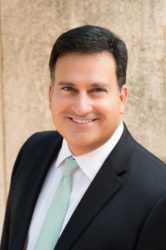

WASHINGTON, D.C. — In a year full of twists and turns originating from 1600 Pennsylvania Ave., N.W., the Friday announcement from the White House that President Trump has nominated a Senior Counsel to FCC Chairman Brendan Carr to serve as a Commissioner at the agency.
Danielle Thumann Severs, if confirmed, would serve a term of five-years, retroactive to July 1, 2024. It is the seat last held by Republican Nathan Simington, who decided to leave the FCC early over reported acrimony regarding the selection of Carr by President Trump as Chairman.
Severs’ nomination at the dawn of a potentially contentious midterm election season could prove to be the ultimate GOP loyalty test to Republican Senators: If Congress approves the nomination, it potentially creates a 3-0 Republican majority with a firing of lone Democrat Anna Gómez. At the same time, Democrats could use the nomination to force Trump to fill out the FCC with a fifth nominee, bringing three Republicans and two Democrats to an agency short of its statutory maximum Commissioners for months.
As key Washington, D.C., lawyers who spoke with RBR+TVBR see it, there’s little consensus on whether Severs will get the Senate’s OK. And, they don’t agree on whether Trump can use a recent Supreme Court ruling to create a one-party agency in lock step with his policy plans.
PUSHING A SCOTUS RULING
On paper, Severs is a young technocrat on the rise. Today, she advises Chairman Carr on FCC matters before the Wireline Bureau; the Public Safety and Homeland Security Bureau; and the Consumer and Governmental Affairs Bureau.
Severs is in her second stint on the FCC. She rejoined then-Commissioner Carr’s Office in August 2024, after working in the private sector on government relations matters for a nationwide telecommunications infrastructure provider. She previously served as Legal Advisor in Commissioner Carr’s Office from March 2021 until July 2023. Before that, she worked as a communications attorney in the Washington, D.C. office of Wilkinson Barker Knauer, home to such noted lawyers as David Oxenford and Davina Sashkin.
Severs is also one of three key individuals at the FCC, including Carr himself, who hold a J.D. from Catholic University of America’s Columbus School of Law.
Yet, her road to becoming a Commissioner could be riddled with potholes because of what her confirmation could yield.
“Subject to Senate confirmation, the FCC could have only three commissioners and all three commissioners could be from the same political party,” notes Frank Montero, the co-Managing Partner of Fletcher, Heald & Hildreth in Arlington, Va. “The president could fire Gómez today, but by doing so the FCC would lose a quorum. If Thumann is confirmed, that would open the door for the president to fire Gomez and retain a quorum.
Or, maybe it will not. Scott Flick, a Partner at Pillsbury Law, points to 47 USC Section 154(b)(5), which requires a partisan mix of FCC commissioners. It states, “The maximum number of commissioners who may be members of the same political party shall be a number equal to the least number of commissioners which constitutes a majority of the full membership of the Commission.”
As a result, Flick says, “The statute prohibits an FCC with only three Republican commissioners and no Democrats. In a four-member FCC, three can be of the same party because three is the bare minimum that ‘constitutes a majority’ of the four-member Commission. That means there would still need to be at least one Democratic commissioner.”
But what about the late June Supreme Court decision in which it reversed and remanded a case involving former Federal Trade Commission Commissioners Alvaro Bedoya and Rebecca Slaughter, the latter of whom sued the president?
“The Supreme Court gave the President the power to fire commissioners, but not to alter the partisan mix Congress required in the statute,” Flick explains.
Why, then, would the President move forward with the nomination of Thumann at this time?
Seth Williams, a colleague of Montero at Fletcher, Heald & Hildreth, views the action as “Republicans wanting to make sure they have control over the Commission for the last two years of Trump’s term as a hedge against midterm losses.” But, he adds, it also opens the door to Trump firing Gomez.
“I’m not sure this necessarily spells an imminent departure for Gomez because firing her would be mostly superfluous once Danielle is on (outside the highly unlikely situation in which one of the Republican Commissioners sides with Gomez on something against the other two Republicans),” Williams says.
From a practical perspective, Montero wonders if the Senate would confirm Severs unless the president indeed offered at least one Democrat nominee to go with it.
CRUZ CONTROL
As Washington pundits consider the consequences of Severs’ confirmation as an FCC Commissioner, there is also the question of whether or not the Senate Commerce Committee will even bring the nomination to a full floor vote.
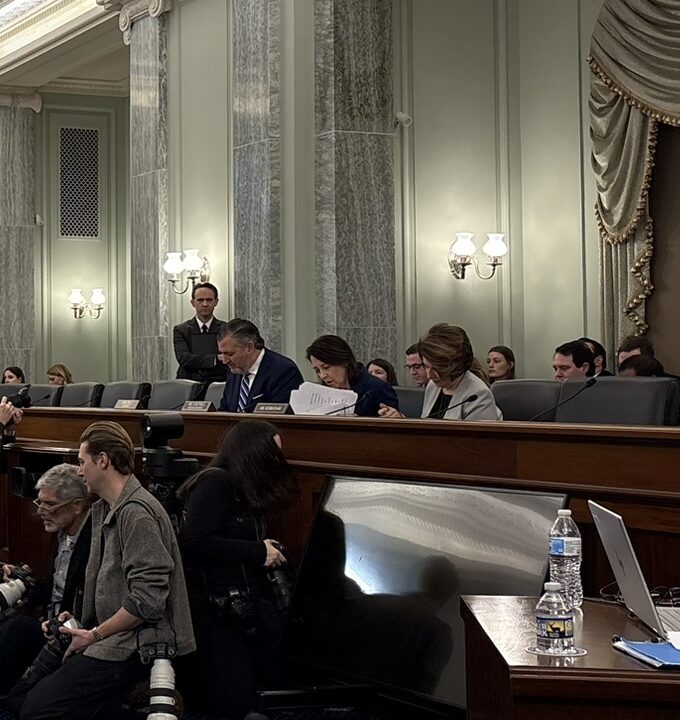
Why is that? Sen. Ted Cruz, the Texas Republican who chairs the Congressional body maintaining ultimate oversight of the FCC, hasn’t exactly been fond of the Carr Commission and actions the White House has orchestrated which have, at least indirectly, led to policy moves at the agency.
In June, Cruz teamed with Democratic Sen. Ron Wyden of Oregon for the introduction of the “Justice Against Weaponized Bureaucratic Overreach to Networked Expression Act,” legislation that would allow Americans to sue federal officials for violating the First Amendment when they coerce social media companies, AI platforms, or broadcasters to change or take down protected speech.
With wording that creates the acronym “JAWBONE,” the proposed legislation would hold the government accountable for censorship and violations of the First Amendment. The subject of “Jawboning” is one that has been discussed inside the Beltway repeatedly since the return of President Trump the White House and installation of Brendan Carr as FCC Chairman.
Then, there is the ongoing consideration of the FCC’s 39% national television ownership reach limit, which the agency in a 2-1 party line vote last Thursday chose to erase, replacing it with a case-by-case look at what is right for that particular proposed deal. Gómez and Congressional Democrats say the vote was illegal as Congress mandated the cap in early 2004. A February 2026 hearing devoted to the ownership reach limit was designed to prepare the Senate Commerce Committee for a potential legislative review of any action the Commission would made. That chess piece has just been moved.
Cruz has also shown his willingness to work alongside Minority Leader Maria Cantwell (D-Wash.) and key Democrats including Amy Klobuchar (D-Minn.) and Andy Kim (D-N.J.) on matters including the Nexstar Media Group merger with TEGNA. In late March, Cruz and Cantwell teamed up to examine why the full Commission didn’t vote on the deal, leaving it to Media Bureau Chief Erin Boone to approve, with waivers allowing Nexstar to exceed ownership limits codified by Congress 22 years ago.
Given the acrimony between Cruz and the Carr Commission, Republican holdouts could join Democrats likely to vote “no” on Severs’ nomination, keeping the 3-0 composition in place until the White House yields that fifth and final seat-filler on the dais at the FCC.
Still, Inside the Beltway haze has blurred what is presently required, and what could be pushed to the test by an administration aggressively challenging its current restraints.
Foster Garvey Principal Brad Deutsch sides with those who believe the FCC indeed does not need to have a Democrat as a Commissioner. “They need to have at least three Commissioners for a quorum, but those three Commissioners can all be Republicans (the maximum allowed for any one party). Theoretically, the other two Commissioners could be Libertarians or Independents.”
That said, Deutsch holds to the “longstanding Senate practice” to allow the Minority Leader to “recommend” two “minority” FCC Commissioners; the president would then defer and nominate those individuals. “The Senate’s usual practice has acted as a backstop against complete political lopsidedness at the FCC and other agencies. But these are not usual times … who knows what will happen here. If Gomez were to abstain or not show up for a given vote right now, she could potentially prevent a vote from going through. Having said all that, will Trump dismiss Gomez? Maybe, but probably more because he simply does not like having her around more so than some grand strategy.”