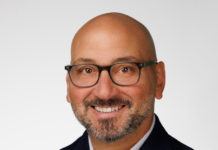
With the election of Donald Trump as President of the U.S. came the departure as FCC Chairman of Tom Wheeler. Since stepping down from the Commission on Inauguration Day in January, he’s been relatively mum on what’s transpiring at the FCC since becoming a senior fellow at Washington, D.C. think tank The Aspen Institute.
Wheeler broke his silence on what the Commission is plotting following his exit in a big way last week, by way of a “Techtank” column appearing at the Brookings Institution‘s website.

In a scathing criticism of the FCC under Chairman Ajit Pai, Wheeler first turned to NAB Chairman/CEO Gordon Smith, who opened the 2017 NAB Show in Las Vegas by noting, “There is no other industry in the world like broadcasting. No other industry has, at its core, such an overarching focus on bringing communities together and serving the public good. No other media industry is as dedicated to supporting our local communities.”
He used those comments to fuel his assessment that the “overarching focus” on “serving the public good” is being stealthily watered down—with the industry’s support—by “the Trump Federal Communications Commission.”
In fact, Wheeler claims that, thanks to “little-noticed decisions, the agency has been removing regulatory requirements to protect broadcast localism, shield a diversity of local voices, and avoid the establishment of a dominant national broadcaster.”
Wheeler’s first complaint is the likely end to the FCC’s Main Studio Rule. He’s against it.
“Exhibit One: imagine broadcast localism without a local broadcast studio,” Wheeler says. “Local emergency coverage, investigative reporting, and neighborhood news all originate in a local studio. That is why the FCC ‘requires that each broadcast station keep its main studio in or near its community of license.’ The obligation to provide such local service is fundamental to the public trustee status of a broadcast licensee.”
His second complaint is the soon-to-be official restoration of the “UHF Discount,” which the Wheeler FCC shelved.
Noting that this action skirted Congress’ mandate that no single broadcaster have more than 39% of the national audience, Wheeler says, “Only three months after taking over, the Trump FCC resurrected (again on a party line vote) a 1985 decision that allowed UHF (channels above 14) broadcasters to count only half their coverage area when calculating the congressional ownership cap.
“Even though the basis for the old decision no longer exists, the Trump FCC dusted it off to give big broadcast companies a path around the congressional prohibition on concentrated ownership,” Wheeler says. “Applying their ‘discount,’ the congressional ownership cap magically increased, and the door to further media consolidation was opened.”
The third issue Wheeler has with the Pai-led FCC involves “using contracts to get around local ownership rules.”
He says, “To promote a diversity of local voices, the FCC rules prohibit any one company from owning more than one of the top four television licenses in a market, as well as other restrictions on local broadcast consolidation. Clever lawyering, however, got around that by creating so-called joint sales and service agreements (JSAs) in which one company, flouting the intent of the rules, took control of the operations of another local station just as though they owned it. The last FCC outlawed this charade. Within two weeks of assuming control of the commission, however, the Trump FCC – without a commission vote – revoked that prohibition, thus creating yet another means for consolidating broadcast power.”
Wheeler then poked a finger at Sinclair Broadcast Group, which seeks approval on its blockbuster merger with Tribune Media — a deal that can only happen with the restoration of the UHF Discount.
He says, “A creative abuser of JSAs before their reinstatement, Sinclair will once again have the ability to exert effective control of stations FCC rules would otherwise prohibit them from running. And, when the FCC eliminates the local studio rule, Sinclair – long known for requiring their stations to carry right-wing programs produced by headquarters – will have an open field to replace local voices with national control.”
Wheeler concluded his thoughts by again recalling comments made by the NAB’s Smith.
“'[N]obody wants to do what we do – live and vital localism,’ Smith reminded the broadcasters’ gathering,” Wheeler said. “Unfortunately, it now appears that broadcast localism, a diversity of local voices, and the congressional mandate against one company dominating local broadcasting are about to become casualties of the Trump FCC.”
RBR+TVBR