PROMOTE Act Co-Sponsor’s Motivation: Fairness

0

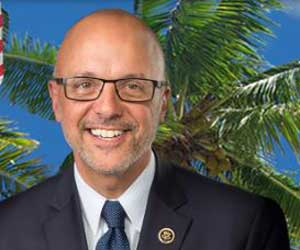
BOCA RATON, FLA. — On a cloudless Friday afternoon with low humidity in Palm Beach County, Florida, Democratic Congressman Ted Deutch has arrived home for a two-week break from Congress, which has recessed for the Passover holiday and Easter Week.


As he drives around town, he points out something on his dashboard that, with the “connected car,” will become standard for many auto owners: The Sirius XM button sits right next to those for Spotify, Apple Music and the FM radio.

If all of those choices to hear music are side by side, shouldn’t royalty payment structures to the artists responsible for this music get fairly compensated by radio?

That’s one of the key reasons why Rep. Deutch has signed on as a co-sponsor to two pieces of legislation many in the radio industry believe will create irreparable harm for smaller operators.

To Deutch, it’s simply about fairness.

“My thinking is pretty simple,” Deutch said. “The argument has always been made that artists want their songs on the radio because of the promotion of it. And, it is a good argument from some artists and promoters. For others, if they don’t need the promotion then they should have the right to decide whether or not their songs should be played on the radio.”

In Deutch’s view, neither the “PROMOTE Act” nor the “Fair Play Fair Pay Act” are about “big radio” — a key rallying point for music rights coalition musicFIRST in its efforts to bring this legislation to a full House vote.

Asked to respond to comments from small radio broadcast company owners that his legislation is a “job killer,” Deutch disputed the claim. “This is not a question of big radio vs. small radio. It is a question of fairness.”

Deutch’s viewpoint is unique. To him, it comes down to compensation for everything that comes out of a radio station’s speakers.

“We have the talent,” he said, referring to such syndicated talk radio personalities as Rush Limbaugh. “Some get paid handsomely.”

Then, advertisers are paying the radio stations for their spots to air on their FM signal.

Therefore, when artists don’t get paid when their song is played, it becomes the only element where a content provider isn’t getting a check from the delivery service, Deutch reasons.

Why has Deutch emerged as a key member of Congress on the issue of a so-called “tax on radio”?

“As someone who has always loved music and played music, having this discrepancy just needed to addressed,” he said. “Advertisers are paying to be on the station. Artists aren’t getting paid.”

Deutch has heard both sides of the story, and has met with musicFIRST representatives as well as those from the NAB, which is pushing its “Local Radio Freedom Act.”

At the end of the day, Deutch just wants the recording artist to get paid.

Deutch could not comment when asked by RBR + TVBR about the payments made by radio stations to groups such as the Irving Azoff-led Global Music Rights (GMR), ASCAP, SESAC and BMI.

However, when asked to view the issue of performance rights and radio in “layman’s terms,” he went back to the dashboard of his vehicle.

“It’s hard for people who aren’t in the business of music to understand why an artists is not getting paid to be singing their song by FM radio, when it’s right there alongside satellite radio, Spotify and Apple Music.”

Ultimately, Deutch believes it should be up to the artist to decide.

When Congress returns from its recess on April 24, many radio industry C-Suiters will be in suites at the Encore resort and casino in Las Vegas. Back in Washington, Deutch hopes there will be an opportunity to soon bring everyone together to review the changes needed to get passage of his legislation, and “test the hypothesis” that radio airplay helps — rather than harms — artists, as the NAB asserts.

When asked about the LRFA’s overwhelming support, Deutch said, “Every legislative effort is difficult. It does not mean it is not worth pursuing.”

RBR + TVBR