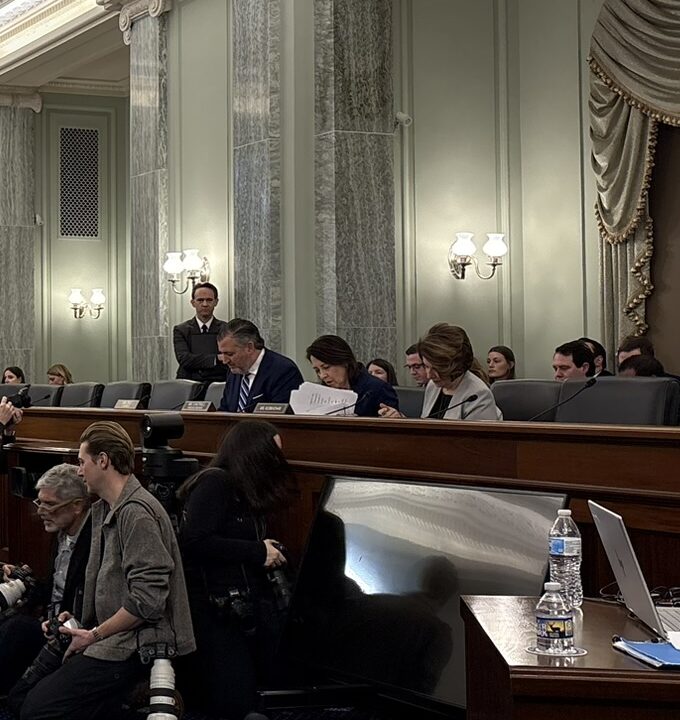
In a 77-22 vote that saw both Republican and Democratic U.S. Senators support the legislation, the upper body of Congress passed the Protect College Sports Act.
It’s an important law for both fans of NCAA sports and broadcasters, as it preserves the scope of the Sports Broadcasting Act by allowing collective media rights negotiations for games on over-the-air television without extending that exemption to paid subscription streaming services. It now awaits consideration in the U.S. House of Representatives.
This bill, introduced on June 2 by Sen. Ted Cruz (R-Tex.) and led by Maria Cantwell (D-Wash.), establishes requirements for name, image, or likeness (NIL) agreements for college student athletes and provides a limited antitrust exemption for schools and conferences to pool and sell certain college sports media rights.
The requirements address elements of the court-approved agreement to settle In re College Athlete NIL Litigation (i.e., House settlement).
First, the legislation statutorily prohibits institutions, conferences, or interstate intercollegiate athletic associations (e.g., the National Collegiate Athletic Association) from restricting student athletes from entering NIL agreements (subject to specified limitations). Students must report to their institution NIL compensation greater than $600.
The bill also requires agents to register with a state and caps agent endorsement contract fees at 5% while providing student athletes with one transfer without losing athletic eligibility. It also restricts football personnel from becoming the head football coach at a different institution during the same season.
Further, the Cruz-penned bill prohibits institutions, conferences, or specified entities acting for the benefit of an institution from providing athletes with compensation that circumvents the limit on sharing revenue with student athletes established under the House settlement. The bill also makes the limit permanent and provides for an annual inflation adjustment.
Importantly, the Protect College Sports Act “generally prohibits Division I conferences from reducing the number of varsity or Olympic sports teams that a member institution must sponsor.”
Specifically, large institutions ($80 million or more in annual athletics revenue) must offer and maintain at least as many grant-in-aid opportunities and roster spots for sports that do not generate positive net revenue as the institution provided during academic year 2024-25. The bill also provides for a waiver of this requirement under certain circumstances of financial hardship and the requirements expire nine years after the enactment of the bill.
Additionally, the bill establishes (subject to specified conditions) a limited antitrust exemption for institutions or conferences that form joint agreements to transfer their sports telecasting rights to a third party. Such an agreement requires participation from at least 75% of the institutions in the Football Bowl Subdivision.
But it is up to the lower body of Congress to take action, or the Senate vote is all for naught.
The House of Representatives will not begin its next legislative session until November 9 — after the mid-term elections.