Radio: The Great Curator That Isn’t?

0

On Dec. 7, RBR + TVBR reacted to a blog post from Mike Henry, CEO of media and entertainment research firm Paragon Media Strategies, that questioned whether or not the radio industry “still doesn’t care” about millennials.


We stated that radio stations and those in the C-Suite overseeing these stations very much care about millennials, but are pretty clueless with how to have a conversation with them and bring them for more than just a big nationally syndicated morning show.

Henry on Friday called the RBR + TVBR Bat Phone, where he reached our intrepid editor catching himself mid-typo while writing about Capitol Hill news from the one place a radio station GM may wish to work from for an entire day: A hip coffee shop full of millennials.

Holy MacBook Pro, Batman!

One group of five women, medical school texts opened, debated the merits of Kerrygold butter.

Others scattered around the coffee shop, near the University of Miami’s main campus, were studying a variety of graduate-level topics.

A group of men held court in a far corner, discussing fire-code regulations and commercial real estate mumbo jumbo.

Mike and I, via a VOIP call on the laptop, talked about the need to unplug from restraints and boundaries.

To him, that is lesson No. 1 for any radio station seeking the millennial, as such restraints limits the listener and results in conversations such as these, some 10 years after they were first discussed.

“We are still using the same-old toolbox,” Henry says. “The millennial doesn’t want radio to be a repetition medium. They are looking for radio to be a filter, to find them the new music they like.”

This will require experimentation, he says, and “people trying things.”

Are radio stations that enjoy a large segment of millennial listeners simply too safe?

Perhaps. But, one thing is for sure — millennials need a new music curator, and that’s where radio can come in to fulfill that role.

“The research shows us that millennials want radio stations to be a fire hose of new music, so they can find the songs they want on the radio and then drill down on those songs and that artist on their own, through all their available digital means,” Henry says. “Data show us that they want to use radio as a new music exploration device, not as a repetition machine of just a few new songs over and over. Using repetition-based programming strategies that were created decades ago for a different world, which were then gilded in iron when the PPM came about, has kept radio stuck in the past.”

As the television industry grapples with the reality that people are consuming more “TV” — but not necessarily live and via a TV channel, the radio industry has largely failed to address the digital realities of today’s millennial music lover, Henry says.

“Radio is still thinking and acting as if it is the center of the millennial’s music discovery universe,” he comments. “It’s clearly not the case anymore with this generation. If radio wants to hold onto to millennials, and those coming up behind them, radio has to be smart enough to break away from PPM-driven strategies and enact listener-driven strategies with more new music, wider style boundaries, deeper music that is not just the hits, and, in general, adapt more adventuresome music strategies.”

We argue that this needs to go even deeper, fundamentally, for radio to truly lure millennials.

That is why we call on the C-Suite to adapt a Future Of Radio Coalition that puts the millennial, Gen Z and “centennial” front and center.

RBR + TVBR hereby proposes the following:

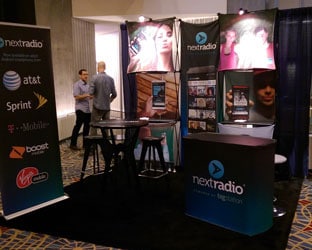
  1. Demo NextRadio at the five hippest coffee shops in your DMA. Get permission from the manager to do a “station remote,” but leave the pop-up tent and useless station swag in the Econoline van wrapped with the station logo. These people don’t give a Kombucha about $1 crap from Stereo 92. Think Apple Store Genius Bar by getting three station staffers — under 30, por favor — equipped with smartphones that have NextRadio. Have them wear T-shirts branded with your station. They can spend three hours at a coffee shop offering free demos on a free app that doesn’t burn through data and gives the user instant access to their favorite music.
  2. Hand-crafted for optimum enjoyment. Why have Shake Shack and Five Guys become a top draw? Customization and top quality have given these brands significant market share whereas 30 years ago, it was all about the Whopper vs. the Big Mac. The millennial is worldly and sophisticated when it comes to entertainment. So why not be a little “gourmet” with your station? This extends to advertisers, promotions and music. Why? Because your station is a brand. If you want your station, to be Starbucks then build character. Otherwise it is that cup of coffee at RaceTrac — very tasty, but still “gas station coffee.”
  3. Embrace Interactivity. What is the biggest draw about Snapchat, Facebook and Instagram? Sharing ideas. Fun and friendly conversation. Hell, radio can do that — and do it well. Do you have full-time people working on station Snapchat, Facebook and Instagram feeds that go beyond one-way promotion posts that do not engage the millennial in a chat?
  4. Live Is Life. We love Brooke & Jubal. We know they tape their show a day in advance. So, what do we mean by “live”? We mean, get your butt out there and remind people why they should consume your product. Radio stations have gotten lazy and do zero promotion. How many times have I traveled lately where I have seen zero promotion for any radio programs or stations? Radio assumes that listeners will tune in — or, at least, that all-important PPM holder. So, we overfocus on that Nielsen participant while the majority of potential listeners get ignored. That’s absurd. Advertising is based on the premise that continued reminders of why a good or service has value will not only help retain that value, but build it further. So … live the life of the millennial. Where do they go when they don’t work? Where do they work? What do they enjoy? Then, go “live” by being there. Post on Facebook and Instagram. Use Snapchat. The best radio stations are great members of the community. In this case, they need to be an active part of the millennial’s community, and world.
  5. New Music, Locally Delivered. When is the last time you saw anyone from Pandora or Spotify at a local concert or event filled with millennial attendees? Your station can be there. They can’t. So, are you? Own the new music mantle wherever your station is based. This will give you valuable street cred with the millennial and make you authentic, rather than a pandering brand run by people their parents’ age.


Paragon’s Henry is one of the radio industry’s biggest supporters. He is the man behind KINK-FM in Portland, Ore., our favorite commercial radio station right now.

“Remember my line: ‘Radio is the cockroach of all media.  You can’t kill it.’”

Eww … that’s, like, gross.

As we said last week, radio may have been Alfalfa but it’s really an Adonis.

Says Henry, “I think these industry conversations are needed to shake the collars of the radio groups to create change. Their hard-working GMs and PDs are rarely able to focus on, or act on, a pressing issue like this because they’re under extreme pressure to deliver the bottom line.  It has to start at the top.”

We agree.

Let’s get the group heads together and strategically discuss how to try new and different things. After all, radio stations are not competing against radio stations. They are competing against all other music delivery mechanisms.

As the coffee shop crowd trickled as the sun went down, the remaining millennials held their smartphones closely, while MacBook Pros glowed in the dusky light.

Nary a radio was in sight. But, untapped delivery platforms were there, to one’s delight.

RBR + TVBR