Within minutes of the FCC’s decision to eliminate a Congressionally mandated 39% national TV owner reach limit, a wide variety of Inside the Beltway policy influencers and at least one CEO of a broadcast TV station licensee chimed in with their thoughts.
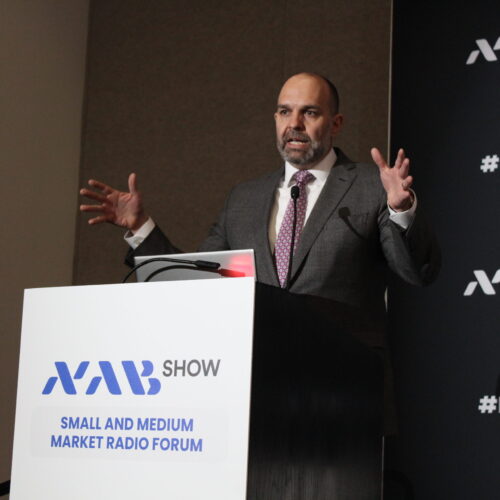
“The FCC’s decision to eliminate the outdated national television ownership cap marks a generational step toward strengthening local stations and ensuring they can compete in today’s media marketplace,” Curtis LeGeyt said just minutes after the Commission vote at its August Open Meeting. “We applaud Chairman Carr and the Commission for recognizing that rules adopted decades ago should not constrain local broadcasters’ ability to invest in journalism, innovation and service to their communities. Today the FCC helped level the playing field and strengthen local stations’ ability to deliver the trusted news and emergency information millions of Americans rely on.”
Sinclair Inc. President/CEO Chris Ripley, echoing comments made during his company’s Q2 2026 earnings call on Wednesday, was also pleased with the vote.
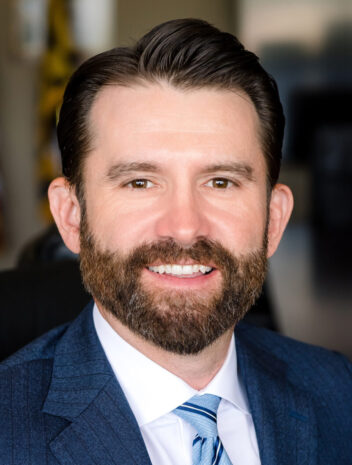 “Today’s media landscape looks nothing like it did decades ago when the 39% limit was set by the FCC,” he said. “Updating these rules to reflect dramatic changes across the media industry will set the stage for local broadcasters to begin to compete on a more level playing field. We applaud Commission leadership and the dedicated Commission staff for their work to modernize the rules and give broadcasters a fighting chance to preserve local news and continue to serve their local communities.”
For Nexstar Media Group, a company spokesman provided a statement following the company’s Q2 2026 earnings call for analysts and shareholders earlier in the day on Thursday.
“The FCC’s decision to eliminate the broadcast ownership cap is a welcome, necessary and long-overdue recognition of today’s competitive landscape, which is dominated by legacy Big Media and Big Tech,” the company led by Perry Sook said.  “For too long, local broadcasters were handcuffed from reaching the scale they needed to compete on a more level playing field by outdated federal rules that didn’t apply to the largest and most powerful companies like Google’s YouTube, Meta’s Instagram, or Netflix. Modernizing these rules will help ensure broadcasters can continue investing in local journalism and providing the free, trusted news and information that communities across America rely on every day.”
In contrast, the Multicultural Media, Telecom and Internet Council (MMTC) and African American broadcaster advocacy group NABOB condemned the party-line vote cast by the Commission. So did the Multicultural Media and Correspondents Association (MMCA).
In a joint statement, MMTC, MMCA, and NABOB believe the elimination of the current 39% cap “is a completely lawless exercise that will undermine competition and jobs, deter innovation, drive up prices, and replace relevant local news with canned national storylines.”
As the groups see it, the 39% cap enacted in January 2004 “helps to preserve one of the last areas of competition and media diversity, ensuring that trusted, local voices don’t get merged out of existence and that journalism remains a viable path for the next generation of reporters and producers. All communities regardless of demographics, income, geography, or political affiliation, need relevant, local perspectives and coverage – exactly what Congress sought to defend when it passed [it].”
To little surprise, the American Television Alliance (ATVA) echoed the multicultural media advocacy groups in condemning the 2-1 vote.
“The FCC’s decision to eliminate the national broadcast ownership cap is a serious setback for American consumers and local communities,” said ATVA spokesman Hunter Wilson. “Congress established the 39% national ownership cap in 2004 to protect localism, viewpoint diversity and consumer choice. By eliminating this safeguard, the FCC has ignored Congressional intent and opened the door to unchecked ‘Big Broadcast’ consolidation that will drive up costs for viewers and reduce local news programming.”
Pointing to “more than 2,500 TV ‘blackouts'” since 2010 it claims were solely caused by broadcasters — an ongoing ATVA narrative that shows its bias — Wilson added that the ATVA “stands ready to work with Congress to modernize dated regulations that turn sizable profits for broadcasters at the expense of consumers.”
He did not mention the sizable salaries of cable TV industry executives in an era of considerable “cord-cutting” activities by consumers.