By Brian Galante
Special to RBR+TVBR
How can an open development philosophy, expanded Linux support and mature software and hardware platforms make SMPTE ST 2110 product development more accessible while helping manufacturers accelerate time to market?
Macnica has an answer and it will demonstrate how one can reach these goals at IBC 2026 in Amsterdam, scheduled for September 11-13.
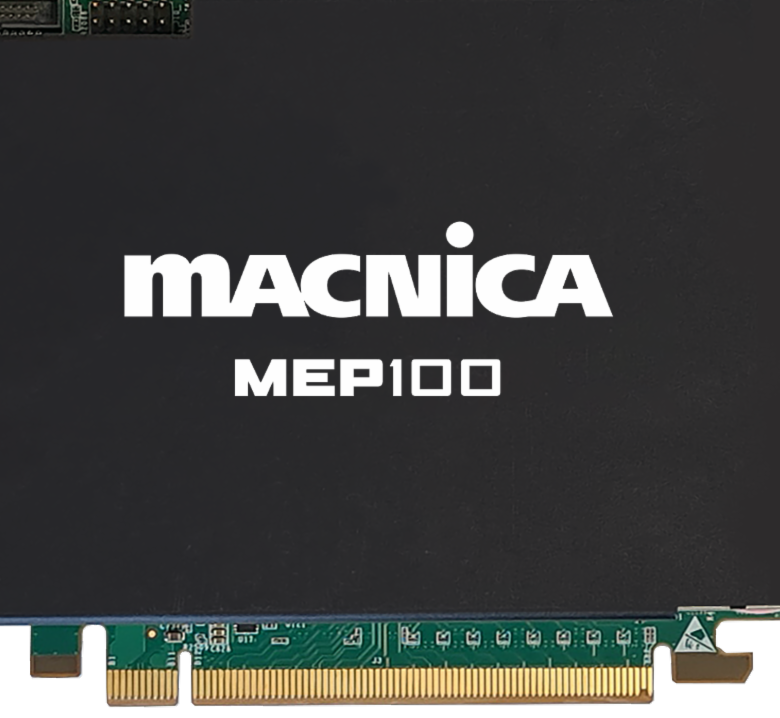
The discussion will touch on how Macnica, through its MEP100 SmartNIC, M2S Media Streaming SDK and growing ecosystem of technology partners, seeks to enable developers to build interoperable IP media products on the operating system and computing platform that best aligns with their engineering strategy.
For Macnica, the company continues to expand an ecosystem built around open standards, interoperable technologies and familiar software tools. At IBC2026, Macnica will showcase expanded support for Linux alongside its established macOS development environments, giving customers greater freedom to develop, deploy and scale IP-based media solutions across a broad range of production and broadcast workflows.
“One of our primary goals is helping developers to get to their solution faster and easier,” said Dwayne Lachance, a Product Manager at Macnica. “A developer building a multi-channel product on Linux shouldn’t have to spend a year building an ST 2110 stack, only to find it consumes the server it runs on. We put the transport in hardware so the host stays free for their application, not our transport.”
Linux is where software-defined production is being built, and it is where the GPU compute stack lives. On a standard Linux server, a single MEP100 handles up to 32 uncompressed HD flows in each direction over dual 100GbE with PTP, ST 2110-21 pacing and ST 2022-7 hitless protection executed in hardware. Zero-copy DMA over PCIe keeps frames out of intermediate buffers, and NVIDIA GPUDirect delivers them directly into GPU memory. The result is a high channel count at a low cost per channel, with host CPU and GPU resources left free for the inference, analytics and rendering that differentiate a product rather than consumed by moving media around.
At the core of this strategy is Macnica’s MEP100 SmartNIC, which provides hardware-accelerated SMPTE ST 2110 media transport with deterministic, ultra-low-latency performance, together with the company’s M2S Media Streaming SDK, which simplifies software development through familiar APIs and an application-centric programming model. Together, these technologies allow manufacturers to accelerate development while maintaining interoperability with open standards and modern IP media ecosystems.
Accelerating time to market extends beyond software. Through collaborations with companies including Advantech, Macnica is helping customers deploy validated hardware platforms optimized for the MEP100 SmartNIC, giving manufacturers a proven foundation that reduces integration effort and allows engineering teams to focus on product innovation rather than infrastructure validation.
Macnica’s IBC demonstrations can be found at Stand 7.C07 in the RAI Amsterdam (September 11-14).
Visitors will see technologies from wTVision and Softron operating within interoperable ST 2110 environments, illustrating how graphics generation, channel playout and media distribution can be developed across Linux and macOS using open standards and shared IP infrastructure.