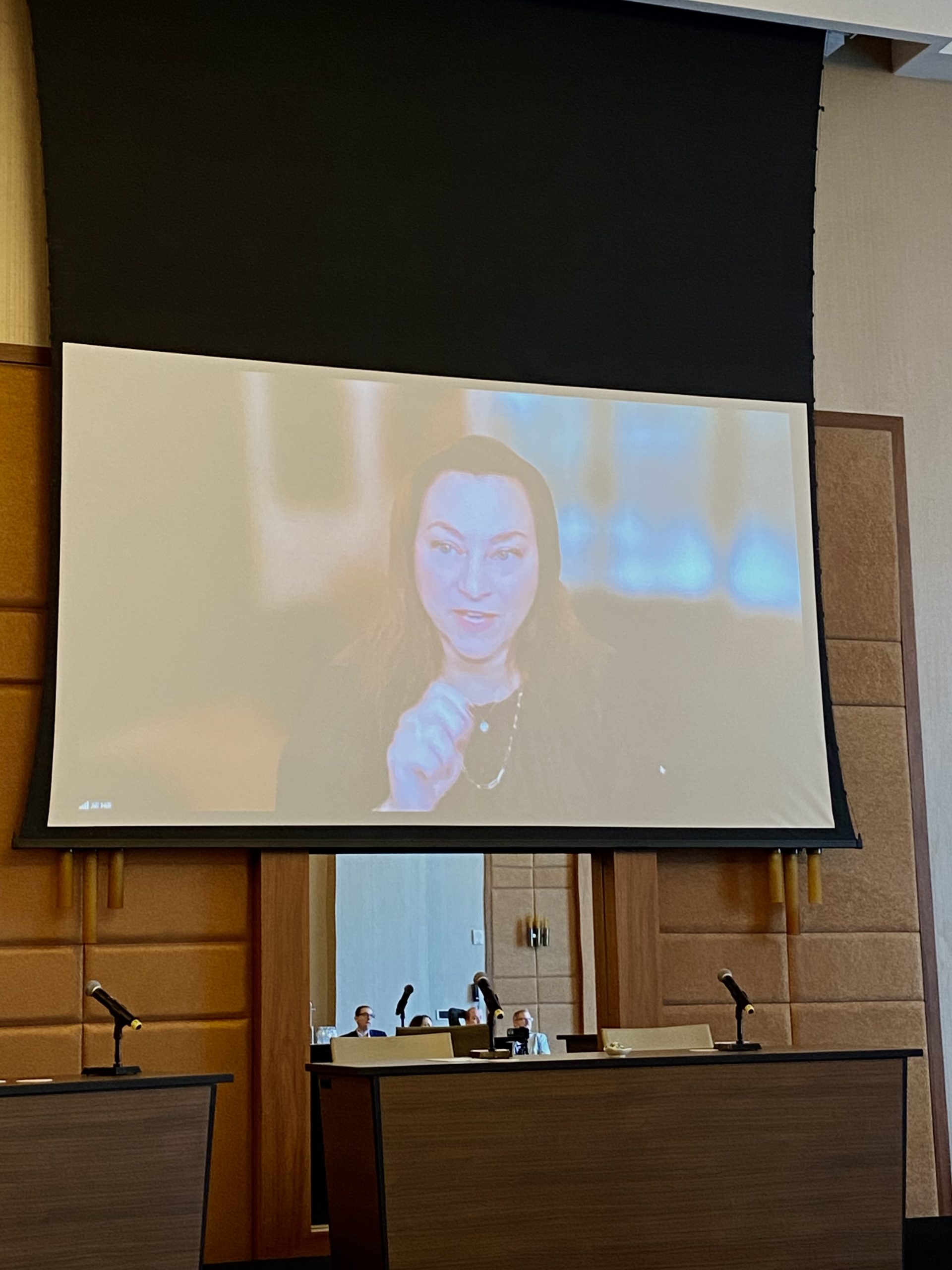
Within the video ecosystem, the marketplace is crowded. Very crowded. But, there are growth opportunities — and broadcast television can benefit. Ad-supported television is ripe for new and returning viewers, paving the way for greater ad revenue opportunties.
That’s according to Magid EVP Jill Rosengard Hill, who delivered a Keynote Presentation on Thursday afternoon at the Matrix Solutions Media Ad Sales Summit in Fort Lauderdale.

With churn in the SVOD space a brewing concern, Hill’s focus of her conference presentation, delivered virtually to in-person attendees due to Hurricane Nicole travel concerns, was on the current state of U.S. consumer streaming television and video consumption behavior.
One big takeaway: MVPDs matter, even as many in the U.S. are saying farewell. “Consumers are still intending to cut the cable television cord, at high levels, because of various free services,” Hill said. “But cable TV services are still in a strong position as aggregators and distributors of content.”
Hill also put a magnifying glass to the subscription video on demand (SVOD) segment of streaming video. It is more at risk today than at the onset of COVID, she said.
Another key takeaway from Hill’s findings is that News and Sports are actually migrating to the free, FAST streaming space. This, too, will continue to impact the bundle value proposition, Hill believes.
It could also very much complement broadcast television, as companies such as Nexstar Media Group are paving the way for the return of pro sports play-by-play to over-the-air television, as the Los Angeles Clippers will see several regular-season telecasts via KTLA-5, the company’s West Coast flagship.
Could this be the harbinger of a trend that could increase the likelihood of consumers cutting the cord? With Magid tracking cord-cutting since 2013, one of the more striking trends Hill has noticed is the increase in MVPD shedding among the AARP generation.
“Boomers are now seeing that streaming is way easier than they thought and not necessary about spending with SVODs,” as free content from linear platforms remains a key driver for viewership, Hill said. That said, SVOD is still experiencing a growth opportunity even though it is slowing.
How many will the consumer pay and subscribe to? A $10 per month price seems to be fair, but the maximum number of SVOD services people will get is at four, Hill said.
Lastly, one of the more intriguing slides Hill had to share showed that SVOD lags live broadcast and cable with respect to Boomers when asked, “Where do you go first to find something to watch?”
For all younger audiences, SVOD still wins.