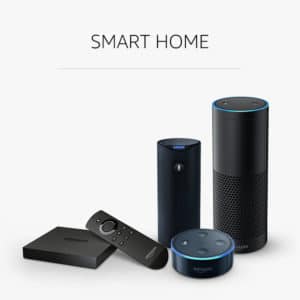
With all of the excitement expressed by the radio industry over smart speakers, and how they have the potential to bring AM and FM radio back in to the home, few have discussed the flip side of the entry of Google Home and Amazon Echo devices.
Could they actually cut, rather than add, to the time spent listening to radio? Business Insider says the answer could be “yes,” and uses a recent study from NPR and Edison Research to back up its report—and perhaps throw a wrench into the radio industry’s amour for Alexa.

In a Jan. 16 report written by reporter Zoe Bernard, Business Insider took a deep-dive into the latest in a series of reports that has provided radio with a particularly flowery story of in-home growth opportunities.
While much of the study’s findings was presented to CES 2017 attendees on Jan. 10, and shared with RBR+TVBR readers, Bernard hyperfocused on one data point: the percentage of U.S. smart speaker owners who replaced time they used to spend with a variety of traditional media devices in favor of a smart speaker.
Using a chart created by Statista, Bernard concludes, “Among the devices and services ranked by the portion of consumers who have shifted time away from them to their smart speakers, smartphones were second only to traditional radio.”
Thus, the debate begins: Is the smart speaker “killing the radio star?”

The Statista data would likely lead many to say “yes.”
But, that’s not an accurate answer. The smart speaker may be drawing consumers from a traditional AM/FM radio. But, this says nothing about whether or not they are instead consuming a radio station’s streaming audio — or not at all, thus contributing to fewer TSL for a radio station.
There is no other commentary or insight from Business Insider.
However, one industry consultant asks if the report puts into question a March 2017 discussion regarding the No. 1 18-34 ranking in the Tampa-St. Petersburg January 2017 PPM ratings for Beasley Broadcast Group’s Tropical WYUU-FM “Maxima 92.5.”
It was hypothesized by Randy Kabrich, who is based in Tampa, that the ratings jump are likely the result of a family receiving an Amazon Echo for Christmas. Jacobs Media called this “Fake News,” with Fred Jacobs noting in a blog post, “The idea that Alexa drove this listening is right out of Randy’s imagination, but it’s a fascinating stab in the dark. It’s possible, of course, that one of these devices was involved, but it’s doubtful because only a small percentage of homes even have an Amazon Echo (or Google Home) voice command device.”
The greater likelihood is that this household streamed the station on a mobile device, perhaps hooked up to Bluetooth speakers, Jacobs adds.
Meanwhile, the latest NPR/Edison Research data show nearly identical reach for AM and FM stations for smart speaker owners and the total population. Additionally, there is virtually identical daily time spent consuming an AM and FM radio station — as this could easily have been done via a smart speaker or radio or smartphone.
“People are listening to AM/FM, but they are receiving it in other ways,” Kabrich concludes.
RBR+TVBR