Hispanic Media’s Big Desire: Dollars, Without Obstacles

0

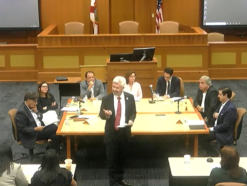
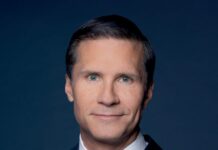
“This problem of money … is ratings, and funding to get into the market.” The multilayered roadblocks for Hispanic media are many, and the Chairman/CEO and founder of Spanish Broadcasting System (SBS) was on the attack at a symposium on Wednesday featuring Commissioners from the FCC and FTC.


As far as Raúl Alarcón Jr. is concerned, fairness in getting Hispanic radio and TV stations its share of the ad dollars is paramount. And, addressing Nielsen Audio issues is a necessary task, he said.

“If we can’t get the money, we cannot exert the power we already have,” said Alarcón, who insisted that dollars, and getting them, was the true focal point of a roundtable discussion designed to explore the market dynamics affecting the success and sustainability of Hispanic and Latino-serving media organizations.

The gathering, at the Florida International University College of Law in Miami, saw FCC Commissioner Anna M. Gómez and Federal Trade Commission Commissioner Alvaro Bedoya
hear input from TelevisaUnivision EVP/Chief Research Officer Roberto Ruiz, NBCUniversal Telemundo Enterprises Sr. VP of Research Strategy and Insights Federico Garza, Entravision Communications Chief Governmental Affairs Officer Marcelo Gaete, and Stephanie Valencia, co-founder, owner and Executive Chair of the Board at Latino Media Network.

Questions from FIU students in the audience were also taken across the 90-minute event, which offered an elementary look at the state of the U.S. Hispanic media marketplace. The refrain from many? Ratings are “not being fair” to Hispanic broadcasters, and it was Alarcón leading the charge.

While Valencia cited Eastlan as an alternative for audience measurement, Nielsen was at the heart of the discussion. For SBS, Alarcón hinted that its costs for Nielsen Audio data and analysis are significant. And, he and others on the panel are dissatisfied with many of the ratings reports received.

What does Alarcón want? Perhaps action from Washington, as he called Nielsen “an unregulated monopoly.”

How Nielsen collects and measures data, a question from an audience member, was addressed by Ruiz, who labeled Nielsen “the bane of my existence” — a remark that generated laughs. Ruiz noted that VideoAmp and Comscore are competitors to Nielsen. But, he also noted that every cable box is a Nielsen device, but without personification. “You don’t know if there is an NFL game being viewed who is on the opposite side of the screen,” Ruiz said. “Patents trying to recognize people by weight or by RF are being developed in Oldsmar, right up the road by Tampa, by Nielsen.”

Gómez jumped in by getting to the heart of how the data is collected, shifting Ruiz to talk with Bedoya about how the Portable People Meter works for radio, and how inaudible noises to specialized devices embedded in the programming is used to measure radio and TV. Garza noted that, for radio, paper diaries are still used, differentiating the media from television.

Ruiz then shifted the conversation to how duration is one of the most important audience measurement data points for media. But, digital media entities such as X have twisted this message, unfairly benefiting “Big Tech” at the expense of broadcasters.

As the symposium wound toward its conclusion, the FTC’s Bedoya questioned how Nielsen recruits its PPM holders and diarykeepers as Alarcón further pressed into Nielsen and how SBS has to pay it in order to stay in business and have its stations appear in ratings books, or risk the loss of advertising dollars. Underrepresentation of Latinos due to door-knocking recruitment of Nielsen participants or the lack of technology needed to be a participant was asked by Bedoya.

With an abundance of concerns voiced, Bedoya’s interest in Alarcón’s contention that Nielsen is a monopoly couldn’t be tempered. Thus, the Federal Trade Commission could act on the SBS head’s words, or acknowledge his opinion and move ahead just as Washington legislators before Bedoya have done since 1983, when SBS was founded by Alarcón.

“This is a thorny set of issues, and some have to do with market disparities while others have to do something with market power,” Bedoya said.

For Garza, “having a stake in the game” for Nielsen is needed, noting that in Denver, Entravision’s ratings have been problematic for nearly two years.

A solution to these issues is hardly expected to come soon. But, in five years, the participants believe a joint industry committee can provide Nielsen with the insight and empower it to address — and erase — the biggest points of consternation between Hispanic media and the audience measurement giant.