Former FCC GC: Agency Empowered To Melt Owner Caps

0

An individual who served as a General Counsel at the Federal Communications Commission and is today the co-Chair of the Issues and Appeals practice at Wiley Law has told the FCC that it holds the authority to adjust the national television multiple ownership rule. Thus, there is no need for Congress to do the job the Carr Commission can.


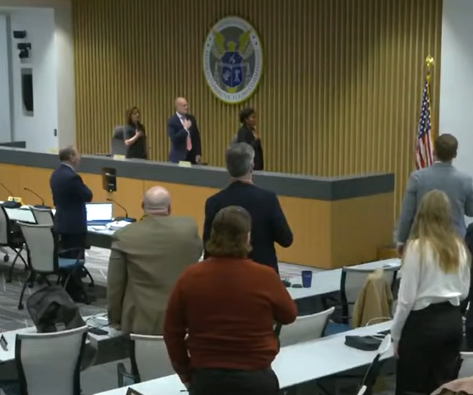
Wiley Rein Partner Thomas M. Johnson Jr. expressed these thoughts in an ex parte letter submitted with the FCC in its comment period tied to MB Docket No. 17-318, which would amend the national TV owner regulations in place under Congressional statute for more than two decades.

At the FCC from 2017 through 2021, the Office of the General Counsel “took seriously its obligation to stay within the limits of the Commission’s delegated authority while vigorously pursuing the public interest,” and Johnson says he’s proud that during his time at the FCC “the vast majority of the Commission’s orders were upheld in court.”

As General Counsel, he defended the agency’s bipartisan consensus that the FCC retains statutory authority to alter or eliminate the national television audience reach limitation under the “plain text” of section 629 of the 2004 Consolidated Appropriations Act and the “structure of the Communications Act as a whole. Now, he’s reaffirming his belief that the FCC has this authority today.

Some commenters have argued otherwise, Johnson points out, claiming that “good textualists cannot support the FCC’s authority to raise the cap. Respectfully, this is wrong.” He adds that the arguments against FCC authority in this area call to mind Justice Alito’s critique of “pirate ship” statutory interpretation: a reading that “sails under a textualist flag” but violates textualism’s central commitment to the text rather than a statute’s supposed purposes or a preferred policy outcome. “The Commission should not be duped by these false-flag arguments,” Johnson said.

Furthermore, Johnson contends Congress intended for the FCC to retain authority to reevaluate and relax the national cap as market conditions change. “As Chairman Carr and others have noted, the media environment today looks very different than it did back in 2004,” he said, quoting Carr as saying, “Broadcasters now compete for eyeballs with
YouTube stars, social medial platforms, and streaming services like Hulu and Netflix—not to mention traditional cable and satellite offerings.”

Thus, Johnson concluded, “the national cap places an anticompetitive thumb on the scale in favor of Big Tech. Relaxing or eliminating it would remove this artificial constraint on broadcasters’ ability to compete with today’s dominant media conglomerates. The FCC lawfully can—and indeed should—reevaluate whether retaining the current national cap makes sense in this new media landscape. That is precisely what Congress intended when it authorized the Commission in 1934 to amend its rules when the public interest requires it.”