FCC’s Starks, Industry Leaders Pose Thoughts On Funding

0

With FCC Media Bureau Chief Michelle Carey welcoming attendees, a day-long virtual Access to Capital Symposium kicked off with a series of sessions devoted to insight and observations on how women and people of color seeking to purchase a broadcast media property can best secure funding.


Pre-COVID 19, that wasn’t so easy. Today, it is even more difficult. But, noted African American TV station owner DuJuan McCoy says it can be accomplished.

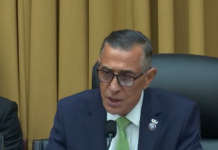
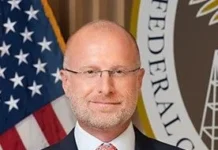
That would please FCC Commissioner Geoffrey Starks, who believes the agency needs to do more to provide ownership opportunities to multicultural entities.

Starks offered remarks in an opening session, and said that it was core to the FCC to serve the public by bringing broadcast communications ownership to all — words that mirror what he said in an exclusive Hispanic Radio Conference address in October.

On Friday, he applauded the FCC’s Diversity & Digital Empowerment Committee, for its role in educating the public and the Commission. “I applaud you for building the bridge of voices that whisper into the Commission’s ear,” he said.

Importantly, Starks said he was pleased to focus on something the Commission has been unable to move forward on in any meaningful way — access to capital. He noted that it was bad prior to COVID-19. Today, it’s even harder, but not impossible.

With no update on legislation introduced by Rep. G.K. Butterfield, of North Carolina, that would restore a minority tax certificate, Starks can only ask if “we should be able to take another shot” with a FCC incubator program.

Something that is likely to see action before Butterfield’s bill is a Notice of Proposed Rulemaking at the FCC on localized programming delivered via an FM booster, championed by GeoBroadcast Solutions. RBR+TVBR hears that the Commission could act as soon as next week on proceeding with the NPRM in a meaningful way.

Following Starks’ comments, ACDDE Chair Ana Gomez and Vice Chair Heather Gates shared thoughts about how the daylong symposium would offer “a robust and impactful discussion,” as Gomez said.

Diversity Working Group Chair Caroline Beasley, CEO of Beasley Media Group, then notd how three subgroups would be offering their thoughts and insight.

The first of the daylong learning sessions was a finance panel, moderated by Circle City Broadcasting owner DuJuan McCoy.

McCoy is the lending and financing subgroup chair, and he directed a lively chat on obtaining financing in today’s changing environment. It was “a case study panel” focused on … McCoy himself, and his experiences obtaining funding in 2008, when he purchased 7 stations for his former Bayou City Broadcasting.

Participants included Circle City CFO Ty Shea and Garret Komjathy, the SVP/Relationship Manager at U.S. Bank.

McCoy recalled how all of his financing was arranged at the end of 2007. Then, by the time closing came, the “Great Recession” was well into its height. “Everyone stopped lending money,” he said.

Today, with COVID-19 pandemic concerns ripping through the economy, the situation isn’t so dissimilar.

What did McCoy do? Seller Financing was the answer, with the following criteria: Reasonable terms, in the 8% to 12% range, was essential. For McCoy, an 8.5% loan for the full amount was secured successfully.

Then came a mutually agreeable maturity date, and the agreement on a loan payment amount payable via cash flow from the station. Lastly, McCoy made a cash downpayment — a move that gives a buyer “skin in the game.”

Other tips offered by McCoy: Small Business Administration (SBA)-backed assistance, and seeking out funding from regional banks.

Shea expressed the importance of the banking relationship, while Komjathy shared how he literally hand-held some clients through the process, with an onus on getting information quickly — and correctly — to the SBA so it can get things started as soon as possible.

“Without that money, clients would have been lost and money would have been gone,” Komjathy said.

The participants then addressed a question submitted by a participant: What’s the single-most important thing to a banking relationship for a CFO?

For Shea, the answer was “making sure we were always systematically buttoned up.”

In Komjathy’s view, it was “overcommunication,” as he noted how some clients have little human action, and solely a portal or website to guide them.


RBR+TVBR will have further coverage from the ACDDE/Media Bureau Access to Capital Symposium on November 9.