Paramount Skydance Corporation is officially the owner of CBS News & Stations and a variety of cable TV networks once under the Viacom banner, including Nickelodeon. It is trading on the Nasdaq GlobalSelect market as “PSKY,” and as of 3:35pm Eastern was down by 2.2% from its inaugural $11.65 price.
That still doesn’t sit well with the lone Democrat who serves as a FCC Commissioner.

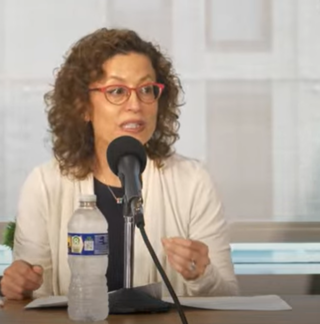
In a statement, Anna M. Gómez said the late evening closing on August 6 of the merger between Paramount Global and Skydance Media, ending the Redstone family’s involvement in the CBS parent, “marks the final chapter of a dark moment in our nation’s history.”
How so? Gómez explains, “After months of cowardly capitulation, including an unprecedented payout to settle a meritless lawsuit in exchange for regulatory approval, Paramount and Skydance have completed their merger. This will be a new company, born in shame after trading away fundamental First Amendment principles in pursuit of pure profit. It embraced [the Trump Administration]’s radical notion that discriminatory behavior should be tolerated and even embraced, while efforts to expand opportunity for everyone should be rejected.”
“More alarmingly,” Gómez adds, Paramount Global “agreed to never-before-seen forms of government control over newsroom decisions and editorial judgment—actions that violate both the First Amendment and the law. A government-sanctioned ‘truth arbiter’ will soon arrive at CBS. Their role will be to ensure that journalists at CBS do not criticize this administration or express views that conflict with its agenda. That should alarm anyone who values the core democratic principle of a free and independent press.”
Gómez also took a moment to point that “those now feigning concern over media bias are the same individuals who have spent the past decade attacking the press and sowing public distrust in journalism.”
And, even if such bias did exist to the extent they claim, the last entity the American people should entrust with defining or policing it is the federal government, Gómez said.
Gómez earlier this year launched a “First Amendment tour” to lash out against the Trump Administration and Chairman Carr’s determination that “news distortion” complaints were worthy of consideration and should not have been dismissed on delegated authority by acting bureau chiefs.
AN ‘OPEN LETTER’ FROM ELLISON

Upon the combination of Paramount with Skydance, new Chairman/CEO David Ellison penned an Open Letter to “teammates, shareholders, creative partners, and the hundreds of millions of people who invite our stories into your lives every day.”
He said, “With the close of the transaction, we unite more than a century of iconic storytelling with the ingenuity and drive of a 15‑year-old studio born in the digital era.”
The comments came alongside an official press release marking the combination of Skydance, largely known for its Tom Cruise-helmed Mission: Impossible feature film franchise, and Paramount Global.
“The close of this transaction positions Paramount to forge a new path forward in the entertainment industry, combining its extensive creative library and global distribution network with Skydance’s production expertise and industry-leading technological capabilities,” the companies said in their official communication. “In the near-term, Paramount will leverage strategic investments to capitalize on identified synergies and opportunities to streamline its business, with a focus on forward-thinking approaches to content creation and storytelling, as well as providing value and stability for shareholders. Supported by RedBird Capital’s business building and financial acumen, the newly combined entity will rely on best-in-class leadership and tech-enabled innovation to revitalize and position one of entertainment’s most storied enterprises for long-term success.”
In his Open Letter, Ellison added, “We began this journey to combine Paramount and Skydance nearly two years ago with a clear objective: to transform Paramount—a company with a storied history and an undeniable impact on culture for over a century—by investing in high-quality storytelling and cutting-edge technology and pursuing opportunities that will help define the next era of entertainment. That ambition was and continues to be fueled by a powerful set of core strengths and unique assets across our now-combined company.”
Gerry Cardinale, Founder and Managing Partner of RedBird Capital, said, “Our investment in Paramount and long-term partnership with the Ellison family reflects our deep conviction in the value of world-class intellectual property and the potential to unlock substantial growth as these businesses navigate technological disintermediation and evolving consumer preferences. We’ve been collaborating with David Ellison for the last 15 years and made our first investment in Skydance in 2019. Over this period, we’ve seen the power of an owner-operator model that integrates technological sophistication with a talent-friendly passion for producing great original content.
“We have evaluated investing in this type of media and entertainment in Hollywood for the last 25 years, but it was only after our investment in Skydance that we began to develop tangible conviction around a performance-based approach to investing in diversified content production,” Cardinale added. “The track record that David and the team at Skydance have established has prepared them for this opportunity, supported by our operating and investment team at RedBird. This is a transformative opportunity to embrace Paramount’s 113-year-old legacy as one of the most iconic Hollywood institutions and help transition it for today’s evolving technological landscape.”
EMPLOYEE TRANSITIONS TO COME?
From Miami to Midtown Manhattan, talk of a major reduction-in-force at Paramount Skydance has been the subject of cocktail bar chatter and social media messaging.
What does Ellison have to say about that?
“We recognize that realizing our ambitions in today’s dynamic and fiercely competitive global market won’t be easy,” he wrote. “We are in the midst of a generational change in our industry—and we understand Paramount has faced its own significant challenges, compounded by the reality of a merger process that stretched out over a considerable time period.”
This means Paramount Skydance “will work with conviction and optimism to transform Paramount into a tech-forward company that blends the creative heart of Hollywood with the innovative spirit of Silicon Valley.”
While investing in its growth businesses is a priority, Ellison and the leadership team at Paramount Skydance recognize that “sustained, profitable growth is not achievable in today’s relentlessly dynamic market without far-reaching changes that will make us a leaner, faster, smarter, and more agile company.”
This includes a hinted-at restructuring of Paramount Skydance into Studios, Direct-to-Consumer and TV Media business units, with George Cheeks overseeing the CBS O&Os and network.
“On the TV Media side, our challenge is to reinvent our portfolio of brands for a non-linear world,” Ellison noted. “We plan to invest appropriately based on the future business opportunity, thereby maximizing cash flow so we can reinvest in our growth businesses.”
“On the TV Media side, our challenge is to reinvent our portfolio of brands for a non-linear world. We plan to invest appropriately based on the future business opportunity, thereby maximizing cash flow so we can reinvest in our growth businesses.” — David Ellison
He concluded, “Inevitably, challenging decisions and difficult trade-offs lie ahead. We will face them head on, maintaining transparency by openly sharing the rationale behind our choices and how they serve the best interests of our stakeholders … The years ahead will undoubtedly bring formidable challenges, but they will also usher in extraordinary opportunities. We stand at the threshold of a remarkable moment—and our strong conviction is that this company is poised to make the most of the possibilities ahead. Because when creative excellence, cutting‑edge technology, and disciplined stewardship meet, great things happen—on the screen and on the balance sheet.”