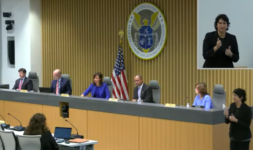
FCC Republicans, Chairwoman Speak Out On Audacy OK

0

As Jessica Rosenworcel, the Chairwoman of the Federal Communications Commission sees it, the process the FCC used to facilitate the long-awaited license transfer needed to get Audacy Inc.’s emergence from debtor-in-possession status the agency’s regulatory approval “is identical to the one” used for three of its Audio content creation and distribution industry peers — in addition to two TV station ownership groups.


Still, Brendan Carr and Nathan Simington couldn’t be more irate over what detractors of the deal have labeled a “Soros short cut” to gaining financial control — and, to conservatives, editorial control — of Audacy’s radio stations.


In a statement, Rosenworcel defended the FCC’s 3-2 vote in favor of approving a Houston federal bankruptcy court’s decision granting Audacy’s restructuring agreement, which came on February 20.

She noted that, when deciding on the plan, it used a process no different than that used in the bankruptcy proceedings of Cumulus Media in 2018, iHeartMedia in 2019, Liberman Television (now Estrella Media) in 2019, Hispanic market-focused America-CV Station Group in 2021, and Alpha Media in 2021.

“To suggest otherwise is cynical and wrong, as this precedent clearly demonstrates,” Rosenworcel said, using language that, for the Chairwoman, is perhaps the biggest tongue-lashing seen since becoming the FCC’s head. The famously cordial Chairwoman continued, “Our practice here and in these prior cases is designed to facilitate the prompt and orderly emergence from bankruptcy of a company that is a licensee under the Communications Act.”

For Carr, a four-page-long dissenting statement slammed the decision for being “unprecedented,” as “never before has the Commission voted to approve the transfer of a broadcast license — let alone the transfer of broadcast licenses for over 200 radio stations across more than 40 markets — without following the requirements and procedures codified in federal law.”

In Carr’s view, “the Commission breaks this new ground today without seeking public comment on altering our established regulations, without actually changing the rules on the books, and without seeking the feedback of other federal agencies with relevant equities.”


“Unless and until the Commission changes our rules, I cannot support the special shortcut adopted today. Accordingly, I dissent.”


For Carr, it is Section 310(b)(4) of the Communications Act that has become his laser focus in the Audacy bankruptcy plan’s codification process. As there was no Petition for Declaratory Ruling process here, Audacy is, in Carr’s view, skipping the FCC’s regular review process.

“Unless and until the Commission changes our rules, I cannot support the special shortcut adopted today,” Carr concluded. “Accordingly, I dissent.”

For Simington, a three-page dissenting statement was distributed by the Commission. He, like Carr, is practically incredulous that his Democratic colleagues pushed the Audacy bankruptcy approval through.

“Since I am voting on a skeletal item citing essentially no factual record that was yanked at the last minute from a contemplated 48-hour notice fast-track, imagination is what I have,” he lamented.

If one could say Rosenworcel was especially stern in her tone, Simington may as well be the FCC’s battering ram against regulatory overreach. “A Commission eager to fast-track a billion dollar broadcast media reorganization, disregarding foreign ownership concerns, is the same Commission that has gone back to the well several times to impose and re-impose foreign sponsorship identification rules on our smallest independent broadcast license holders every time they place local church content on the air. Just saying,” he said in his statement. “It is trivial that fair and objective judgment is rooted in an opportunity to discover facts, yet I was afforded none. The first outreach I received about this transaction, the application for which has been pending before the Commission since March, was when I was informed by bureau staff in August that: thanks but no thanks, they would handle it for me. And now that I have been afforded an opportunity to weigh in, I have no meaningful record to review, and consequently no way to determine if grant of the Section 1.5000(a)(1) waiver, or the Application overall, serves the public interest. I have no choice but to dissent.”