Embracing Change in a Dynamic Media Landscape

0

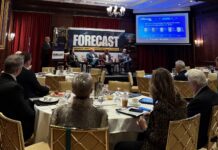
ARLINGTON, VA. — With renewed vigor and CEO Joe Annotti fully energized about this year’s event, the Media Finance Management 2025 Conference formally kicked off Monday following a Hearst Television-sponsored welcome reception on Sunday evening with welcome remarks from the President/CEO of the National Association of Broadcasters.


 

Speaking first, ahead of 2 1/2 days of sessions full of presentations focused on the CFO and revenue drivers of broadcast radio and television and newspapers across the U.S., Curtis LeGeyt addressed the transformative shifts reshaping the media landscape and what broadcasters are doing to capitalize on these changes.

For LeGeyt, the first half of 2025 marks “a pivotal time for the media and entertainment industry, but specifically the broadcast industry, for which I represent.” With representatives from broadcast and print media in attendance, LeGeyt acknowledged both industries, noting how their respective roles are central for providing communities with the news and information they need.

And, LeGeyt shared, the MFM attendees are the stewards that ensure that these media have the finances necessary to keep “trusted local news and information” on track. Acknowledging that the financial environment for print and broadcast media is far from stellar, the NAB head noted that, despite the challenges we are experiencing today, the industries are on track and “behind that progress is the work of people like you.”

With that, LeGeyt touched on three areas where policymakers “must focus to ensure a vibrant future for broadcasters and other local media.”

First, he addressed the FCC’s “outdated broadcast ownership rules.”

Second, LeGeyt noted of the potential harms posed to content creators, including newsrooms for broadcast media, due to the rise of AI.

Third, he spoke of enabling advertising tools as a driver of economic growth and innovation.

Starting with “the most urgent issue facing the broadcasting industry,” LeGeyt addressed “the need to modernize” the Commission’s broadcast ownership restrictions — “frozen in a landscape that no longer exists.” With a 39% national TV household reach cap for broadcast TV station ownership groups and a “Top Four” rule still in place, “these rules were designed decades ago, when broadcasters were the primary way Americans got their news, entertainment and information.”

Today, “the dominant players are ‘Big Tech’ platforms like Amazon, Netflix and YouTube — companies not just with national but with global scale,” LeGeyt said.

These are part of the regulations he believes hinder broadcasters’ ability to grow and compete. Yet, “we compete with them everyday, for audience, for advertisers and for programming rights including sports,” LeGeyt added.

For the NAB, the stakes couldn’t be higher, as LeGeyt shared data that show YouTube accounting for 10% of all television Americans watch — more than any other video service including broadcast, cable or streaming.

The solution as the NAB sees it? Less is more. “I would like to see in local markets across the country our ability, where it makes sense, to have two or three extremely well-resourced newsrooms rather than the government forcing us to have four or more just simply because that made sense in the 1970s.”

But LeGeyt did not offer an example of a market where four or more news organizations compete with English-language newscasts. Only a handful of the biggest markets fit this scenario. In West Palm Beach, Gray Media-owned WFLX-29 has long enjoyed a shared services agreement in which The E.W. Scripps Co.’s WPTV-5 produces the “FOX 29”-branded news with anchors and reporters from the WPTV newsroom. This means that only two competitors in broadcast TV exist in the vibrant TV market home to Mar-a-Lago and President Trump’s abode when not in the White House. LeGeyt continued, “We need an environment where local stations have the scale and resources to support forward-looking investments, like ATSC 3.0.”

Ensuring Americans are aware of the risks to local media, and why one company owning more stations is a good thing, is part of a publicity effort launched earlier this year by the NAB. “We are already off to a great start in this advocacy campaign,” LeGeyt said, as the association has been “flooding the zone here in Washington” since January 20 to ensure that policymakers are aware of the urgency of the need to update the FCC’s rules. In Washington, digital advertising and spots on local radio targeting these policymakers have appeared across the first half of 2025.

ADVOCATING FOR SAFE AI

LeGeyt also used his appearance just minutes south of the NAB’s Washington, D.C., headquarters to provide attendees with a full overview of other key federal policy issues impacting the media and entertainment industry and local stations’ ability to serve their communities. These includes the benefits and risks linked to artificial intelligence. The biggest AI worry is the unauthorized use of news in AI models — “a concern not just for broadcasters but for all of us.”

This creates matters regarding compensation, while trust issues could arise because of a loss of control in that content, and how it is being used, thus undermining the credibility of a news organization. Misappropriation of likeness of “trusted radio and television personalities” presents a danger of fraud, and with “Deep Fakes” on the rise, newsrooms are more challenged than ever in distinguishing legitimate content from fictitious folly.

“The rise of AI is going to make broadcasters’ role in verifying factual information not only that much more important but also that much more challenging,” LeGeyt said. “It is going to take major investments to keep up with this game-changing technology.” This is why the NAB is advocating for policies that can maintain the delivery of its content, he noted.

KEEPING THE ADVERTISING TAX CREDIT

Advertising is the lifeblood of the broadcast media business. As of today, it is fully deductible as a necessary business expense. “Unfortunately, that is on the table in the tax reform discussions that are happening on Capitol Hill through the reconciliation process,” LeGeyt explained.

In the last few years, some in Congress have expressed changes to the tax treatment of business advertising as a means of raising revenue to use it as a “pay-for” for other legislative tax changes. “This would be a direct hit to local media,” LeGeyt said. “It is what enables us to support small businesses in our hometowns. Any change to the deductibility of advertising would have a devastating impact on local television and radio stations as well as the entire media ecosystem. If businesses are discouraged from advertising, the loss of these dollars won’t just impact our newsroom. It will also effect the production of trusted content and our commitment to community service that defines local media.”