Carr’s First 100 Days: From CBS ‘Penalty’ To Deregulatory Wishes

0

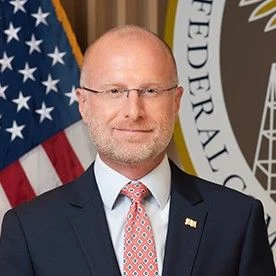
BEVERLY HILLS, CALIF. — He started as a staffer in 2012 and has risen to the top leadership post at the FCC. Today, Brendan Carr has in just 100 days become one of the most forward-thinking and forward-driven Chairmen the agency has had in the modern era. But, that has come with partisan polarization of Carr’s agenda, with many arguing that he’s simply taking direction from President Trump.


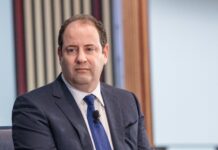
Carr discussed his first 100 days leading the FCC on Monday in a 20-minute “Fireside Chat” at the Milken Institute Global Conference, where he also directly addressed the agency’s controversial probe into “news distortion” conducted by Paramount Global-owned CBS.


In conversation with CNBC personality and financial journalist David Faber, Carr detailed some of the accomplishments already seen under his leadership — a new high-speed internet bill, addressing spectrum needs and how “China has sprinted out ahead of us,” national security, and deregulation.

“We’ve launched the largest deregulation initiative in the FCC’s history,” he said. “We’re doing a top-to-bottom review of all regulations and we’ve already proposed to close something like 2,000 dockets. It’s been a pretty busy first 100 days.”

HOPES AND EXPECTATIONS ON DEREGULATION

Loosening the Commission’s broadcast ownership rules was something Faber wanted to know more about first and foremost. He asked Carr what his expectations and wishes are when it comes to deregulation.

Carr replied that deregulation could “really help unleash private sector investment. We have so many rules on the book and, look, we’ve got rules that continue to regulate telegraph services, if you can believe it.”

His goal with the Code of Federal Regulations? To chop it down in half. “I think that will go a long way toward giving people the incentive that they need, because in this space — and, a lot of of around here [in Los Angeles], it means billions and billions of dollars in investment,” Carr said.

Spectrum use for commercial purposes was then asked by Faber, to which Carr explained that we’re short on spectrum, and there’s a big chunk of it available for “true 5G” experience. “China does not have 7% of their mid-band spectrum for high-power use,” Carr said. “They have a lot more, and we’ve got to work with the Department of Defense and got to find a way to move spectrum they have been using and move it into the commercial marketplace.”

The key? Congress needs to restore the Commission’s spectrum auction authority. “That is $80 billion to the positive,” Carr said. “We’re looking at the couch cushions right now to get this done. We have a lot of government spectrum, which is great, and we have a lot of unlicensed spectrum, but we have more.”

FREE SPEECH VS. ‘THE RIGHT SPEECH’

At the 11-minute mark, Faber turned his attention to some of the more controversial fodder involving the FCC under Carr — investigations against Comcast, CBS, and ABC. Faber asked why, if there’s an issue, the FCC isn’t looking across the political spectrum?

“Restoring free speech is one of the most important things we’re doing,” Carr responded. “Particularly when it comes to online speech, that is when we saw so much censorship take place. That’s why I pushed for a long time for Section 230 reform.”

Acknowledging that many of the actions that have drawn attention are on the broadcast side, Carr said, “In reality broadcasting is simply different. Unlike a podcast or a cable show, broadcasters have a public interest obligation because they’ve been given a very unique thing, which is monopolistic access to a public resource — the airwaves.”

Retransmission and must-carry also make them special compared to online media, and given they are licensed by the federal government, the Carr Commission wants to hold them accountable to their public interest needs.

What is Carr’s broad view when it comes to the media space and what he’s seeking to accomplish at the Commission? “Trust in the national news media is at an all-time low, but it is not uniform,” he said, noting that local television news anchors and reporters are more trusted. “The problem is that the national programmers are exerting more control over local broadcasters.”

Faber quickly interjected, asking Carr what evidence he has to back that statement up. Carr pointed to the economics of the network-affiliate relationship. Commissioner Nate Simington addressed this just days ago in a blog post calling for a 30% maximum in “reverse comps” paid to networks by their affiliates. Restraining the power of national broadcasters, thus, is a desire of Carr.

But what about the White House influence at the Commission today? “We take the facts as we find them,” Carr replied.

At this point, he addressed the CBS “edit” and an alleged violation of the FCC’s “news distortion” rules. “We put that out for comment and we’re going to make a final decision there,” Carr said. “That will ultimately be based on the law and the facts on the record.”

The comment cycle has closed, but Carr has no hints as to when a final decision has been made.

Earlier in the day, Carr appeared on CNBC with Faber’s co-host, Sara Eisen, and shared how the inquiry into how CBS treated an interview with Democratic Presidential candidate Kamala Harris, and answers to a question about Israeli Prime Minister Benjamin Netanyahu, is not a “threat” but instead a “penalty that’s in the Communications Act.”

During the Faber conversation, Carr reiterated that a lawsuit against CBS from President Trump is separate from the investigation and the pending Skydance Media merger with Paramount Global. “We’re staying in our lane,” he said.