For many years, the legendary Jerry Miller served as Chief Engineer for the 50kw Class A WCCO-AM 830 in Minneapolis. Upon his retirement, Miller joined FCC staff across the U.S. and Media Information Bureau columnist Ken Benner to greatly improve the integrity of the Alternative Broadcast Inspection Program (ABIP), beginning in 1995.
The latest column from Benner builds on Miller’s idea to provide suggestions for stations some 10 days prior to a scheduled inspection. Reading it and saving it could save your radio and/or TV properties a bundle in potential FCC forfeitures.

The Alternative FCC Inspection Day Format
I suggest you obtain a copy of the appropriate FCC Self Inspection Checklist to review prior to the arrival of your inspector. These are available by clicking here.
EAS information is available by clicking here. Your inspector will help you understand any questions you may have following your review of these items.
- An inspector will arrive at your station a few minutes before your designated appointment.
- He/she will ask for the General Manager or other designated representative for the inspection.
- The inspector will review the status of the station’s Public File and provide any necessary updates. Please do so before the visit.
- Assemble your staff in the conference room to review all items in the applicable FCC Self-Inspection Checklist(s), so there are no surprises upon the inspector’s visit. Review Section I of the Self-Inspection Checklist — administrative non-technical. Then, review the Public File Requirements. Following these two reviews, the administrative staff may return to their regular work duties if they wish.
Subsequent sections are technical, requiring the Chief Engineer, Chief Operator or contract Engineer’s attention.
- Control Room Operations inspection is conducted. Insure the availability of both Federal and State-plan EAS booklets, the EAS Log, posting of the license, posting of Chief Operator designation, availability of tower-light outage reporting information, means to determine proper power output, mode of operation, etc.
- Transmitter/Tower site inspection. A measurement of tower coordinates will be done, if necessary. There will also be a tower paint comparison with the Hale color-chart standards, and there will be a check of the tower lighting as indicated on the station license.
A copy of the station license is necessary for this part of the inspection, along with a copy of the tower registration certificate 854R and for AM directional stations, and directions to the designated Monitor Point locations with copies of recent Monitor Point measurements.
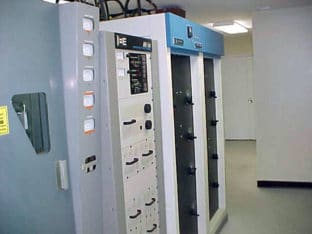
Observation of proper power, mode of operation, proper remote control system, elements of good engineering practices (i.e. proper cooling), air filtration, UPS units for remote metering and control systems, operator safety, proper signs (i.e. tower registration numbers), yellow triangle radiation warnings, will be done as required.
The station GM or designated representative will be called on to provide answers to questions or be asked to refer to the appropriate sources of information.
The final act of the ABIP visit will consist of a debriefing with the GM, licensee and/or station owner, staff, and others interested.
Once this is done, you will need to provide a copy of the inspection Certificate of Compliance or a copy of item of non-compliance pending correction for later certification.
For a station found significantly non-compliant, an explanation for obtaining certification without additional cost will be provided.
This road-map should well serve those broadcasting operations seeking to FCC self-certify, or for contract engineers offering to save their clients very substantial costs.
Ken Benner is an independent Alternative FCC Compliance Certification Inspector and a research analyst for the Coalition for Transparency, Clarification and Simplification of Regulations pertaining to American Broadcasting. Benner has more than 55 years of experience providing service to the broadcast industry.
The views expressed by Media Information Bureau columnists are those of the writer only and not of the editorial board of the Radio + Television Business Report or its parent, Streamline Publishing.
This is an encore presentation of a column that originally appeared Dec. 28, 2017 at RBR.com.