Here’s something noteworthy as the push to bring additional financial support to recording artists through new royalty fees for radio continues on Capitol Hill: four co-sponsors of the “American Music Fairness Act” are also co-sponsors of the “Local Radio Freedom Act,” the resolution that as of today has resounding support.
Even so, the musicFIRST Coalition is confident that the “AMFA” will win over Congress.
Or, is that a statement that’s a bit unfair to make as musicFIRST, led by the Congressman who lost his seat in a primary race to Alexandria Ocasio-Cortez, continues to push “AMFA” — something musicFIRST calls “actual legislation that has a real path to becoming law this year?”

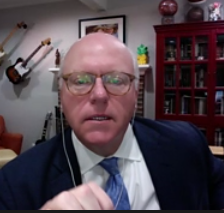
Joe Crowley, Chairman of musicFIRST, would argue that the likelihood of AMFA getting a floor vote in the House of Representatives remains strong.
In his organization’s view, the LRFA is a symbolic resolution that, by definition, cannot become law no matter what happens. Technically, the LRFA is a resolution.
It is a resolution with some 208 co-sponsors, and is considered a pledge, albeit non-binding, that these House members will not vote for legislation that would bring any sort of new fee to Radio. In the last week, Republican Dan Crenshaw, of Texas, and Democrat Kathy Manning, of North Carolina, added their names to the LRFA co-sponsor list.
In the U.S. Senate, 23 co-sponsors have signed on to a companion LRFA resolution.
That may sound insurmountable, and a sign of the NAB‘s lobbying prowess on Capitol Hill. For musicFIRST, that’s not the case. Speaking of the LRFA, a group spokesperson asserts, “It hasn’t gotten a floor vote in the 15 years since it was introduced, and even if it did and it passed, it wouldn’t actually protect a single local radio station.”
Furthermore, the musicFIRST representative claims, “If lawmakers care about protecting truly local radio stations, AMFA does that by writing in protections for small stations and ensuring they have a low-cost, predictable way to play as much music as they need to. That’s why we’re seeing more and more LRFA cosponsors come over and also sponsor AMFA.”
To be clear, the “more and more” refers to a handful of LRFA co-sponsors including Rep. Dwight Evans (D-Pa.), Gregory Meeks (D-N.Y.) and Bobby Rush (D-Ill.). A fourth Member of Congress, Albio Sires (D-N.J.), is becoming an AMFA co-sponsor.
“We think these ‘dual sponsors’ underscore that, despite what the NAB might say, lawmakers can both support artists being paid their fair share for radio airplay and support local radio,” the musicFIRST spokesperson says. “They’re not mutually exclusive — and we believe AMFA does both.”
Speaking confidently, the organization adds, “When this bill becomes law, it will look out for truly local radio by limiting the amount stations have to pay — from only $500 a year for small commercial stations down to just $10 a year for the smallest stations to play as much music as they want.”
As Crowley sees it, “It’s time to reject the cynical ploys iHeart uses to avoid having to dip into its coffers and pay artists any of the billions of advertising dollars it generates from the music it plays and pass actual legislation that respects artists and protects local radio.”
Yet, with 31 co-sponsors, no Senate companion legislation and time ticking, the AMFA could wither away just as previous LRFA resolutions have.
And, for Radio, that’s likely a preferred scenario as the LRFA’s appearance every Congressional session has successfully thwarted legislation it would rather not want — including the AMFA — from reaching the Senate for any vote.