
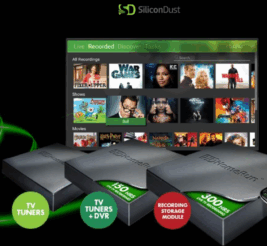
The Glendale, Ariz.-based technology company best known for creating the HDHomeRun line of network-attached digital television tuners is urging the “hold separate” unit of Nexstar Media Group formerly known as Gannett to disable Digital Rights Management encryption one week before a November 17 Emergency Alert System test at 2:20pm Eastern — a move that would insure messages are fully distributed and received by viewers.
In a letter submitted to the FCC in its ECFS and publicly accessible to all, SiliconDust USA President Nick Kelsey asks TEGNA Associate General Counsel Michael Beder to disable DRM encryption across 22 of the company’s broadcast TV stations by November 10, and to leave it so through the test on the third Tuesday in November.
This would allow at least seven days for receivers and tuners to confirm reception. Kelsey explains, “When DRM encryption is enabled, the EAS audio and visual message carried within the television service is also encrypted. Viewers using receivers without A3SA authorization cannot see or hear that emergency message.”
That’s a matter of public safety, and raises “a substantial question whether a station has fulfilled its EAS obligations,” Kelsey says. “Records showing insertion and transmission of the message do not establish that viewers could receive it. Availability through an ATSC 1.0 simulcast likewise does not establish successful delivery through the ATSC 3.0 service.”
Silicondust intends to observe selected ATSC 3.0 services during the test and submit a factual followup to the FCC, including any access barriers caused by DRM encryption.
The letter to TEGNA’s Beder follows an October 5 ex parte filing in GN Docket No. 16-142 concerning viewer access to the EAS test. In that filing, 35 Gray Media stations, 27 Nexstar stations, 22 Hearst Television properties, 18 stations owned by The E.W. Scripps Co., 17 NBCUniversal Local stations, 16 Fox Television Stations O&Os, 11 CBS Stations properties, 8 Cox Media Group TV stations, 6 TelevisaUnivision stations, and Allen Media Group‘s KVOA-4 in Tucson were also identified as transmitting DRM encrypted ATSC 3.0 television services.
View the filing and list of stations here.
So were Circle City-owned WRTV-TV in Indianapolis, Graham Media Group‘s KSAT-12 in San Antonio, Mission Broadcasting-owned KOLR-11 in Springfield, Mo., and Bonneville flagship KSL-5 in Salt Lake City.
December 3, 2026 is the EAS test backup date.