The Attorney General of the State of California has reached a settlement agreement with Paramount Skydance Corporation, bringing it one step closer to completing its merger with Warner Bros. Discovery.
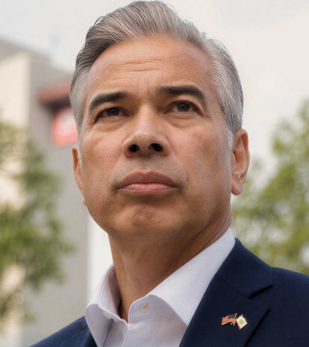
In a statement issued midday Monday, Pacific Time, Rob Bonta shared that the agreement between the Golden State and the company led by CEO David Ellison “includes court enforceable guardrails to resolve the antitrust issues at the center of our case, protect competition and consumer choice, and provide for the production of significantly more films and a minimum of $1.5 billion in additional investment in domestic film production.”
Bonta continued, “Over and over, our office has heard from people who would be most impacted by the merger that what matters most is consistent film output, domestic production, and protecting jobs. Today’s settlement protects workers, jobs, and Hollywood.”
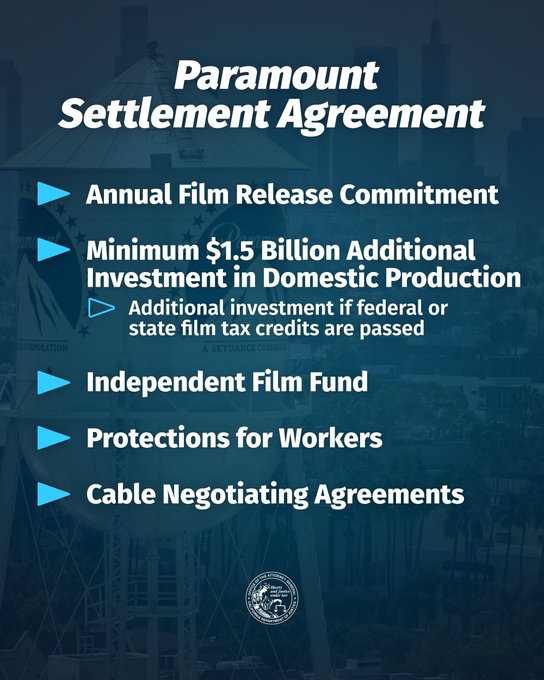
Bonta lled a coalition of 12 attorneys general in securing the settlement with Paramount, resolving the states’ lawsuit alleging the merger of the entertainment giant and Warner Bros. Discovery would harm competition by lowering output and raising prices, hurting both workers and consumers in the process.
The settlement, pending approval by the court, includes a five-year court enforceable commitment to increase film output, a $47.5 million fund for workers who are impacted by the merger, and restrictions on how the company handles cable negotiations to help keep prices competitive, Bonta said.
Don’t consider it a victory for the state AGs, he added. “Let me be clear: This settlement is not a vote of support for this merger, but we believe this settlement, which resolves our antitrust concerns in every market alleged in our case, protects competition and consumer choice, and puts workers’ needs, concerns, and futures first, is the best course of action,” Bonta said. “When we get down to brass tacks, what we heard over and over from people who would be most directly and immediately impacted by the merger is that what matters most is consistent film output, domestic production, and protecting the livelihoods of workers above and below the line. As such, our settlement provides court-enforceable commitments for more films and protections for workers who are impacted by the merger. There’s no Hollywood without the people who work on and off screen to make the magic happen, and today’s settlement protects workers, jobs, and Hollywood.”
IATSE International President Matthew D. Loeb thanked Bonta for “a job well done in settling with Paramount and achieving protections for workers, enforceable safeguards and other important commitments from the company as the merger may now move forward.”
Directors Guild of America National Executive Director Russell Hollander, who thanked both Bonta and New York State Attorney General Leticia James, added, “We congratulate the parties on reaching an agreement that addresses a number of critical concerns related to the Paramount/WBD merger. The AG agreement contains important binding and enforceable commitments that protect theatrical film and television markets and domestic film jobs. Equally important, it brings clarity and stability to the industry during a period of decreased production … We intend to continue our discussions with Paramount regarding domestic television production, with a focus on ensuring a competitive and robust marketplace that protects jobs.”
How is the television industry impacted?
For five years, the merged company must conduct negotiations for Paramount basic cable channels independently from negotiations for Warner Bros. basic cable channels, preserving the existing competitive dynamic between the companies.
“Preserving competition helps to keep prices down for consumers,” Bonta said. “The merged company also must continue to offer a free streaming service, like Pluto TV, and maintain its current service and quality.”
Additionally, the company agrees to a News Editorial Independence Board to help CNN and CBS maintain editorial independence.
“The settlement of the Attorneys General antitrust lawsuit, announced today, addresses some of our deep concerns about production levels and investment in U.S. production. We thank California Attorney General Rob Bonta, New York Attorney General Letitia James and the other Attorney’s General for helping to ensure our members’ interests were part of the conversation. Their advocacy is deeply appreciated,” said Sean Astin, President of SAG-AFTRA, and Duncan Crabtree-Ireland, National Executive Director and Chief Negotiator of SAG-AFTRA. “We will continue to approach our relationship with Paramount with professionalism and the intention to work well together. We hope that the process of engaging with the attorneys general has impressed upon them the fact that in addition to collective bargaining, our members rely on the law to help protect our interests. These are the lowest standards that our employers must meet. All of the companies have the opportunity to exceed their legal obligations and make additional efforts to ensure that our workplaces are healthy and that employers honor our dignity.”
FCC Commissioner Anna M. Gomez felt otherwise.
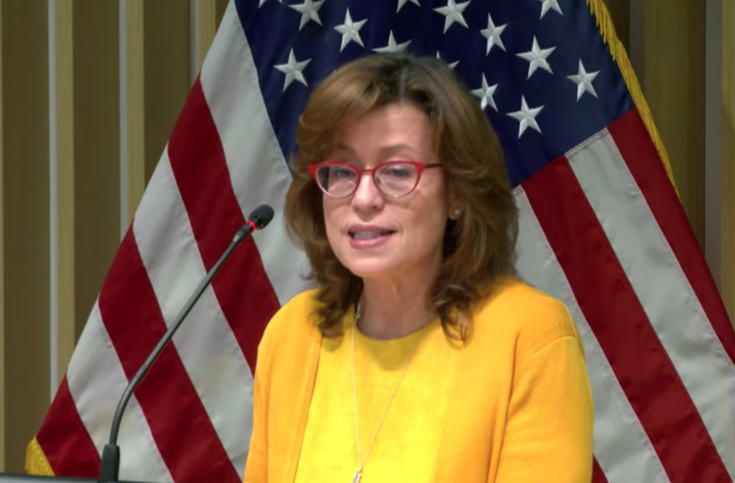 “I am disappointed that this settlement appears to pave the way for yet another massive media consolidation deal that could raise prices for consumers, reduce content diversity, and weaken editorial independence,” she said. “This settlement does nothing to resolve the FCC’s own unprecedented decision to approve near complete and unchecked indirect foreign ownership of one of America’s largest media companies from some of the most repressive governments in the world. Setting aside that worrisome arrangement, this transaction still represents a troubling new stage of media consolidation, with real consequences for consumers and for a free and independent press. The editorial independence protections included in this settlement remain untested, and there is good reason to be skeptical they will hold up once the ink is dry. Whether these commitments actually protect newsrooms inside CBS and CNN from political, financial, or regulatory pressure, or simply provide cover for further editorial interference, remains to be seen. I will be watching closely to see whether these promises translate into real protections or will be just words on a page.”
Today’s settlement includes:
An Annual Film Release Commitment: Paramount has agreed to a five-year term, where the merged company will commit to release:
-
30 films a year — including 20 wide releases — in the first two years.
-
32 films a year — with 21 wide releases — in years three, four, and five.
-
Paramount commits to release at least four independent films in each year of the commitment period.