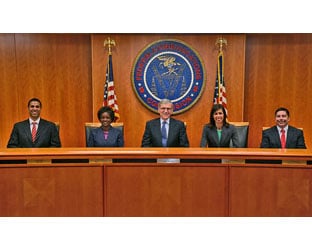
The FCC’s latest roadmap to the incentive auction will be available for public comment, and given the fact that it is controversial within the confines of the five-member Commission, it figures to be a hot topic among all stakeholders for some time to come.
A wide number of issues are presented for discussion.

A major issue is the use of dynamic reserve pricing, which
Republican Commissioners Ajit Pai and Michael O’Reilly believe is intended to minimize payments to broadcasters. What they fear is that it will instead minimize participation by broadcasters.
The three Democrats on the commission were optimistic that the NPRM provides a useful platform upon which to move the complicated proceeding forward.
The two Republicans did not concur, stating their belief that stakeholder comment should have been considered more fully before getting to the point the proceeding is at, and adding that it adds unnecessary layers of complexity to the proceeding.
Chairman Tom Wheeler noted that at the very least, all five commissioners could agree that complexity is a major feature of the incentive auction.
The FCC’s goal is to take the current NPRM, consider public comment and make modifications based on it and arrive at a final road map for the auction.
FCC staff said that the Commission is seeking to develop criteria for new channel assignments for displaced stations with an eye on keeping moving costs as low as possible.
Here are summaries of the Commissioners’ comments.
Mignon Clyburn: This proceeding presented more than technical challenges, it presented a character challenge. She’s optimistic that industry will cooperate with the FCC’s goals. The results of the AWS-3 auction, which exceeded expectations, is cause for optimism, particularly given the superior characteristics of the 600 MHz band. Attractive Greenhill valuation estimates should encourage broadcaster participation. Stakeholders need to focus on details of the present NPRM. There is considerably more detail provided than previously, and broadcasters that desire to stay in business and those that want to sell must both pay close attention and make the case for any desired changes.
Jessica Rosenworcel: This action is not like other before it. The art and science of reclaiming airwaves from one service to move to another is difficult. There are a lot of new issues stakeholders need to process, particularly the reverse auction process. Interference issues promise to be particularly challenging. There may be the possibility of some broadcasters remaining in the new wireless band. Impaired wireless licenses is a new concept that has to be understood. Calls for attracting participants via simplicity.
Ajit Pai: Keep it simple and let the outcome be driven by market forces rather than centralized planning. He also cites the success of the AWS-3 auction. This procedure is already adding unnecessary of complexity, which has already moved them to 2016. Pai said he offered 12 edits to a prior document and got 11 noes, and decried the lack of compromise on the current FCC. He wishes stakeholders the best of luck trying to figure out and comment on what the FCC proposals mean. He dissents from the NPRM, and specifically objects to dynamic reserve pricing, saying it threatens to cause broadcaster dropouts from the process and defeating the goal of attracting maximum broadcaster participation and less spectrum for auction. Pai believes DRP is penny wise and pound foolish. He also objects to setting opening prices in the reverse auctions, preferring to let market forces determine pricing. Cites the College Station TX market, which impacts four other larger Texas markets – failing to get participation from College Station will damage repacking efforts elsewhere, hence the value of stations there is greater than their enterprise value. Pai said the forward auction rules area also adding needless complexity. He hopes the Commission will be receptive to feedback from stakeholders.
Michael O’Rielly: Says this is a rushed NPRM that lacks a solid foundation. Says his suggestions fell on deaf ears, and adds that the outcome of many of the issues presented seem pre-determined. He lacks confidence that the confusing elements of the NPRM will discourage participation. Dynamic reserved pricing needs to be eliminated – it will force a broadcaster to accept a lower price for a relinquished station or will cause them to drop out of the auction altogether, making it both unfair and unproductive. He believes there is too much regulation and discrimination tied to the acquisition of spectrum under the bidding rules. There should have been more comment and change made prior to releasing the current document. Is glad that this is not a final version and hopes it can and will be improved.
Tom Wheeler: The FCC is unanimous in agreeing that the issue is complex. The people involved on both sides, sellers and buyers, are out to maximize their positions. It’s understandable but it fogs the issues. There are multiple moving pieces that affect all other moving pieces. The heart of process and transparency is what is happening today – the process, where it stands today, is detailed and put out for public comment. It is what the heart of good process is all about. Wheeler agrees with Clyburn on optimism, and with Rosenworcel on the novelty of the proceeding.
RBR-TVBR observation: Broadcasters are certain to have a lot to say about this one.
In the case of stations that plan to remain in business, broadcasters are striving to assure that as innocent bystanders to the process who may be forced to make a move that includes plenty of inconvenience and no benefit whatsoever, they are not harmed by loss of audience, diminishment of signal or by being forced to subsidize the auction by incurring uncompensated moving expense.
In the case of the other group, those willing to sell, they have a friend in Ajit Pai who gave a speech that could have been written by the Expanding Opportunities for Broadcasters Coalition. But Pai is absolutely right to point out that trying to limit the amount of money broadcasters can earn by agreeing to go out of business is more than likely to simply limit the number of broadcasters that agree to participate.
Strap in! This one figures to be especially messy, loud and turbulent.