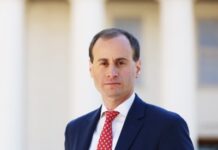


A recent poll conducted for the Foundation for Individual Rights and Expression gained the attention of American Enterprise Institute nonresident senior fellow Clay Calvert. As he points out, this survey concludes that a large portion the public is concerned about the federal government pressuring private businesses to influence speech.
Additionally, many respondents lack confidence in President Trump to protect their First Amendment rights. Could this antipathy toward jawboning and lack of trust in Trump to safeguard free speech affect the midterm elections?
With freedom of speech issues clouding broadcast television since Brendan Carr took the reins as FCC Chairman, the upcoming elections could prove pivotal for the Trump Administration when it comes to whether or not the House of Representatives will tilt toward Democratic control.
Thus, the results of an April poll of 1,000 Americans conducted for the foundation known colloquially as “FIRE” are worth noting. It shows that 77% of respondents were “somewhat,” “very,” or “extremely” concerned about the federal government “pressuring tech companies to provide it with unrestricted access to their products so they can be used for mass surveillance.”
That’s more than three times the percentage of Americans who said they were either “not at all” or only “slightly” concerned about such government pressure, Calvert states.
It isn’t the only area where Americans seemingly are bothered by “jawboning,” which Calvert defines as informal censorship that occurs when the government pressures private businesses to change their own views or to squelch or deprioritize viewpoints and messages of others that the government disdains. “Jawboning violates the First Amendment when government pressure pushes past the bounds of permissible persuasion and enters the realm of illicit coercion, typically via threats of adverse consequences if businesses fail to follow the government’s censorial desires,” he says.
Similarly high levels of public concern also exist about the federal government “pressuring media organizations to report news about foreign affairs in a favorable way” and “pressuring video platforms to remove content because of the viewpoints expressed,” Calvert adds. “People are worried, as the stench of government jawboning fills their nostrils during an election year.”
Compounding the problem, 58% of FIRE’s respondents expressed either “no confidence at all” or “very little confidence” that Trump will protect their First Amendment rights.
To that, Calvert concludes, “The U.S. Constitution and the First Amendment thus might just matter to some voters come November.”