

The Florida broadcaster was penalized for “willfully and repeatedly violating” FCC rules allowing access to a station’s public inspection file, which hadn’t been properly maintained.
RBR + TVBR Observation (in full, for subscribers, below story): As the FCC explains on its website, “Relying on the advantages of current technology, the Commission has changed its rules to require almost all of this public file information for broadcast stations … to be posted online at this site. As a result, members of the public will be able to find information … more easily and at any time convenient to them.” Note the word almost — as we ask why the FCC continues to require certain items be only at the actual station. Are the fines a great money maker?
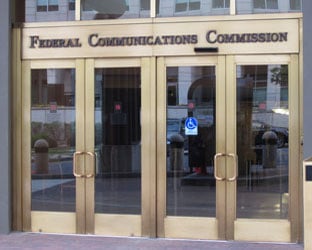
The FCC on August 15 upheld a $15,000 fine handed on June 16 to Rama Communications for failing to maintain and provide access to the public inspection file of WQBQ-AM/Leesburg, Fla., a Class D with one tower that airs an Oldies-focused Full Service format.
According to the FCC’s Notice of Apparent Liability, WQBQ—“The Voice of Lake County”—denied a member of the public identified as Robert E. Boris immediate access to the station’s public file. Such access is required by the FCC.
Upon finally gaining access to WQBQ’s public file, Boris determined it was missing several items.
Rama did not respond to the Notice, thus affirming the financial penalty.
According to the FCC, a broadcast station public inspection file must include FCC authorizations, applications and related materials, contour maps, ownership reports and related materials, its EEO file, the Public and Broadcasting manual, citizen agreements, its political file, letters and e-mails from the public, material relating to FCC investigations and complaints, issues/programs lists, local public notice certifications and announcements, time brokerage agreements, joint sales agreements, and sponsorship identification.
RBR + TVBR Observation: As the FCC explains on its website, “For decades, the public file for each broadcast station has been kept at the station’s main studio in paper form (or more recently in electronic form at some stations) and made available during normal business hours.” A few sentences later, the FCC then states, “Relying on the advantages of current technology, the Commission has changed its rules to require almost all of this public file information for broadcast stations, cable systems, DBS providers, and SDARS licensees to be posted online at this site. As a result, members of the public will be able to find information regarding individual stations, cable systems, and DBS and SDARS entities more easily and at any time convenient to them.” We ask: Why continue to force stations to have these files at a station, and to make them publicly accessible when they simply need a computer or tablet and an internet connection? Why the almost in that statement, requiring certain items to appear only at the station? It makes almost as much sense as a 41-year-old prohibition on a failing newspaper merging with a TV or radio operation in its market.