NPR Podcast, Programming Head To Say Goodbye

0

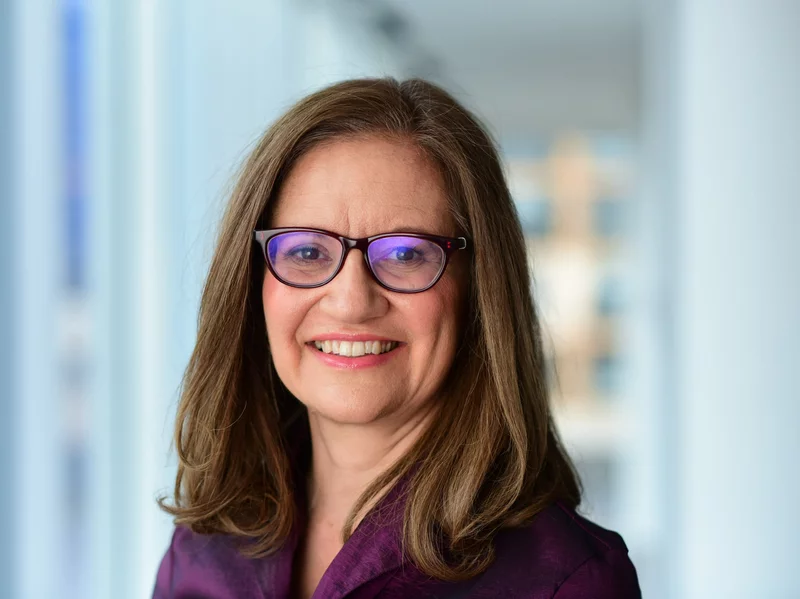
WASHINGTON, D.C. — The chief programming executive at NPR will conclude her tenure at the noncommercial public radio entity at the end of 2023, ending a nearly 30-year tenure that includes on-demand audio innovations.


At the same time, NPR’s own journalists note how Anya Grundmann has weaved through “sharp setbacks buffeting the industry broadly and the network specifically.”



“After 30 years at NPR, I have decided it’s time for my next adventure,” Grundmann said in an e-mail to staff on Monday without elaborating on what’s next for her.

In a comment sent via text to reporter David Folkenflik and Deputy Business Editor Emily Kopp, Grudmann called her tenure “the best kind of rollercoaster ride,” noting that she especially loved it “when the sparks are flying.”

Grundmann first arrived at NPR in 1994 as an intern, arriving from member station KNAU-FM in Flagstaff, Ariz. She later became SVP for Programming and Audience Development, rising through the ranks; she became head of NPR programming in 2015 and served as the founding executive director of NPR Music. Since then, Grundmann has overseen music, entertainment and talk shows such as Wait Wait Don’t Tell Me and Fresh Air, which originates from WHYY-FM in Philadelphia, a key Member station. Grudmann was also in charge of most of NPR’s podcasts.

She is also the brainchild behind the popular “Tiny Desk” music performances, which fueled NPR on social media while helping to broaden the appeal of the recording artists featured.

But, it was bringing NPR programming to an on-demand space that is perhaps her biggest achievement, key in an environment where Republican legislators on Capitol Hill are once again seeking to “zero out” funding for the Corporation for Public Broadcasting. While these dollars are an infinitesimal fraction of the dollars needed to fund a typical NPR Member station, it has been an ongoing quest since Newt Gingrich first suggested no federal funding be put toward broadcast media some 30 years ago — just as Grundmann was starting her NPR career.

To be clear, Grundmann made the decision to exit NPR, CEO John Lansing told Folkenflik and a colleague working on the report for the network. “She led the podcasting revolution in many ways, and has been just an invaluable partner for me in my four years here,” Lansing said of Grundmann.

The pending exit of Grundmann, however, comes after a decision in 2022 by Lansing to combine NPR news and programming under one chief content officer. For some, it was perceived to be a slap in the face to SVP for News Nancy Barnes, with the job going to Grundmann. Barnes ended up exiting NPR following the restructuring announcement and joined the Boston Globe. 

Meanwhile, the investment in podcasts, which NPR’s report itself indicated was belated and partly in response to The New York Times, ballooned under Grundmann. As NPR’s fiscal year ends in five weeks, the timing of Grundmann’s voluntary departure plans may now be scrutinized by market observers. For fiscal year 2023, a $31 million shortfall in podcast revenues has been forecast. With macroeconomic headwinds in the headlines for commercial radio stations, Lansing in Spring 2023 trimmed the NPR workforce by roughly 10% and killed four podcasts. A fifth podcast, science-focused Short Wave, saw a cut back in production.

Podcast revenue isn’t unique to NPR, and the industry is considered to have peaked with respect to growth, at least for now. NPR noted that ABC, CNN, ESPN, the Los Angeles Times, Spotify, Vox Media, and the Washington Post “underwent similar job cuts.”

But, the NPR report admitted that it possesses an “inability to produce a larger volume of podcasts,” which made it harder to compensate for that drop in revenue.