By Erwin Krasnow and Colin Andrews
A Local Marketing Agreement (LMA), also known as a Time Brokerage Agreement (TBA), is the sale by a licensee of discrete blocks of time to a “broker” that supplies the programming and commercial spot announcements to fill that time.
While LMAs have been around since the mid-1990s, we know of no FCC decisions or articles that focus on the role of the broker.
We will fill that void by providing advice tailored to individuals or companies contemplating entering into an LMA. When finding that an unauthorized transfer of control has taken place, the FCC imposes sanctions on the licensee of the station. The Commission does not have jurisdiction over the activities of a broker who does not have any attributable interests in the ownership of broadcast stations. However, where the broker has submitted an application to purchase a station, the FCC has issued Consent Decrees for an unauthorized transfer of control and has made the licensee and the broker jointly responsible for the payment of a “voluntary contribution” to Uncle Sam.

Here are our suggestions on steps that a broker should take to comply with FCC rules and policies.
Do: Commit to Writing Your Understanding with the Licensee
One of the most basic requirements of the FCC is that the LMA must be in writing and a copy kept in the local public file (although the Commission allows the parties to redact confidential and proprietary information).
A copy of the LMA agreement must be also filed if the licensee in the same market is brokering the station and providing programming more than 15% of the time on the brokered station. The LMA Agreement must unequivocally reserve to the licensee the unlimited right to suspend, cancel, or reject any programming furnished or recommended by the broker.
The failure to enter into a written LMA Agreement led the FCC to fine Birach Broadcasting $8,000. The FCC’s Enforcement Bureau inspected WMFN-AM in Zeeland, Mich., and found that no employees of Birach were present at the main studio. The broker’s personnel at the station told the FCC inspector that the station was being operated for Birach pursuant to a “handshake” LMA. As a result of the concerns raised by the FCC inspection, the Enforcement Bureau sent a letter of inquiry to Birach. Rather than submitting a copy of an LMA Agreement, Birach’s response consisted of an invoice signed by licensee and the broker for the monies owed for use of the station. The invoice included a statement that the customer is responsible for any legal problem caused to the station.
Do: Include the Following Provisions in the LMA Agreement
Include provisions which make clear that:
- Licensee retains the right, without limitation, to suspend, cancel or reject any programs or commercials.
- Licensee retains the right to preempt any program for another program deemed to be of greater national, regional, or local interest or importance; in case of an emergency; or to comply with federal, state, or local laws.
- Licensee shall be solely responsible for maintaining the station logs and political and public inspection files, receiving and responding to telephone inquiries related to station operations, broadcasting proper station identification announcements, responding to requests for political time and complying with other FCC rules.
- Licensee shall be responsible for the salaries, taxes, insurance, and related costs of its own employees and station operation.
- Licensee shall be responsible for payment of costs associated with operating the transmitter and antennas.
- Licensee shall oversee, and take ultimate responsibility for, the broker’s advertising and programs practices with respect to the provision of equal opportunities, lowest unit charge and reasonable access, and other requirements contained in the FCC’s political rules.
DON’T: Avoid The Following Provisions
- Licensee shall pay an excessive amount of money as liquidated damages in the event it terminates the agreement (in this connection, the FCC has ruled that a disproportionately large penalty imposed on the licensee diminishes the licensee’s control over the station).
- Broker shall be responsible for purchasing new equipment and making repairs to the existing equipment.
- Broker shall be responsible for expenses related to the Licensee’s studio and broadcast transmitter (e.g., tower and studio rent, utilities, telephone, property taxes, etc.).
DON’T: Tell Anyone You Own the Station
A broker should under no circumstances give anyone the impression that it is the owner of the station.
Brokers should instruct their employees that they are not authorized to represent to anyone that the broker owns the station or has any role other than that of providing programming and selling commercial time. Broker’s sales personnel should make it clear to advertisers that they are not selling advertising on a broker-owned station, but are merely brokers for the sale of advertising time on the station. They should neiter say that the broker is now “in charge of” the station, nor should they say that the station is now being “leased.” A lease implies that the licensee has turned over the station to the broker.
DON’T: Employ The Station’s GM
The licensee must follow one personnel-related rule — the FCC’s “main studio” rule. This rule, as interpreted by the Commission, requires that the station’s main studio be staffed fulltime by two employees, one of whom must be a managerial-level person. The licensee’s general manager and/or other licensee employees should be at the station at all times during normal business hours, Monday through Friday. These employees must be paid by the licensee.
All of the broker’s employees need to abide by the decisions of the licensee’s General Manager. The broker can have no supervisory authority over the licensee’s employees when they are performing duties for the licensee. Whenever the broker’s personnel are at the station’s facilities, they are subject to the supervision and direction of the licensee’s General Manager. The broker cannot have the ability to hire or fire employees of the licensee. No broker personnel should be referred to as the “General Manager” of the station.
DON’T: Pay the Licensee’s Operating Expenses
The licensee must maintain control over station finances. Such control includes the continuation by the licensee of its own bank account and the payment of expenses that involve the essence of a station’s operations. At a minimum, this means that transmitter site rental payments, the electrical bill for the transmitter, the telephone bill for at least one phone line to the studio, transmitter maintenance costs and equipment insurance expenses should be paid from the licensee’s account.
In addition, the licensee must be responsible for the payment of salaries, taxes, insurance and other related costs of two full-time employees. The FCC has ruled that the payment process must not be short circuited by allowing the broker to pay expenses directly.
DO: Abide by the Licensee’s Programming Decisions Even If You Disagree
While the main purpose of entering into an LMA is to allow the broker to program the station as it sees fit, the broker does not have a “blank check” when making programming decisions.
While the broker can make day-to-day programming decisions, the licensee must be the final arbiter.
The FCC has made clear on multiple occasions that the licensee must have ultimate control and authority over the programming of the station, including, without limitation, the right to decide whether to accept or reject any programming or advertisements, the right to refuse any programming or part of programming deemed by the licensee to not be in the public interest or to not meet licensee’s programming standards, the right to interrupt or preempt any programming at any time in order to broadcast programming deemed by the licensee to be of significant national, regional or local interest.
Adhering to these suggestions will assist in ensuring that the letters LMA are not an acronym for “Lotsa Money for Attorneys!”
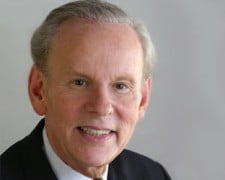
Erwin G. Krasnow, the co-chair of the Communications Group of Garvey Schubert Barer, is a former General Counsel of the National Association of Broadcasters, Washington counsel to the Media Financial Management Association, and a coauthor of Profitably Buying and Selling Broadcast Stations and 100 Ways to Cut Legal Fees and Manage Your Lawyer. He has been described by Legal Times as “the guru of Communications Law.” Erwin can be reached at [email protected] and at 202-298-2161.
Colin Black Andrews is an Associate Attorney in the Communications Practice Group of Garvey Schubert Barer. Prior to joining GSB, he worked for the General Counsel at the White House’s Office of Science and Technology Policy. He can be reached at (202) 968-1736 or [email protected].